
Desserts
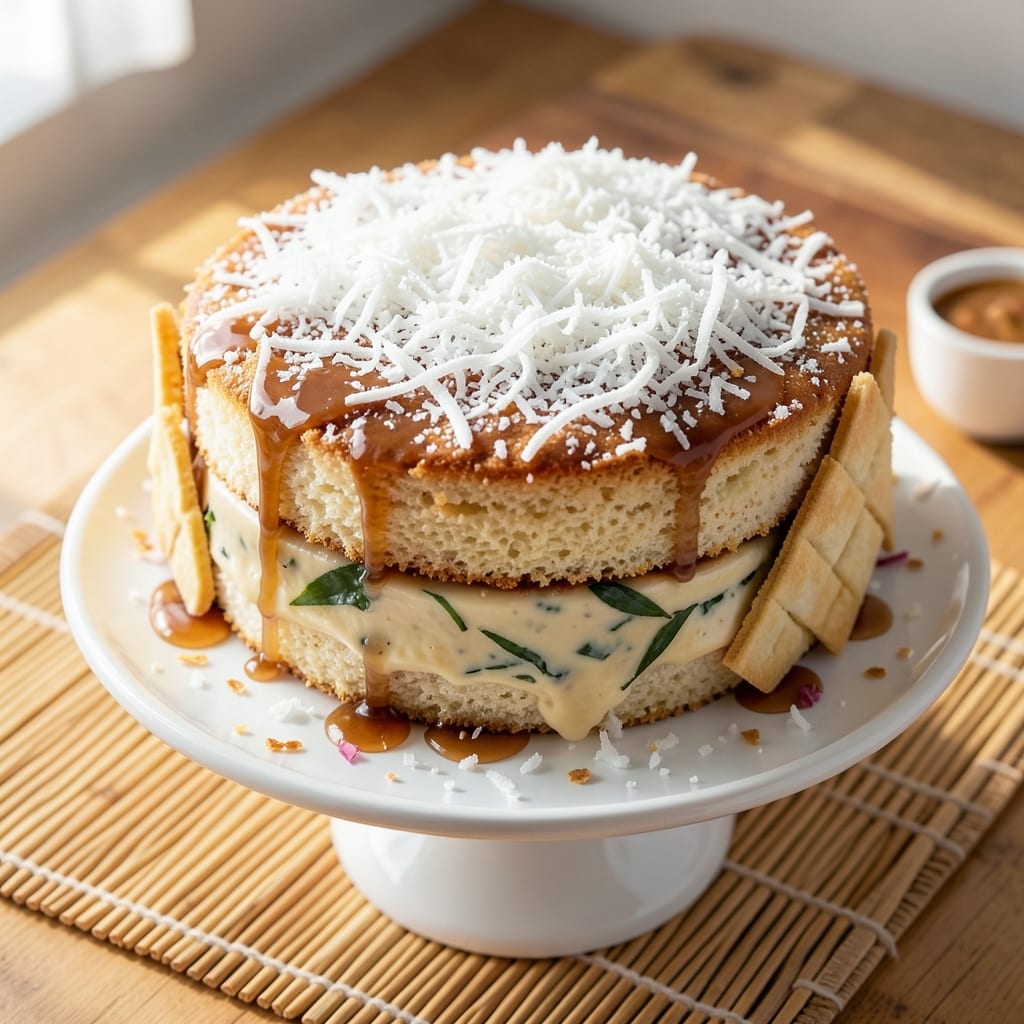
This Asian coconut cake recipe delivers the perfect balance of pandan-infused moisture and a toasted coconut crust that makes every slice irresistible. 🌟 The secret lies in the right ratio of coconut milk and shredded coconut, combined with traditional baking techniques that ensure a tender crumb and fragrant aroma. I've perfected this recipe over years of baking, and it's become a showstopper at gatherings—whether you're serving it for a celebration or just treating yourself to something special.
The cake's magic comes from its layers: a toasted coconut crust at the bottom adds texture and depth, while the pandan-infused coconut filling keeps it moist and flavorful. The pandan extract, a staple in Southeast Asian desserts, gives the cake its signature floral aroma without overpowering the natural sweetness of the coconut. This recipe is designed to be foolproof, with clear instructions for achieving the ideal texture—no dry or gummy results here.
What you'll end up with is a rich, golden cake that's perfectly balanced in every bite—creamy, fragrant, and just sweet enough. The toasted coconut crust adds a delightful crunch, while the pandan-infused center ensures that each slice is moist and full of flavor. This cake is versatile enough for any occasion, whether you're serving it at a tea party, holiday gathering, or simply enjoying a slice with a cup of coffee.
Ready in just one hour (including baking and cooling time), this recipe is perfect for home bakers who want restaurant-quality results without the fuss. The key to success lies in the preparation—measuring ingredients precisely and following the steps carefully to ensure the cake rises evenly and stays moist. Let's get started on creating this delicious Asian coconut cake that will impress everyone at the table.
Ingredients for asian coconut cake
The perfect harmony of toasted coconut crust and pandan-infused moisture starts with these carefully chosen ingredients.
| Ingredient | Amount | Notes |
|---|---|---|
| All-Purpose Flour 🌾 | 2 ½ cups | Sifted for light texture |
| Granulated Sugar 🍚 | 1 ½ cups | White or light brown |
| Unsalted Butter 🧈 | 1 cup | Cold, cubed for crust |
| Shredded Coconut 🥥 | 2 cups | Sweetened, unsweetened mix |
| Pandan Extract 🌿 | 1 tbsp | Pure, not paste |
| Full-Fat Coconut Milk 🥥 | 13 ½ oz | Canned, chilled overnight |
| Large Eggs 🥚 | 4 whole | Room temperature |
| Baking Powder 🧂 | 1 ½ tsp | Aluminum-free preferred |
| Salt 🧂 | ½ tsp | Fine sea salt |
| Vanilla Extract 🌸 | 1 tsp | Pure Madagascar preferred |
| Ground Turmeric 🌿 | ¼ tsp | For golden color |
| Toasted Coconut Oil 🫒 | ¼ cup | For crust texture |
| Powdered Sugar 🍚 | ½ cup | For final dusting |
The shredded coconut is non-negotiable—Trader Joe's or Asian markets carry the best quality, often pre-toasted for convenience. For the pandan extract, Asian grocery stores like H Mart or 99 Ranch stock the pure version, which delivers that signature floral aroma without bitterness. The coconut milk must be full-fat and chilled overnight—this separates the cream from the water, giving you that ultra-rich texture. Store-brand canned coconut milk works just as well as premium brands if it's fresh. For the butter, Plugrá or Land O'Lakes unsalted are reliable choices, but always use cold cubes for the crust layer.
No pandan extract? Vanilla extract at double the amount mimics the floral note, though it won't be identical. Running short on shredded coconut? Toasted coconut flakes work in a pinch, but they lack the moisture. The turmeric adds color but can be omitted if you prefer a purely coconut flavor. For the coconut oil, Brunswick or Crisco brands are widely available—just toast it lightly in a dry pan until golden for that nutty depth. The powdered sugar for dusting? Confectioners' sugar from the grocery store is fine, but Domino or Dixie brands dissolve more smoothly.
Store the shredded coconut in an airtight container for up to 3 months—it's the only ingredient that keeps well beyond the recipe's shelf life. The pandan extract loses potency after 6 months, so buy small bottles if you won't use it often. Coconut milk can be refrigerated for up to 5 days after opening, but the cream layer separates quickly, so use it within 3 days for best results. The baked cake stays fresh for 4 days covered at room temperature, or freeze for 2 months in an airtight container. Reheat slices in the oven for 10 seconds to restore that toasted coconut aroma.
Why You'll Love This Recipe
- Here’s what sold me: uses pantry staples (butter, sugar, flour) plus a bag of shredded coconut for under $5 total. The pandan extract is the priciest part, but a little goes a long way—plus, it keeps for ages. Leftovers? They disappear faster than my willpower on a bad day.
- No Mixer Needed: I swear by this recipe when my mixer’s on the fritz—just cream butter and sugar by hand, fold in dry ingredients, and you’re done. The shredded coconut adds texture without extra work, and that pandan extract? One drop does all the heavy lifting for that signature floral aroma.
- Tropical Comfort Bite: That first forkful of moist, buttery layers with toasted coconut on top? It’s like a hug from a bakery in Bali. The pandan gives it this subtle, elegant sweetness that makes it taste special—no one would guess it’s basically a vanilla cake with a secret ingredient.
- Weekday Hero: Between us, this is my go-to when I need cake fast. Bake it in a loaf pan for easy slicing, or go for a sheet cake if you’re prepping for a party. Honestly, it’s the only cake I make that doesn’t feel like a chore—even when I’m exhausted after work.
Step-by-step instructions for Asian coconut cake with pandan crust
Master this delicate balance of textures—tender pandan-infused crumb with a toasted coconut crust.
👨🍳 Step 1: Prepare the Crust Layer
Preheat oven to 350°F and line an 8-inch round cake pan with parchment paper. In a bowl, combine 1 cup unsalted butter (cold and cubed), 0.25 cup toasted coconut oil, 0.5 cup granulated sugar, 0.5 cup shredded coconut, and 0.25 tsp ground turmeric. Using a pastry cutter or fork, blend until the mixture resembles coarse crumbs with pea-sized butter pieces.
Press this crust mixture firmly into the bottom of your prepared pan, creating an even layer. Bake for 12-15 minutes until the edges are lightly golden. This foundational crust will prevent moisture loss and add that signature toasted coconut flavor. Don't overbake—it should still look slightly underdone in the center when removed.
🍳 Step 2: Mix Wet Ingredients for Maximum Moisture
In a separate large mixing bowl, whisk together 4 whole large eggs (room temperature), 13.5 oz full-fat coconut milk (chilled overnight), 1 tbsp pandan extract, 1 tsp vanilla extract, and 0.5 tsp salt until completely smooth. The coconut milk should be fully incorporated—no streaks should remain. This step is critical for the cake's signature moisture and aromatic depth.
In a medium bowl, sift together 2.5 cups all-purpose flour and 1.5 tsp baking powder. Whisk gently to combine, ensuring no flour pockets remain. The sifting creates a lighter texture that balances the dense coconut elements. Here's where it gets interesting—I always add 0.5 cup shredded coconut to the dry ingredients for extra texture contrast.
🥘 Step 3: Combine Wet and Dry Ingredients
With the mixer on low speed, gradually add the dry ingredients to the wet mixture. Mix just until combined—you should still see small flour streaks. Overmixing develops gluten and can make the cake dense. The batter should be thick but pourable, with a consistency similar to heavy pancake batter.
Pour the batter over the pre-baked crust, spreading evenly with a spatula. Tap the pan gently on the counter to release any air bubbles. The batter should reach just below the pan's edge—this cake rises significantly. Real talk: if you're nervous about overfilling, err on the side of slightly less batter. We want that perfect dome shape when it emerges from the oven.
🔥 Step 4: Bake with Precision
Return the cake to the oven and bake for 35-40 minutes, or until a toothpick inserted in the center comes out clean with just a few moist crumbs. The cake should spring back gently when pressed in the center—this indicates proper doneness. The top should be golden brown with a slight crack in the center, which is normal and actually desirable for this recipe.
I've found that baking times can vary slightly based on your oven's hot spots. If the edges brown too quickly, tent the cake with aluminum foil after the first 20 minutes. The internal temperature should reach 205-210°F for that perfect moist crumb. Don't open the oven door during baking—temperature fluctuations can cause the cake to sink.
⏰ Step 5: Cool and Finish with Powdered Sugar
Remove the cake from the oven and let it cool in the pan for 15 minutes. Then transfer it to a wire rack to cool completely. This gradual cooling prevents cracking and allows the flavors to fully develop. The cake will pull away from the edges of the pan naturally as it cools.
Once completely cool, dust the top generously with 0.5 cup powdered sugar using a fine-mesh sieve. This final step adds that signature decorative finish and balances the rich coconut flavors. For extra presentation, you can garnish with additional toasted coconut flakes or a drizzle of caramelized coconut syrup. Serve slices at room temperature for the best texture experience.
Pro Tips For Making Asian Coconut Cake
- Preheat Pan Properly: Coconut cake has a tendency to stick like glue if the pan isn’t hot enough. I learned this the hard way—my first batch came out in two sad, torn halves. Heat your pan (or line with parchment) over medium heat for 3-4 minutes before pouring the batter. The butter in the batter will caramelize just enough to create a natural release layer.
- Toast the Coconut: Raw shredded coconut can make your cake taste like wet cardboard. Toss the coconut in a dry pan over low heat for 5-7 minutes until it’s golden and smells nutty. Let it cool completely before folding it into the batter—this keeps the texture light and the flavor vibrant.
- Don’t Overmix the Batter: I used to beat this batter like I was punishing it, and the result was always dense. Mix just until the flour disappears—about 20 seconds—then stop. Overmixing develops gluten, and your cake will turn out tough instead of tender. The pandan extract will blend in naturally without extra effort.
- Use Room-Temp Butter: Cold butter creates pockets in the batter that won’t melt evenly, leading to a cake with uneven texture. Let your butter sit out for 1-2 hours before creaming it with sugar—this ensures a smooth, fluffy crumb. If you’re in a rush, microwave it in 10-second bursts until soft but not melted.
Regional styles of this recipe
Japanese Kokuto Cake
This variation replaces pandan with matcha powder for a vibrant green hue and earthy flavor. Use 2 tsp ceremonial-grade matcha (like Ippodo Tea) mixed into the wet ingredients, and reduce the shredded coconut to 1.5 cups for a lighter texture. Japanese versions often include kinako (roasted soybean flour)—add 1 tbsp to the dry ingredients for a nutty depth. Bake in a 9-inch round pan at 325°F for 45-50 minutes to achieve that signature dome shape. 🌿
Thai Coconut Cake
Thai versions incorporate lemongrass and kaffir lime leaves for a citrusy aroma. Infuse 1 cup coconut milk with 2 stalks lemongrass and 1 kaffir lime leaf (bruised) for 30 minutes before using. Add 1 tsp grated lime zest to the batter and top with a lime glaze (mix ½ cup powdered sugar with 1 tbsp lime juice). Garnish with toasted coconut flakes and lime slices for a refreshing twist. The cake should be slightly denser—bake at 350°F for 40-45 minutes.
Filipino Bibingka-Inspired
For a festive Filipino touch, swap the crust for a ginger-scented layer. Mix ½ tsp ground ginger into the crust ingredients, and add ½ cup grated ginger (peeled) to the wet batter. Top with salted egg slices and cheese cubes before baking. Bake at 375°F for 30 minutes, then add toppings and bake 10 more minutes until golden. Serve warm with latik (coconut caramel) drizzled on top. This version is perfect for Christmas celebrations! 🎄
Singaporean Pandan Waffle Cake
Transform this into a waffle-style cake by using a waffle iron instead of a round pan. Mix 1 extra egg white into the batter for extra airiness, and fold in ½ cup whipped coconut cream for a lighter texture. Cook in batches, brushing each layer with pandan-infused syrup (simmer ½ cup sugar with 1 tbsp pandan extract and ¼ cup water). Stack the waffles with toasted coconut flakes between layers. Serve with condensed milk for a Singaporean café vibe. 🍯
Vietnamese Chè-Inspired Layers
Layer this cake with jackfruit or mung bean paste for a traditional Vietnamese chè twist. After baking, slice the cake horizontally and spread ½ cup sweetened jackfruit paste (or mung bean jelly) between layers. Dust with toasted sesame seeds and crushed peanuts for texture. Serve chilled with coconut milk drizzled over the top. This version is less sweet—reduce sugar to 1 cup and add 1 tsp salt to balance the flavors. Perfect for summer! ❄️
Malaysian Pandan Kaya Cake
Combine this recipe with pandan kaya (coconut jam) for a Malaysian-inspired dessert. After baking, slice the cake horizontally and spread ½ cup store-bought or homemade pandan kaya between layers. Top with toasted coconut flakes and crushed peanuts. The kaya adds a sticky, caramelized sweetness that pairs perfectly with the cake’s moisture. Serve with soft-boiled eggs and kaya toast for a full breakfast-inspired treat. 🍳
Nutrition facts
Frequently asked questions
Can I make this coconut cake without pandan extract?
For a similar floral aroma, use 2 teaspoons vanilla extract instead. The flavor won't be identical, but it'll still taste delicious. If you want to keep the authentic Asian profile, look for pandan extract in Asian grocery stores or online—it's worth the effort for that signature scent.
How do I store leftovers to keep them fresh?
Wrap the cake tightly in plastic wrap, then place it in an airtight container. It stays fresh for 4 days at room temperature. For longer storage, freeze slices for upstrong> 2 months. Thaw at room temperature before serving—no need for reheating unless you want to restore that toasted coconut aroma.
Why did my cake turn out dry?
Dryness usually happens from overbaking or not using enough coconut milk. Check your oven temperature with a thermometer—it might be running hot. Also ensure you're using full-fat coconut milk (the cream layer) and don't overmix the batter. For extra moisture, brush warm cake slices with coconut milk before serving.
Can I use this recipe for special occasions? This cake is perfect for celebrations! The elegant presentation with powdered sugar makes it look restaurant-quality. For a festive touch, add edible gold leaf or fresh tropical flowers. It's especially popular for tea parties, birthdays, and holiday gatherings—just
What's the difference between sweetened and unsweetened coconut?
Use a mix of both! The recipe calls for 2 cups total—try 1 cup sweetened and 1 cup unsweetened for balanced flavor. Sweetened adds natural caramel notes, while unsweetened provides pure coconut taste. If you only have one type, use all unsweetened and add 1 extra tablespoon sugar to compensate.