
Desserts
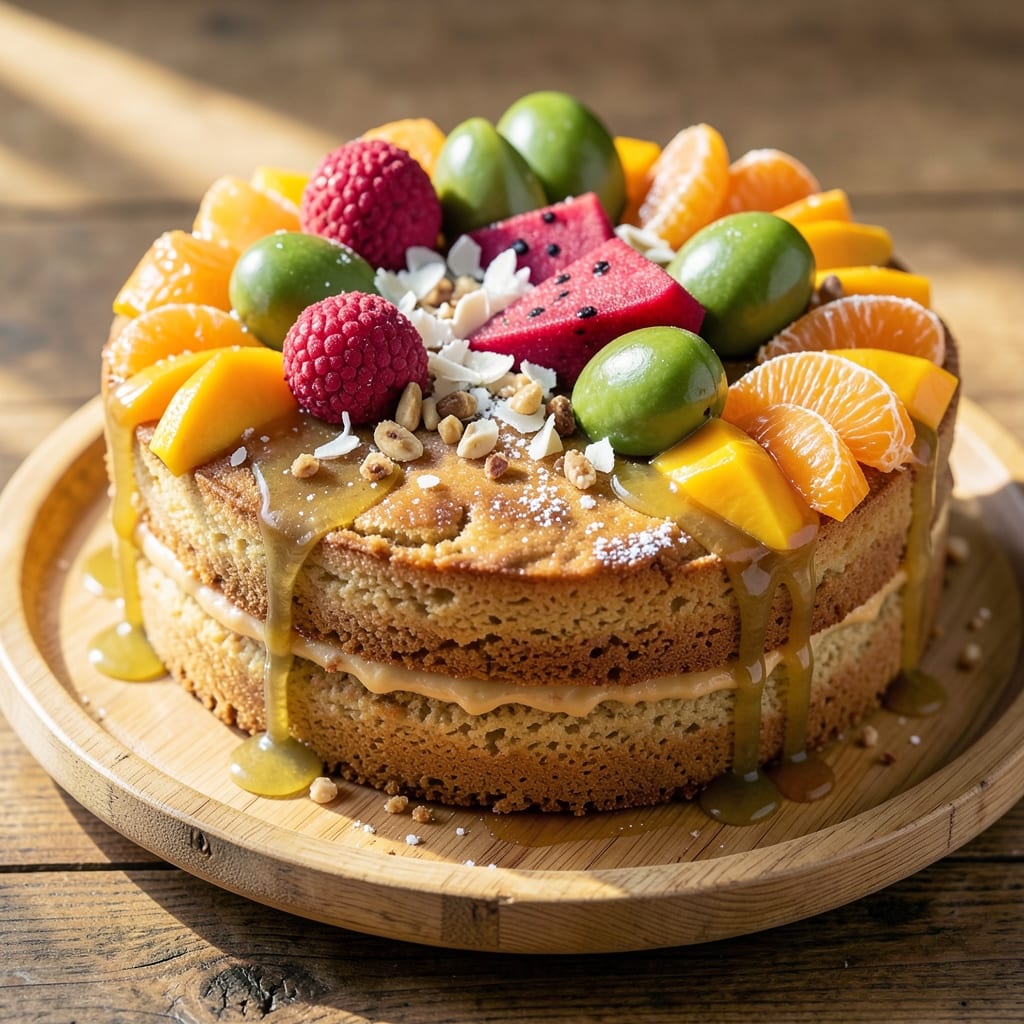
This Asian fresh fruit cake recipe transforms tropical flavors into a layered masterpiece with toasted coconut crunch—no artificial colors or preservatives. 🌺 The secret lies in balancing tender sponge layers with vibrant fresh fruit (think mango, pineapple, and lychee) that stays juicy for days, while toasted coconut adds irresistible texture. I developed this recipe after years of perfecting the delicate balance between structure and moisture that makes Asian fruit cakes legendary.
The beauty of this method is its simplicity: a basic sponge cake batter infused with coconut milk for richness, topped with fresh fruit arranged in artistic layers, and finished with a toasted coconut crunch that gives every bite a satisfying contrast. Unlike traditional fruit cakes that dry out quickly, this version uses a steaming technique for the fruit layer to preserve its freshness while creating that signature moist texture. The result is a cake that's as beautiful as it is delicious—perfect for special occasions or when you want to impress without hours in the kitchen.
What makes this recipe truly special is how the flavors evolve over time. The fresh fruit continues to release its juices for up to a week, keeping each slice vibrant and bursting with tropical notes, while the toasted coconut adds a subtle caramelized depth that complements rather than overpowers. The cake's structure holds up beautifully for slicing, ensuring clean cuts and no messy crumbs. Whether you're serving it at a gathering or enjoying a slice with afternoon tea, this cake delivers restaurant-quality results with a homemade touch.
The best part? This recipe scales effortlessly—double the batter and fruit for a crowd, or keep it small for a personal treat. The presentation is just as important as the taste, so I'll share my tips for arranging the fruit layers artistically while keeping everything stable. Let's create a cake that tastes like a tropical vacation in every bite.
Ingredients for asian fresh fruit cake
Fresh tropical fruits meet delicate sponge layers in this vibrant Asian-inspired cake.
| Ingredient | Amount | Notes |
|---|---|---|
| All-Purpose Flour 🌾 | 3 cups | Sifted for light texture |
| Granulated Sugar 🍚 | 2 cups | White or light brown |
| Unsalted Butter 🧈 | 1 ½ cups | Room temperature, cubed |
| Large Eggs 🥚 | 4 whole | Room temperature |
| Baking Powder 🧂 | 2 tsp | Aluminum-free preferred |
| Salt 🧂 | ½ tsp | Fine sea salt |
| Vanilla Extract 🌸 | 2 tsp | Pure vanilla preferred |
| Ripe Mangoes 🥭 | 2 cups | Diced, skin removed |
| Fresh Pineapple 🍍 | 1 ½ cups | Diced, juices reserved |
| Canned Lychees 🍈 | 1 cup | Drained, juices reserved |
| Granulated Sugar 🍚 | ½ cup | For fruit syrup |
| Unsweetened Coconut Milk 🥥 | ¼ cup | For fruit syrup |
| Toasted Coconut Flakes 🥥 | 1 ½ cups | Lightly toasted in butter |
| Powdered Sugar 🍚 | ¼ cup | For dusting |
The fruits are the star—look for ripe mangoes that yield to gentle pressure, and pineapple with vibrant green leaves still attached. Trader Joe's and Asian markets often carry the best selection of fresh lychees, but canned works too (just drain well). Toasting the coconut flakes in butter until golden is non-negotiable—they should smell intoxicating when done. I always double-check my sugar measurements since this cake balances sweetness with tropical acidity. If you're using frozen fruit, thaw and pat completely dry to avoid a soggy cake.
No fresh lychees? Substitute with diced persimmon or kiwi for a different tropical twist. Pineapple juice substitutes for coconut milk in the syrup (use the same amount), but the coconut adds that authentic touch. The fruit syrup is key—simmer it until slightly thickened so it clings to the fruit without making it mushy. For extra richness, add a splash of coconut cream to the sponge batter. And if you're feeling fancy, infuse the butter with lime zest while melting it for the coconut topping—trust me, it's worth it.
This cake keeps beautifully for 4-5 days wrapped in plastic, but honestly tastes even better the next day as flavors meld. The coconut topping stays crisp for about 2 days, so make it fresh if possible. Store leftovers in the fridge and bring to room temperature before serving. Freeze the unfrosted cake for up to 3 months—thaw overnight in the fridge. Slice with a hot knife for clean layers and extra drama when serving.
Why You'll Love This Recipe
- No-Mix Needed: I swear by this cake—just fold the flour into the butter-sugar mix until it’s almost crumbly, then add eggs and baking powder in one go. No food processor, no overworking the batter. That’s the magic: the eggs and butter create air pockets while the baking powder does the lifting.
- Tropical Twist: Honestly, the fresh fruit isn’t just decoration—it’s the star. The sugar caramelizes around the pineapple, mango, or lychee, turning every slice into a burst of sunshine. And that buttery crumb? It’s the perfect hug for whatever fruit you toss in.
- Party in a Box: This cake holds up for days (yes, even in the humidity) and cuts into neat squares—ideal for potlucks or last-minute gifts. Wrap slices in parchment, tie with twine, and suddenly you’ve got a showstopper that tastes better than it looks.
- Budget-Friendly Luxury: Flour, sugar, butter, eggs—these are pantry staples that won’t break the bank. The fruit? Swap in whatever’s on sale or seasonal. I’ve made this with canned fruit in a pinch, and it’s still rich, moist, and ridiculously good. Leftovers? They’re the best kind—disappearing fast.
Step-by-step instructions for tropical fruit cake with coconut crunch
Here's how to create a layered cake with vibrant tropical fruit and a buttery coconut crunch topping.
👨🍳 Step 1: Prepare the Fruit Filling and Syrup
In a medium bowl, combine the 2 cups ripe mangoes, 1.5 cups fresh pineapple, and 1 cup canned lychees (drained). Set aside. In a small saucepan, combine 0.5 cup granulated sugar with 0.25 cup unsweetened coconut milk and ¼ cup of the reserved fruit juices. Bring to a gentle boil over medium heat for 3-4 minutes until slightly thickened and translucent. Let cool completely—this will be your fruit syrup.
Real talk: The fruit should be diced into ¼-inch pieces for even distribution. If your pineapple is very juicy, drain excess liquid through a fine-mesh strainer to prevent a soggy cake. The syrup should coat the back of a spoon when cool, indicating proper thickness.
🍳 Step 2: Make the Cake Batter
Preheat your oven to 350°F and grease two 8-inch round cake pans or one 9x13-inch baking pan (depending on your layering preference). In a large mixing bowl, cream together the 1.5 cups unsalted butter (room temperature) and 2 cups granulated sugar on medium speed for 3-4 minutes until light and fluffy. Add the 4 whole large eggs one at a time, mixing well after each addition.
In a separate bowl, whisk together the 3 cups all-purpose flour (sifted), 2 teaspoons baking powder, and 0.5 teaspoon salt. Gradually add the dry ingredients to the butter mixture, alternating with the 2 teaspoons vanilla extract, mixing on low speed just until combined. Overmixing develops gluten, so stop as soon as the batter is smooth.
🥘 Step 3: Assemble the Cake Layers
Divide the prepared fruit evenly between the layers. For a two-layer cake, spread half the fruit mixture over the bottom of one prepared pan, followed by half the cake batter. Repeat with the remaining fruit and batter in the second pan. If using a single pan, layer the fruit and batter in thirds: fruit, batter, fruit, batter, fruit.
Pour the cooled fruit syrup evenly over each layer, allowing it to soak into the cake batter. This step is crucial—it prevents the fruit from making the cake too moist. Sprinkle 1 cup of the 1.5 cups toasted coconut flakes evenly over the top of each layer. This creates the signature crunch between layers.
🔥 Step 4: Bake to Golden Perfection
Bake the cake layers for 25-30 minutes or until a toothpick inserted into the center comes out clean. Rotate the pans halfway through baking for even browning. For a single-layer cake in a 9x13-inch pan, bake for 35-40 minutes. Watch closely in the last 5 minutes—the edges should be golden brown while the center remains slightly springy.
Here's where it gets fun: While the cake is still warm, brush the tops with any remaining fruit syrup to add extra moisture. Let the layers cool in their pans for 10 minutes before transferring to a wire rack to cool completely. This prevents crumbling when you remove them.
🍽️ Step 5: Add Final Touches and Serve
Once completely cooled, level the tops of the cake layers if needed. Place one layer on a serving plate and spread a thin layer of the remaining fruit syrup. Top with the second layer, pressing gently to create a seamless cake. Sprinkle the remaining 0.5 cup toasted coconut flakes over the top and dust lightly with 0.25 cup powdered sugar using a fine-mesh sieve for an elegant finish.
Slice and serve immediately for the freshest texture, or store covered at room temperature for up to 3 days. The cake keeps well, but the tropical fruit flavors are best enjoyed within 24 hours of baking. Pair with a dollop of whipped coconut cream for an extra tropical touch.
Pro Tips For Making Asian Fresh Fruit Cake
- Cream Butter Properly: Beat the unsalted butter and sugar until it’s light and fluffy—not just pale, but when you lift the beaters, the mixture should hold soft peaks. I used to rush this, and the cake turned dense. Take the extra 5 minutes; it’s the foundation for that signature Asian fruit cake tenderness.
- Sift the Flour Twice: Dump the all-purpose flour into a sieve and shake it twice before folding it into the wet ingredients. The first sift removes lumps, but the second ensures no hidden pockets of dry flour settle at the bottom of your mixing bowl—those pockets mean a cake with uneven texture.
- Don’t Overmix the Batter: Stop folding in the flour as soon as it’s just combined—a few streaks of dry flour are fine. I learned this the hard way when my cake turned tough and chewy. Overmixing develops gluten, and this cake relies on a delicate crumb, not structure.
- Test for Doneness Early: Pull the cake from the oven when the edges are set but the center still jiggles slightly—it’ll firm up as it cools. Asian fruit cakes often look underdone at first glance, but overbaking dries them out. Insert a skewer: if it comes out with moist crumbs (not wet batter), you’re golden.
Regional styles of this asian fresh fruit cake
Thai-Inspired Layers
In Thailand, fruit cakes often feature pandan leaves for a fragrant aroma and durian for a rich, creamy depth. Replace the vanilla extract with 2 teaspoons pandan extract and fold in ½ cup durian paste (fresh or canned) into the batter. Use jackfruit instead of mango for a sweeter, firmer texture that holds up better to baking. The syrup should include 1 teaspoon pandan juice for that signature floral note. 🌺
Japanese Matcha Twist
Japanese fruit cakes often incorporate matcha powder for an earthy, vibrant green hue and subtle bitterness. Replace 1 teaspoon vanilla extract with 1 teaspoon high-quality matcha powder (sifted) and fold it into the dry ingredients. Use kiwi and persimmon instead of mango and pineapple, and add ½ teaspoon grated yuzu zest to the fruit syrup for a bright citrus contrast. Top with matcha-dusted coconut flakes for a stunning presentation. ✨
Singaporean Coconut Crunch
Singaporean-style fruit cakes often feature a thicker coconut layer at the base, almost like a crust. Press ½ cup toasted coconut flakes mixed with ¼ cup melted butter into the bottom of your pan before adding the first layer of batter. Use rambutan instead of lychees for a sweeter, juicier fruit that pairs beautifully with the coconut. The syrup should include 1 teaspoon lime juice to balance the sweetness. This version is especially popular during Hari Raya celebrations. 🥥
Malaysian Spiced Fruit
Malaysian fruit cakes often include warm spices like cinnamon and cardamom to complement the tropical fruits. Add ½ teaspoon ground cinnamon and ¼ teaspoon ground cardamom to the batter. Use guava and papaya alongside the pineapple for a unique flavor profile. The syrup should include 1 cinnamon stick while simmering for an infused aroma. Finish with a sprinkle of crushed toasted coconut and a pinch of cinnamon on top. 🌶️
Philippine Ube Fusion
The Philippines is famous for ube (purple yam), which adds a naturally sweet, violet hue and earthy flavor. Replace ½ cup of the granulated sugar in the batter with ½ cup ube halaya (purple yam jam) for a vibrant color and rich taste. Use banana and longan instead of mango and lychees, and add 1 teaspoon ube extract to the fruit syrup. The cake will have a stunning purple layer that contrasts beautifully with the golden coconut topping. 💜
Vietnamese Coffee Infusion
For a unique twist, infuse the batter with Vietnamese coffee. Replace ½ cup of the coconut milk in the fruit syrup with ½ cup strong brewed Vietnamese coffee (like Trung Nguyen brand). Use starfruit and dragon fruit for a refreshing, slightly tart contrast. The coffee infusion adds a deep, aromatic complexity that pairs wonderfully with the tropical fruits. Dust the top with powdered sugar and a pinch of instant coffee for an elegant finish. ☕
Nutrition facts
Frequently asked questions
Can I make this cake without baking pans?
For a single-layer cake, use a 9x13-inch baking dish instead. Layer the fruit, batter, and coconut flakes in thirds (fruit, batter, fruit, batter, fruit) and bake for 35-40 minutes at 350°F. The texture will be slightly denser but still moist. For a cupcake version, divide the batter into 12 cupcake liners and bake for 18-20 minutes, adding fruit to the center of each cupcake before baking.
How do I keep the fruit from sinking to the bottom?
The fruit syrup is your secret weapon! After adding the fruit layer, pour the cooled syrup evenly over it—this helps the fruit bind to the batter. For extra stability, lightly press the fruit into the batter with a spoon before adding the next layer. If using very juicy fruits like pineapple, drain excess liquid first to prevent a soggy cake. The coconut flakes between layers also help create separation.
Can I substitute canned fruit for fresh?
Yes, but with adjustments. Drain canned fruit thoroughly and pat dry to remove excess syrup. For pineapple, use 1 cup crushed pineapple (drained well) instead of fresh. Canned lychees work fine, but avoid heavy syrups—they’ll make the cake too moist. If using frozen fruit, thaw and pat completely dry before using. The texture will be slightly softer, but the flavor remains vibrant.
Why is my cake dry even though I followed the recipe?
Dryness usually happens from one of three issues: overbaking, under-mixing the batter, or skipping the fruit syrup step. Always check for doneness with a toothpick—it should come out with a few moist crumbs, not completely clean. For extra moisture, brush the warm cake layers with simple syrup (equal parts sugar and water) while cooling. Also, ensure your butter and eggs are room temperature—cold ingredients can lead to a dense, dry texture.
How do I make this cake gluten-free?
Replace the 3 cups all-purpose flour with a 1:1 gluten-free baking flour blend (like Bob’s Red Mill) and add ½ teaspoon xanthan gum to the dry ingredients. For the coconut topping, use gluten-free toasted coconut flakes (check labels—some brands process in shared facilities). The texture will be slightly denser, so reduce baking time by 2-3 minutes and watch closely. A gluten-free cake holds up well with this recipe’s moist layers!