
Desserts
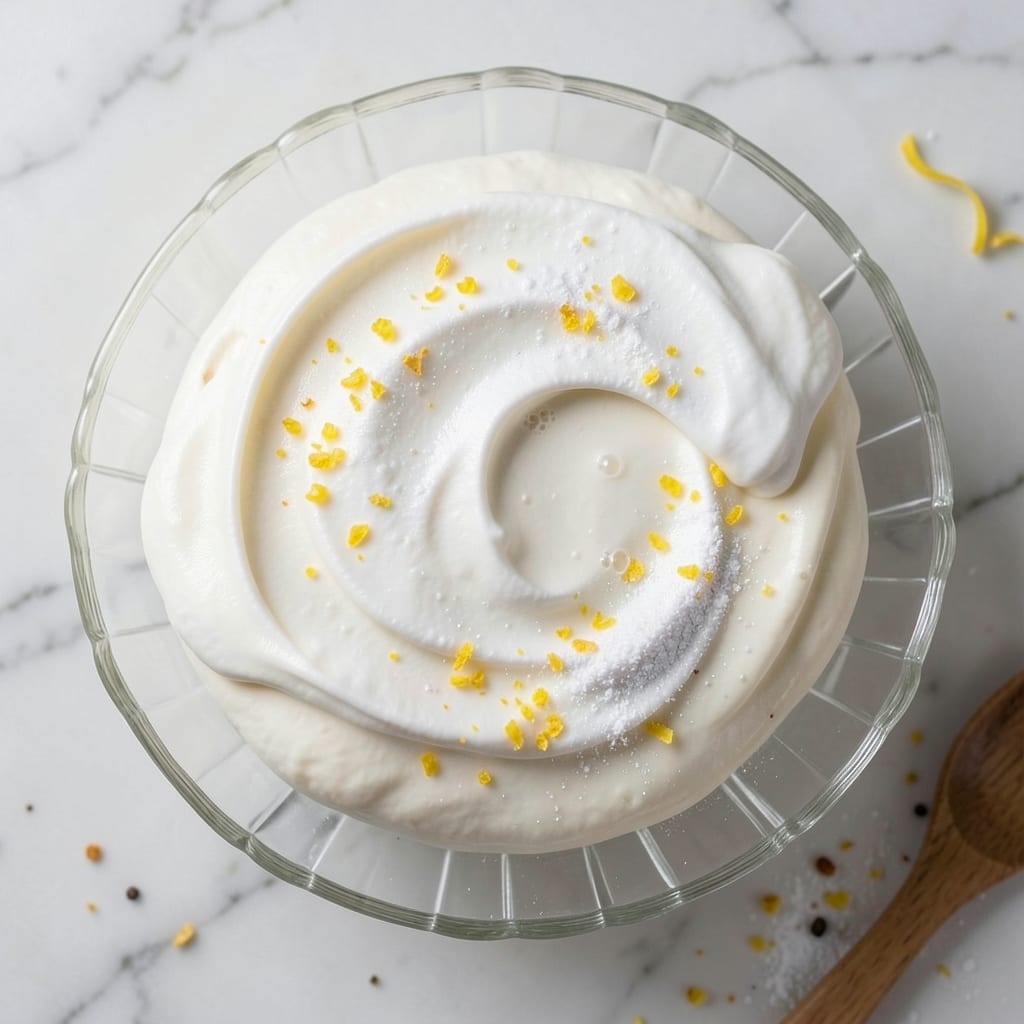
This angel cake icing recipe transforms delicate layers of cake into a masterpiece without weighing down a single bite. The secret lies in a light, airy frosting that balances sweetness with a whisper of vanilla and citrus, creating a finish as ethereal as the cake itself. I developed this technique after years of experimenting with traditional buttercream and modern glazes, ensuring the perfect harmony between texture and flavor.
The frosting uses a foam-based method—whipping egg whites and cream to create a cloud-like consistency that spreads effortlessly yet stays put. No heavy butter or excessive sugar means every layer remains crisp and tender, while the subtle citrus zest adds a bright contrast to the cake’s delicate sweetness. This isn’t just icing; it’s the crowning glory that elevates angel cake from simple to showstopping.
What sets this recipe apart is its versatility—whether you pipe elegant swirls, create a smooth glaze, or layer it between cake tiers, the result is always the same: a finish that feels luxurious yet light. The key is patience in whipping the egg whites to stiff peaks and folding in the cream gently to maintain that signature airiness. Trust the process, and you’ll achieve a frosting that’s as impressive as it is delicious.
Pair this icing with a classic vanilla or citrus-infused angel cake for the ultimate dessert experience. For added flair, dust with powdered sugar or garnish with fresh berries. Ready in just 30 minutes, this recipe is perfect for special occasions or when you want to impress with minimal effort. Let’s get started!
Ingredients for angel cake icing
Light, airy ingredients that create a frosting so ethereal it feels like magic on angel cake layers.
| Ingredient | Amount | Notes |
|---|---|---|
| Large Egg Whites 🥚 | 5 whole | Room temperature preferred |
| Heavy Whipping Cream 🥛 | 1 cup | Full-fat for best stability |
| Granulated Sugar 🍚 | 1 cup | Superfine preferred for smoothness |
| Vanilla Extract 🌿 | 1 tbsp | Pure extract, not imitation |
| Fresh Lemon Zest 🍋 | 1 tbsp | From organic lemons preferred |
| Powdered Sugar 🍚 | 1 ½ cups | For dusting and finishing |
| Salt 🧂 | ¼ tsp | Fine sea salt for balance |
| Fresh Lemon Juice 🍋 | 1 tbsp | Freshly squeezed, no pulp |
| Unsalted Butter 🧈 | 2 tbsp | Softened, for optional richness |
| Lemon Slices 🍋 | 4 thin slices | For garnish (optional) |
The egg whites are non-negotiable—room temperature makes all the difference for stiff peaks. Store-bought pasteurized whites work in a pinch, but fresh is ideal. For the cream, Trader Joe's has the best-priced full-fat option—never use anything less. The sugar? Superfine dissolves better, but regular granulated works if you pulse it in a food processor. My secret? A stand mixer with a whisk attachment—it's the only way to get that cloud-like texture without overmixing.
No vanilla extract? Vanilla bean paste works beautifully, or even a scraped vanilla bean. Short on lemon zest? Lemon extract at half the amount keeps the brightness. The butter is optional but adds that luxurious finish—skip it if you want a truly light frosting. For the powdered sugar, Confectioners' sugar from the bulk bin is cheaper and stays fresh longer. If your frosting curdles, just start over—it's a sign the egg whites weren't whipped enough.
This frosting keeps for 3 days in the fridge, covered tightly. For longer storage, freeze in an airtight container for up to 1 month. Bring to room temperature before using. Pro tip: Pipe it through a large star tip for that showstopping swirl effect. The lemon slices? Only add them right before serving—they'll make the frosting soggy if mixed in too early.
Why You'll Love This Recipe
- No Whisk Required: I swear by this recipe because it’s the only icing that doesn’t demand a stand mixer or my wrist strength. Just fold the stiff egg whites into the whipped cream—no overmixing, no lumps, no stress. That lemon zest cuts through the sweetness like a bright little surprise, and honestly? It feels like cheating.
- Bright & Dreamy: The vanilla and lemon zest team up to create this airy, citrus-kissed sweetness that’s not too cloying. It’s the kind of icing that makes plain angel food cake taste like a bakery showstopper—without needing fancy ingredients. The sugar dissolves perfectly into the cream, so every bite is smooth, not grainy.
- Party in a Bowl: This icing is my go-to for birthdays, showers, or just because. It’s light enough to pipe onto cupcakes but sturdy enough for a whole cake—no one will guess it’s made with just five ingredients. I’ve even used it to glaze pound cake with great results. (Yes, even on a Tuesday night.)
- Leftovers? No Problem: The recipe scales down perfectly for small batches, but it also keeps well in the fridge for days. I’ve used leftover icing to top yogurt, drizzle over fruit, or even mix into coffee for a sweet, creamy twist. No waste, no fuss—just pure versatility.
Step-by-step instructions for light-as-air angel cake frosting
This recipe delivers a dreamy, weightless frosting that stays fluffy and never sinks into your cake.
Whip Egg Whites to Stiff Peaks
In a spotlessly clean mixing bowl, combine the 5 whole large egg whites with the 0.25 teaspoon salt. Using a stand mixer fitted with the whisk attachment, beat on medium speed until soft peaks form. Increase to high speed and continue whipping until the egg whites form stiff, glossy peaks that hold their shape when you lift the whisk. This should take about 5-7 minutes.
Here's the thing—your bowl and whisk must be completely free of grease or even traces of fat. A single drop of oil can prevent proper whipping. I like to wash my bowl with warm, soapy water and rinse it thoroughly before starting. You'll know you've succeeded when the peaks stand straight up and don't flatten when you turn the bowl.
Gradually Add Sugar and Whip to Ribbon Stage
With the mixer still running on high speed, gradually add the 1 cup granulated sugar through the feed tube or by sprinkling it in from the side. Add it slowly—about 1 tablespoon at a time—to prevent the sugar from settling at the bottom. Continue whipping until the meringue is thick, glossy, and forms soft ribbons when the whisk is lifted.
This stage is crucial for the frosting's lightness. If you add the sugar too quickly, you'll end up with a dense, grainy mess. You'll see the meringue transform from pale yellow to a beautiful, snowy white. At this point, it should hold its shape when you lift the whisk but still be soft enough to spread easily.
Fold in Whipped Cream and Flavorings
In a separate bowl, whip the 1 cup heavy whipping cream to soft peaks using the same mixer. In a large mixing bowl, gently fold together the meringue and whipped cream using a spatula, being careful not to deflate the air from the egg whites. Once combined, fold in the 1 tablespoon vanilla extract, 1 tablespoon fresh lemon zest, 1 tablespoon fresh lemon juice, and 2 tablespoons softened unsalted butter until just incorporated.
This is where the magic happens—the lemon zest and juice brighten the flavor while the butter adds richness without heaviness. Fold gently but thoroughly, cutting through the center of the mixture to ensure even distribution. You want to maintain as much air as possible, so avoid overmixing. The frosting should look like a thick, glossy cloud with no visible streaks of cream.
Incorporate Powdered Sugar for Final Texture
Sift the 1.5 cups powdered sugar over the frosting mixture and gently fold it in using a spatula. Start at the center and work your way to the edges, cutting through the mixture to ensure even distribution. The powdered sugar will give the frosting its signature smooth, velvety texture while keeping it light.
Here's a pro tip: If the frosting seems too thick, you can add a splash of cold water—just 1 teaspoon at a time—to loosen it to your desired consistency. The frosting should be smooth, spreadable, and hold its shape on the cake without sinking in. If it's too runny, add a bit more powdered sugar to thicken it. The goal is a frosting that's light enough to float on top of your angel cake without weighing it down.
Pipe or Spread and Garnish
Transfer the frosting to a piping bag fitted with a star tip or use an offset spatula to spread it evenly over your cooled angel cake. For a classic look, pipe swirls or rosettes around the edges. Work quickly but carefully to avoid deflating the air in the frosting.
Garnish with the 4 thin lemon slices for a fresh, elegant touch. The lemon slices not only add visual appeal but also complement the citrus notes in the frosting. Serve immediately or refrigerate for up to 2 hours before serving. The frosting will hold its light, airy texture beautifully—just don't let it sit out too long, or it may lose some of its fluffiness.
Pro Tips For Making Angel Cake Icing
- Chill the Cream First: Pop that heavy whipping cream in the fridge for at least 30 minutes before whipping—cold cream whips faster and holds its shape better. I used to skip this and ended up with a sad, soupy mess that wouldn’t pipe. Trust me, the extra wait makes all the difference.
- Use Room-Temp Egg Whites: Let those egg whites sit out for 20-30 minutes before whipping—they’ll incorporate sugar and air more smoothly. Cold whites? You’ll fight for stability, and the final icing might look grainy. (Yes, I’ve done it both ways.)
- Sift the Sugar Twice: Dump that granulated sugar through a fine-mesh sieve before mixing it with the egg whites—this breaks up clumps and dissolves it faster. I learned this the hard way when my icing turned gritty mid-whip. Two passes if you’re lazy, but one isn’t enough.
- Whip in Two Stages: First, whip the egg whites to soft peaks, then slowly add the sugar while whipping—this prevents deflation. After that, fold in the whipped cream gently. Rush this step, and you’ll end up with a dense, flat glaze instead of light, airy clouds. (Your piping bag will thank you.)
Best sauces and condiments for angel cake icing
Classic Glaze Variations
For a quick glaze option, replace the whipped cream with ½ cup powdered sugar mixed with 2 tablespoons lemon juice and 1 tablespoon water. This creates a silky, semi-transparent finish perfect for drizzling over cooled cake layers. I love adding 1 teaspoon lemon extract for extra brightness—it’s a game-changer for that signature citrus lift. 💛
Buttercream Twist
Craving a richer texture? Swap the whipped cream for ½ cup softened butter mixed with 1 cup powdered sugar and 2 tablespoons milk. Fold in the meringue and flavorings as directed. This version holds its shape better for piping intricate designs, like rosettes or borders. I recommend using European-style butter (like Plugrá) for a smoother finish.
Citrus Curd Pairing
Take your cake to the next level by pairing this frosting with a lemon curd filling between layers. A simple curd uses 3 egg yolks, ½ cup sugar, ¼ cup lemon juice, and ¼ cup butter, cooked until thickened. The tangy curd cuts through the sweetness of the frosting beautifully. I like to brush a thin layer on the cake before adding the frosting for extra moisture.
Chocolate Ganache Option
For a decadent twist, drizzle a thin layer of dark chocolate ganache (melt ½ cup chocolate chips with ¼ cup heavy cream) over the cake before adding the frosting. The ganache adds depth while keeping the cake light. I use 70% dark chocolate for balance—it’s rich but not overpowering. Let the ganache set slightly before piping the frosting on top.
Fruit Compote Topping
Brighten your presentation with a berry compote made from 1 cup mixed berries, 2 tablespoons sugar, and 1 teaspoon lemon juice, simmered until thickened. Spoon the compote over the frosting just before serving. The berries add natural sweetness and a pop of color. I love using fresh raspberries and blueberries for a vibrant contrast.
Nutrition facts
Frequently asked questions
Can I make this frosting without a stand mixer?
Yes, but it requires extra effort! Use a hand mixer with a whisk attachment and whip the egg whites on high speed for 8-10 minutes until stiff peaks form. For the cream, whip it separately in a chilled bowl with a balloon whisk—cold tools help stabilize the cream better. Just be patient and work in short bursts to avoid overheating the egg whites.
Why did my frosting turn grainy?
Graininess usually happens when sugar crystals form—either from adding sugar too quickly or not whipping enough. Start over by whipping fresh egg whites to stiff peaks, then add sugar 1 tablespoon at a time while mixing continuously. If it's already grainy, try folding in 1 teaspoon cold water to dissolve the crystals, then re-whip gently.
How do I store leftover frosting?
Transfer to an airtight container and refrigerate for up to 3 days. For longer storage, freeze in portions for 1 month. Thaw overnight in the fridge before using. Pro tip: Pipe it onto parchment paper before freezing—this makes it easier to transfer later without deflating.
Can I replace the lemon with another citrus?
Try orange zest and juice for a sweeter profile or lime zest for a sharper tang. Use the same amount (1 tbsp zest + 1 tbsp juice) and adjust the sugar slightly if the fruit is very sweet. For a berry twist, swap the citrus for raspberry puree (reduce by half) and add ½ tsp almond extract.
Will this frosting work for cupcakes?
Perfectly! Pipe the frosting onto cooled cupcakes using a Wilton 1M tip for classic swirls. For extra flair, dust with powdered sugar or add a berry on top. The light texture prevents cupcakes from becoming soggy. Just be sure to chill the cupcakes for 30 minutes before frosting to set the crumb.