
Desserts
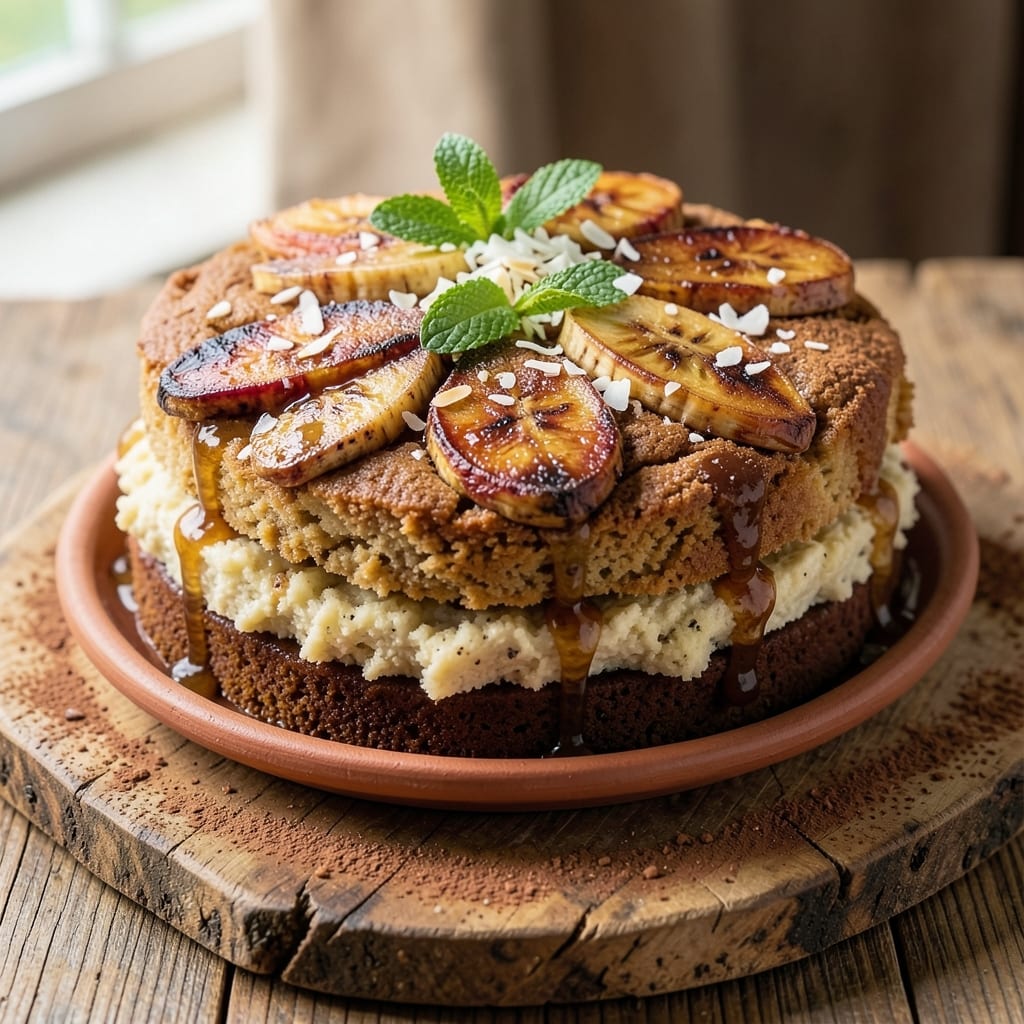
This banana cake recipe from Cameroon blends West African warmth with tropical sweetness, using ripe plantains and aromatic spices for a dessert that’s rich yet light. 🌟 Unlike traditional banana bread, this version incorporates cassava flour and a hint of palm oil, creating a moist, slightly dense texture that’s both comforting and unique to the region.
The secret lies in balancing ripe plantains with ripe bananas—plantains add natural sweetness and a subtle caramelized depth when baked, while bananas keep the cake tender. Traditional Cameroonian spices like nutmeg and cinnamon infuse warmth, and a touch of vanilla elevates the flavor profile without overpowering the natural tropical notes.
What you’ll end up with is a golden, fragrant cake with a soft crumb and a hint of spice, perfect for brunch or dessert. Serve it warm with a cup of strong coffee or chilled hibiscus tea to balance the richness, or pair it with a side of fried plantains for a true Cameroonian experience.
This recipe stays true to its roots while adapting for home kitchens—no special equipment needed, just a few key ingredients and patience for the baking process. The result? A cake that tastes like a taste of home, whether you’re celebrating a special occasion or simply craving something familiar.
Ingredients for banana cake recipe cameroon
Ripe plantains and bananas meet West African spices for a fragrant, moist cake with cassava flour and palm oil.
| Ingredient | Amount | Notes |
|---|---|---|
| Ripe Plantains 🍌 | 2 cups | Mashed, slightly caramelized |
| Ripe Bananas 🍌 | 2 whole | Mashed, no brown spots |
| Cassava Flour 🌾 | 1 ½ cups | Fine, sifted for texture |
| All-Purpose Flour 🌾 | 1 cup | For structure and rise |
| Granulated Sugar 🍚 | 1 cup | Light brown preferred |
| Palm Oil 🫒 | ½ cup | Unrefined, for authentic flavor |
| Ground Nutmeg 🌿 | 1 tsp | Freshly grated preferred |
| Ground Cinnamon 🌿 | 1 ½ tsp | Warm, aromatic variety |
| Pure Vanilla Extract 🌸 | 1 tbsp | High-quality, no alcohol |
| Baking Powder 🧂 | 1 ½ tsp | Aluminum-free for stability |
| Salt 🧂 | ½ tsp | Fine sea salt preferred |
| Large Eggs 🥚 | 2 whole | Room temperature for blending |
| Milk 🥛 | ½ cup | Whole milk for richness |
| Honey 🍯 | 2 tbsp | Local, unprocessed preferred |
The plantains and bananas are the heart of this cake—ripe is key. Look for plantains with black skin and firm flesh (they’ll caramelize beautifully), and bananas that are soft but not mushy. African markets or specialty grocery stores like Whole Foods often carry plantains, but regular grocery stores usually have them too. Cassava flour can be found in the international aisle or online—Bob’s Red Mill carries it if you’re in a pinch. Palm oil is non-negotiable for that authentic flavor; grab the unrefined version at African markets or Amazon if your local store doesn’t stock it. The spices? Penzeys for nutmeg and cinnamon if you want to splurge, but the regular grocery store stuff works fine.
No ripe plantains? Substitute with mashed sweet potatoes—they’ll add moisture and natural sweetness, though the flavor won’t be identical. Running low on cassava flour? Half all-purpose, half tapioca starch mimics its texture. Palm oil hard to find? Coconut oil at half the amount works in a pinch, though it’ll lack that distinct West African note. The honey can be swapped for maple syrup or agave, but honey adds a subtle floral depth. For the eggs, flax eggs (1 tbsp ground flax + 3 tbsp water per egg) work if you’re avoiding them, though the texture will be slightly denser. The milk can be any kind—almond or oat milk if you prefer dairy-free, but whole milk gives the best richness.
This cake keeps well for 3-4 days in an airtight container at room temperature, though it’s best enjoyed fresh. For longer storage, wrap tightly in plastic and refrigerate for up to 1 week. Freeze portions for 3 months—thaw overnight in the fridge before serving. The plantain-banana mash can be prepped ahead and stored in the fridge for 2 days, saving you time on baking day. Serve warm with a dusting of cinnamon or a drizzle of honey for that true Cameroonian touch.
Why You'll Love This Recipe
- No Chopping Chaos: I swear by this recipe because you only need to mash the plantains and bananas—no peeling, no slicing, just smooth, sweet puree ready to go. The cassava flour handles the texture like a dream, so you’re not stuck measuring or sifting.
- Sweet-Savory Magic: That caramelized plantain edge? It’s where it’s at. The ripe bananas add natural sweetness, but the cassava flour gives it this subtle, earthy depth that makes every bite feel special. Honestly, it’s the kind of cake that disappears faster than you can say “second slice.”
- Weeknight or Party Star: Make it for breakfast, dessert, or even a quick snack—this cake is that adaptable. Between us, I’ve served it at family gatherings and had my kids beg for it on school nights. The best part? It keeps well for days, so you’re never stuck scrambling for something to feed a crowd.
- Budget-Friendly Stretch: Plantains and bananas are often cheaper than regular baking ingredients, and cassava flour lasts forever. I’ll be real: this recipe has saved me money more times than I can count, especially when I’m buying in bulk. Plus, leftovers reheat beautifully—just a quick zap in the microwave, and it’s like it was fresh-baked.
Step-by-step instructions for West African spice banana cake
This moist, aromatic cake blends Cameroon's signature flavors with tender plantain and banana. Follow these steps for perfect texture and rich spice notes.
👨🍳 Step 1: Caramelize Plantains and Mash Bananas
Heat a large skillet over medium heat and add the 2 cups ripe plantains, cut into ½-inch chunks. Cook for 4-5 minutes until golden brown spots appear and they release natural caramelized sugars. This step adds depth of flavor that plain mashed plantains can't match.
Transfer the caramelized plantains to a mixing bowl and mash with a potato masher or fork until smooth. In a separate bowl, mash the 2 whole ripe bananas until completely free of lumps—no brown spots should remain. Set both mixtures aside until ready to combine. The bananas should be creamy with no resistance when mashed.
🍳 Step 2: Whisk Wet Ingredients for Smooth Batter
In a large mixing bowl, combine the mashed plantains and bananas with the 0.5 cup palm oil, 0.5 cup milk, 2 tbsp honey, and 1 tbsp pure vanilla extract. Whisk vigorously for 2 minutes until the palm oil fully emulsifies and the mixture becomes smooth and glossy.
Add the 2 whole large eggs one at a time, whisking well after each addition until fully incorporated. The batter should thicken slightly but remain pourable. This is where the cake's rich, moist texture begins to develop—don't rush this blending process.
👨🍳 Step 3: Sift Dry Ingredients for Light Texture
In a separate medium bowl, sift together the 1.5 cups cassava flour, 1 cup all-purpose flour, 1 cup granulated sugar, 1.5 tsp baking powder, 0.5 tsp salt, 1.5 tsp ground cinnamon, and 1 tsp ground nutmeg. The cassava flour gives this cake its signature tender crumb while the all-purpose flour provides structure.
Gently fold the dry ingredients into the wet mixture using a spatula, mixing just until combined. Avoid overmixing—you should still see small flour streaks. The batter will be thick but not stiff, similar to brownie batter. This careful folding preserves the cake's airy texture.
🔥 Step 4: Bake Until Golden and Springy
Preheat your oven to 350°F and grease an 8-inch round cake pan or line it with parchment paper. Pour the batter into the prepared pan and smooth the top with a spatula. Bake for 40-45 minutes until a toothpick inserted in the center comes out clean and the top springs back when pressed gently.
The cake should have a deep golden brown color with slight cracking on the surface—this indicates proper caramelization from the plantains. If the top browns too quickly, tent loosely with aluminum foil after 25 minutes to prevent over-browning while maintaining even cooking.
⏰ Step 5: Cool and Serve with Warm Spiced Glaze
Remove the cake from the oven and let it cool in the pan for 10 minutes, then transfer to a wire rack to cool completely. For an authentic Cameroon touch, prepare a simple glaze by heating 2 tbsp honey with 1 tbsp milk and ½ tsp ground cinnamon in a small saucepan until smooth. Drizzle over the cooled cake.
Slice into 8 equal wedges and serve warm or at room temperature. The cake should be moist with a slightly dense but tender crumb, and the plantain flavor should shine through with warm cinnamon and nutmeg notes. Each bite should reveal the caramelized plantain sweetness balanced by the cake's subtle spice complexity.
Pro Tips For Making Banana Cake Recipe Cameroon
- MASH THE PLANTAINS WELL: Skip the blender if you want that classic Cameroon texture—hand-mash the ripe plantains with a fork until you’ve got no lumps left. I learned this the hard way: blending leaves tiny chunks that don’t soften properly during baking, and the cake ends up chewy instead of tender.
- BAKE UNTIL GOLDEN, NOT JUST SET: Pull the cake when the edges look golden and a toothpick comes out with moist crumbs, not wet batter. I used to take it out too soon—it’d look done but taste undercooked. Let it sit 5 minutes before slicing, or the crumb will fall apart.
- SIFT THE FLOUR MIX: Cassava flour is dense, and if you don’t sift it with the all-purpose flour, you’ll end up with a cake that’s dense and heavy. Just a quick sift before mixing makes a real difference—think lighter, fluffier layers.
- REDUCE SUGAR BY 2 TABLESPOONS: The ripe bananas and plantains are already sweet—cutting back on sugar by a quarter keeps the cake from tasting cloying. Trust me, your taste buds will thank you, especially if you’re using very ripe fruit.
Common mistakes when making perfect results
Overmixing the Batter
This is the #1 culprit behind a dense, rubbery cake. When you overmix the batter, you develop too much gluten in the cassava and all-purpose flour, which creates a tough texture instead of that tender crumb we want. I’ve seen people whip this batter for 5 minutes or more—stop as soon as you see just a few small streaks of flour remaining. The ideal consistency should be thick but still pourable, like brownie batter. 🌟
Skipping the Caramelization Step
Those golden brown spots on your plantains aren’t just for show—they’re where the natural sugars caramelize, adding deep, complex flavor to the cake. If you skip this step or rush it by only cooking the plantains for 2-3 minutes, your cake will taste flat and one-dimensional. Take your time here—4-5 minutes of even cooking over medium heat makes all the difference.
Using Underripe Plantains
This is where many home cooks go wrong. Underripe plantains (green with firm flesh) will make your cake taste starchy and unpleasant. You want plantains that are black-skinned but still firm to the touch—they’ll caramelize beautifully and add natural sweetness. If you’re in a pinch, you can use slightly overripe plantains (soft with brown spots), but avoid anything mushy or fermented. 🍌
Incorrect Oven Temperature
Baking at the wrong temperature throws off the entire cake. If your oven runs 25°F hotter or colder than 350°F, you’ll end up with either a dense, underbaked center or a burnt exterior. Always preheat your oven for at least 15 minutes and use an oven thermometer to confirm accuracy. I’ve had cakes fail because the oven wasn’t hot enough—don’t skip this step!
Not Enough Resting Time
Freshly baked cakes need time to set properly. If you slice into this cake too soon (within 10 minutes of baking), the layers will fall apart and the crumb will be gummy. Let it cool in the pan for 10 minutes, then transfer to a wire rack to cool completely. This resting time allows the moisture to distribute evenly, giving you that perfect tender texture. ✨
Substituting Palm Oil
Palm oil isn’t just a fat—it’s the soul of this cake. If you replace it with coconut oil, vegetable oil, or butter, you’ll lose that rich, slightly earthy flavor that’s characteristic of Cameroonian desserts. Unrefined red palm oil is ideal, but even the yellow version adds depth. For the best results, stick with palm oil, or at least use half coconut oil if you’re in a bind—but expect a slightly different flavor profile.
Nutrition facts
Frequently asked questions
Can I make this cake without cassava flour?
Yes, but the texture will differ. Replace 1 cup cassava flour with a mix of ½ cup all-purpose flour and ½ cup tapioca starch for a similar tender crumb. The cake will be slightly less moist, but still delicious. For a gluten-free option, use 1.5 cups almond flour and add 1 extra egg to bind the batter.
How do I know when plantains are ripe enough?
Look for plantains with black skin and firm flesh—they should yield slightly when pressed but not be mushy. Avoid green plantains (too starchy) or overly soft ones (they’ll make the cake gummy). If you can’t find ripe plantains, use 2 extra ripe bananas (mashed) plus ½ cup unsweetened applesauce as a substitute.
Can I bake this cake in a different pan size?
Yes, but adjust baking time. For a 9-inch round pan, bake 35-40 minutes (check at 30 minutes). For a loaf pan (8x4 inches), bake 50-55 minutes. Always use a toothpick test—it should come out clean. Line pans with parchment paper for easy removal and even baking.
What’s the best way to store leftover cake?
Wrap tightly in plastic wrap and store at room temperature for 2-3 days or refrigerate for 5-7 days. For longer storage, freeze slices in an airtight container for up to 3 months. Thaw overnight in the fridge. The cake’s moisture makes it perfect for toasting—pop slices in the oven at 300°F for 5-7 minutes to revive texture.
Why does my cake taste bland?
This usually means the spices or palm oil were underused. Double-check your nutmeg and cinnamon amounts—too little can mute the West African flavors. For extra depth, add ½ tsp ground cloves or a pinch of cardamom. Also ensure you used unrefined palm oil (refined lacks flavor). A final drizzle of honey or caramelized plantain syrup can enhance sweetness too!