
Desserts
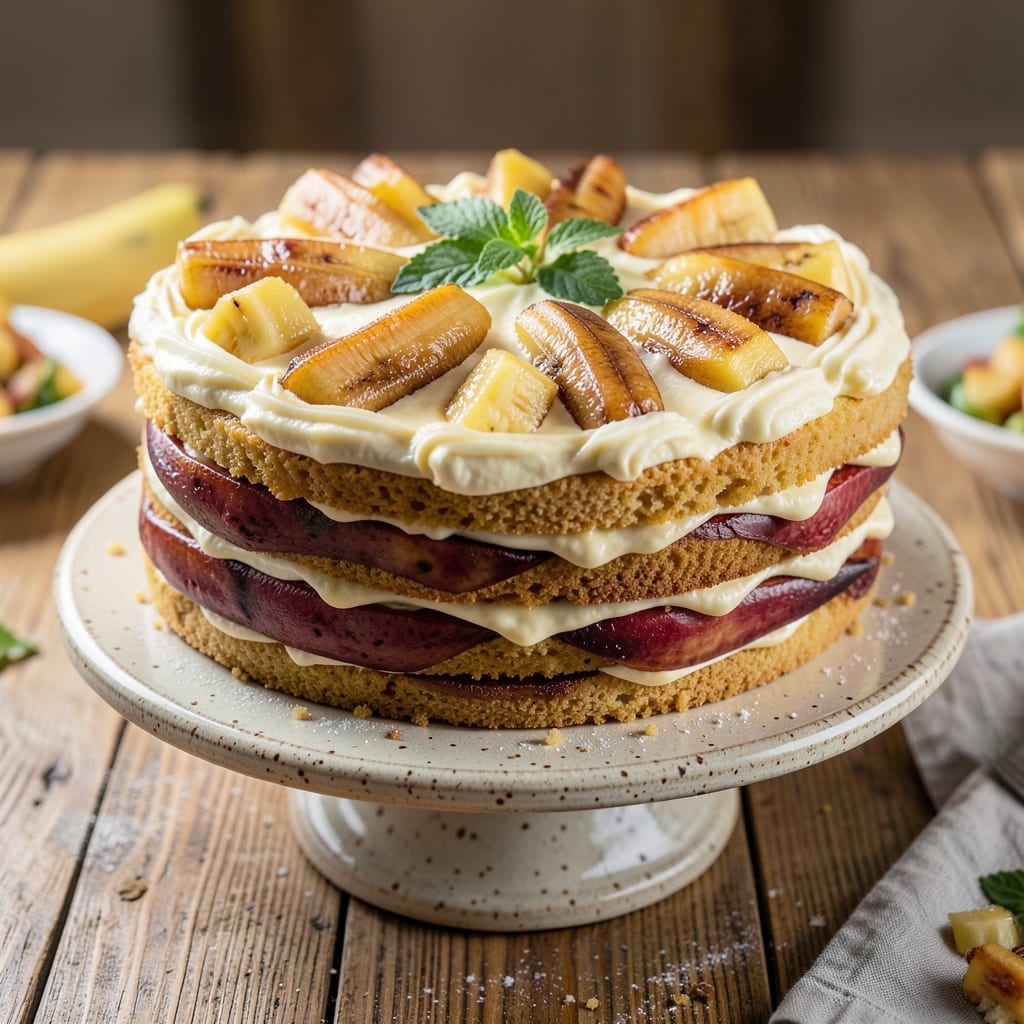
This banana cake Pinoy cooking recipe transforms ripe bananas into layers of caramelized sweetness with a signature buttery ube swirl—no box mix needed. 💛 The secret lies in blending ripe plantains with the cake batter for extra moisture and depth, while the ube (purple yam) adds that signature Filipino flavor. This recipe delivers a tender crumb with moist layers and a swirl so rich it’ll have everyone asking for seconds.
What makes this cake special is the balance of textures: soft, moist layers from the bananas and plantains, contrasted by the creamy ube swirl that cuts through like a ribbon of sunshine. The recipe uses simple pantry staples—flour, sugar, eggs, and coconut milk—while the caramelized banana topping adds a restaurant-worthy finish. Perfect for birthdays, potlucks, or when you crave something sweet without the fuss.
Baking time is just 45 minutes at 350°F, but the prep is where the magic happens. Ripe bananas and plantains get mashed into the batter, while the ube swirl is piped between layers for that signature look. The result? A cake that’s moist, flavorful, and impossible to resist—Filipino comfort food at its finest. Let’s get baking!
This recipe works with ripe bananas (the sweeter, the better) and can be made ahead for even better flavor. Serve warm with vanilla ice cream or dusted with powdered sugar for a showstopping dessert. Here’s everything you need to recreate this Pinoy classic at home.
Ingredients for banana cake pinoy cooking
Filipino baking staples meet tropical sweetness in this layered banana cake with signature ube swirl.
| Ingredient | Amount | Notes |
|---|---|---|
| Ripe Bananas 🍌 | 1 ½ cups | Mashed, medium-sized bananas |
| Ripe Plantains 🍌 | 1 cup | Mashed, for moisture depth |
| All-Purpose Flour 🌾 | 2 ½ cups | Sifted, for tender crumb |
| Granulated Sugar 🍚 | 1 ½ cups | White or brown preferred |
| Large Eggs 🥚 | 3 whole | Room temperature for blending |
| Unsalted Butter 🧈 | 1 cup | Melted, full-fat for richness |
| Coconut Milk 🥥 | 1 cup | Full-fat canned, for ube swirl |
| Ube Halaya 💜 | ½ cup | Store-bought or homemade |
| Baking Powder 🧂 | 2 tsp | Diamond Crystal preferred |
| Vanilla Extract 🌿 | 1 tsp | Pure, for aromatic depth |
| Salt 🧂 | ½ tsp | Fine sea salt preferred |
| Powdered Sugar 🍚 | ½ cup | For caramelized banana topping |
| Cinnamon 🌶️ | 1 tsp | Ground, for warm spice note |
The bananas and plantains are the heart of this cake—ripe and speckled means naturally sweet, no added sugar needed. Grab medium-sized bananas (about 3-4) that yield roughly 1.5 cups mashed. For plantains, look for blackened skins—they’re sweeter and softer. Trader Joe's and Asian markets often carry ripe plantains year-round. The ube halaya? Filipino markets sell it pre-made, or you can find it frozen in the international aisle. If using store-bought, check for no artificial colors—real ube should be a deep purple, not neon.
No ripe plantains? Substitute with extra bananas—just reduce the sugar slightly. The ube halaya can be tricky to find, but purple sweet potato puree works in a pinch (though the flavor will differ). For the coconut milk, full-fat canned gives the best texture—light versions won’t swirl properly. The baking powder is critical here; Diamond Crystal measures differently than other brands, so if your recipe calls for 2 tsp, use 1.5 tsp instead. Prefer a lighter cake? Swap half the all-purpose flour for cake flour, but the texture will be slightly less sturdy.
Mashed bananas and plantains oxidize fast—prep them last and keep covered until ready to mix. The ube swirl keeps for 3 days in the fridge if stored in an airtight container with plastic wrap pressed directly on the surface. For make-ahead baking, assemble the cake layers 24 hours ahead and refrigerate—this actually enhances the ube flavor. The caramelized banana topping can be made 1 day in advance and reheated gently before serving. Freeze individual layers (without frosting) for up to 3 months for impromptu desserts.
Why You'll Love This Recipe
- No Mash Required: I swear by this trick—just slice those ripe bananas and plantains thin, then toss them in boiling water for 2 minutes. They soften instantly, no sticky mess, and the syrup from the water? I pour it right into the batter for extra moisture. Honestly, the easiest prep I’ve ever used for cake.
- Sweet Caramel Crunch: That plantain adds a deep, almost butterscotch-like richness you won’t find in regular banana bread. And when you bake it just until the edges are golden? The top develops this irresistible crispy crust—like a cross between cake and a soft cookie. (Yes, even on a Tuesday night.)
- Breakfast or Dessert: Serve it warm with a dusting of powdered sugar for a lazy weekend brunch, or slice it cold for after-school snacks. My kids ask for it more than cake or toast—because it’s both. Plus, it’s the only dessert I let them bake themselves (they’re terrible at measuring, but this recipe forgives).
- Pantry Staples Only: No fancy ingredients, no last-minute store runs. You’re using what’s already there: overripe fruit that’d otherwise go bad, basic flour, and eggs. I made three of these last month using bananas from my freezer—turned $2 worth of groceries into 12 servings. Budget-friendly doesn’t get better than this.
Step-by-step instructions for banana cake with ube swirl
Here's how to create layers of caramelized banana perfection with a velvety ube swirl—every bite delivers rich texture and tropical flavor.
👨🍳 Step 1: Prepare the Banana-Plantain Purée
In a medium bowl, combine the 1.5 cups ripe bananas and 1 cup ripe plantains. Mash them thoroughly with a fork until completely smooth—no lumps should remain. The purée should be thick but pourable. I like to press the fruit through a fine-mesh sieve for extra-smooth texture, though a fork works fine for most home kitchens.
Set the purée aside while you prepare the dry ingredients. The bananas and plantains provide natural sweetness and moisture, so don't skip this foundational step. If your purée is too thick, add 1 tablespoon coconut milk to loosen it slightly before proceeding—this ensures even distribution in the batter.
🍳 Step 2: Mix Wet Ingredients and Create the Ube Swirl
In a separate large bowl, melt the 1 cup unsalted butter in the microwave for 30-45 seconds, then let it cool slightly. Add the 1.5 cups granulated sugar, 3 whole large eggs, 1 cup coconut milk, 1 tsp vanilla extract, and 0.5 tsp salt. Whisk vigorously for 2-3 minutes until the mixture is light and airy—this incorporates air for a tender crumb.
In a small bowl, mix the 0.5 cup ube halaya with 1 tablespoon coconut milk until smooth. This will be your swirl. For the swirl technique, divide the wet mixture into three equal portions. Set one portion aside for the final layer, and mix the remaining ube halaya into one portion for the middle layer.
👨🍳 Step 3: Combine Dry Ingredients and Layer the Batter
Sift the 2.5 cups all-purpose flour and 2 tsp baking powder into the wet mixture. Gently fold with a spatula until just combined—overmixing develops gluten and makes the cake dense. The batter should be thick but pourable. Grease and line three 8-inch round cake pans with parchment paper for easy removal.
Pour one-third of the plain batter into the first pan, spreading evenly. Drizzle half of the remaining ube mixture over the batter, then add another third of the plain batter. Top with the final third of plain batter and swirl gently with a knife. Repeat for the remaining pans, reserving the last portion of ube mixture for the final layer.
🔥 Step 4: Bake Until Golden and Springy
Preheat your oven to 350°F. Place the pans on the middle rack and bake for 25-30 minutes, or until a toothpick inserted in the center comes out clean and the edges are golden brown. Rotate the pans halfway through baking for even browning. The cakes should spring back slightly when pressed—they'll continue setting as they cool.
Let the cakes cool in the pans for 10 minutes, then transfer to a wire rack. While still warm, brush the tops with a mixture of 0.5 cup powdered sugar and 1 tsp cinnamon dissolved in 2 tablespoons coconut milk for a caramelized finish. This step adds a sweet, aromatic crust that complements the rich banana layers.
🥘 Step 5: Assemble and Serve
Once completely cooled, place one cake layer on a serving plate. Spread a thin layer of the reserved ube mixture over the top, then add the second layer. Repeat with the final layer and remaining ube mixture. Dust the top and sides with additional powdered sugar and a pinch of cinnamon for presentation.
Slice with a serrated knife for clean layers. The contrast of moist banana cake, creamy ube swirl, and buttery crust creates a harmonious texture with each bite. Serve at room temperature for the best experience—this cake tastes even better the next day as the flavors meld.
Pro Tips For Making Banana Cake Pinoy Cooking
- Mash Until Smooth: The bananas and plantains should be completely broken down—no lumps, no resistance. I used to hit this step halfway and wondered why my cake turned out dense. Use a fork first, then a potato masher or wooden spoon until it’s like thick pudding. (Yes, it’s tedious, but trust me.)
- Preheat Pan to 350°F: This isn’t just a formality—it’s how you get that signature golden crust without burning the top. I learned this the hard way after pulling out a cake that was raw in the middle but charred on the edges. Give the oven 10-15 minutes to heat up fully, and use an oven thermometer if yours lies.
- Skip Overmixing the Batter: Once you fold in the flour, stop stirring after just combining. Overmixing develops gluten, and that’s how you end up with a tough, chewy cake instead of the tender, moist texture this recipe promises. Mix until barely uniform—lumps are fine.
- Use Brown Sugar for Depth: Swap half the granulated sugar for light brown sugar. The molasses in brown sugar adds a subtle caramel note that cuts through the sweetness of the bananas and plantains. I was skeptical until I tried it—now it’s non-negotiable for me. (And yes, it’s worth the extra 30 seconds to measure it out.)
Common mistakes when making great banana cake pinoy cooking
Overmixing the Batter
This is the #1 mistake I see with banana cakes—the temptation to mix until smooth. But overmixing develops gluten, creating a tough, dense crumb instead of that tender, moist texture we want. Once you've combined the wet and dry ingredients, stop mixing as soon as everything is just incorporated. The batter should look thick but still pourable—think "lumpy but smooth," not "smooth and stretchy." 💛
Skipping the Ube Swirl Prep
Many home bakers try to shortcut the swirl by just pouring the ube mixture on top after baking, but that misses the magic. The swirl needs to be piped between layers while the batter is still wet so it fully integrates with the cake. I recommend dividing your wet mixture into three portions before adding the ube—this ensures even distribution and that signature marbled look. Trust me, the effort is worth it!
Underripe Bananas/Plantains
Using underripe fruit makes your cake taste bland and dry. Look for bananas with brown speckles and plantains with blackened skins—they're naturally sweeter and softer. If you must use slightly underripe fruit, mash it extra well and add 1 extra tablespoon of sugar to compensate. The texture difference is night and day when you nail the ripeness. 🍌
Incorrect Baking Time
Taking the cake out too early is a common mistake—especially when the edges look golden but the center still jiggles. Always check with a toothpick: it should come out with a few moist crumbs, not wet batter. For this recipe, 25-30 minutes at 350°F is perfect. If your oven runs hot, start checking at 22 minutes to avoid overbaking and dry layers.
Forgetting to Cool Properly
I've seen too many people try to slice their cake immediately after baking, leading to crumbly layers. Let the cakes cool in their pans for 10 minutes first, then transfer to a wire rack to cool completely. This allows the layers to set properly so they slice cleanly. Patience here makes all the difference for that perfect presentation. ⏰
Neglecting the Caramelized Topping
The powdered sugar-cinnamon topping isn't just decoration—it adds that restaurant-quality finish that makes this cake special. Don't skip brushing the warm cakes with the sugar mixture! Dissolve the 0.5 cup powdered sugar and 1 tsp cinnamon in 2 tablespoons coconut milk first for a smooth application. This step creates that beautiful caramelized crust that enhances every bite.
Nutrition facts
Frequently asked questions
Can I substitute regular bananas for plantains in this recipe?
You can, but the texture will differ slightly. Use 2 cups ripe bananas instead of 1.5 cups bananas + 1 cup plantains and reduce the sugar by 1 tablespoon since plantains add natural sweetness. For extra moisture, add 1 tablespoon coconut milk to the batter.
How do I know when my bananas and plantains are ripe enough?
Look for bananas with brown speckles and plantains with blackened skins. These indicate natural sweetness and softness. If your fruit isn't ripe, place it in a paper bag with an apple for 1-2 days to speed up ripening.
Can I make this cake in a single layer instead of three?
Use a 9-inch round pan and bake for 35-40 minutes at 350°F. Swirl the ube mixture directly into the batter before pouring into the pan. The flavor will be just as rich—just the presentation changes!
Why did my cake turn out dense instead of moist?
Overmixing or underripe fruit are common culprits. Always stop mixing once ingredients are just combined, and use properly ripe bananas/plantains. For extra moisture, try adding 2 tablespoons sour cream or yogurt to the batter.
How long will this cake keep, and can I freeze it?
Store at room temperature for 3 days or refrigerate for 5 days. For freezing, wrap individual layers tightly in plastic wrap, then place in a freezer bag. Thaw overnight in the fridge—best reheated for 10 seconds in the microwave before serving.