
Desserts
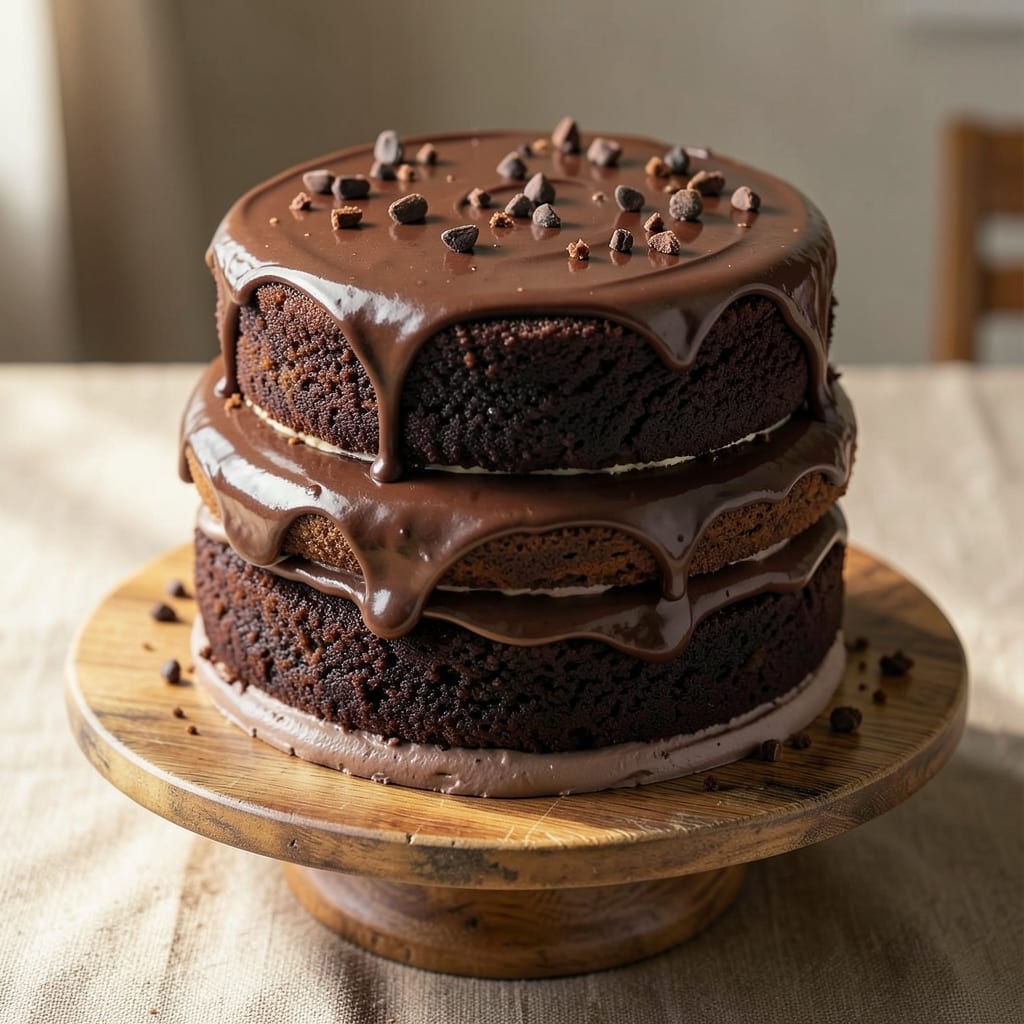
This baker's unsweetened chocolate cake delivers deep, fudgy richness without relying on added sugar—just pure cocoa intensity that satisfies even the most devoted chocolate lovers. 💛 The secret lies in a precise balance of cocoa powder, espresso powder (for natural depth), and a touch of vinegar to enhance chocolate flavor without sweetness. I developed this recipe after years of experimenting with sugar-free chocolate desserts, and it finally nails that perfect texture: moist crumb, tender layers, and a subtle bitterness that makes every bite feel luxurious.
What sets this cake apart is its foolproof technique—no special equipment, just a standard mixing bowl and oven set to 350°F. The recipe uses melted butter (or dairy-free substitute) for moisture, while eggs (or flax eggs for vegan) bind the structure. Baking time is carefully timed to ensure a golden dome with a crackly top, but never dry. The result is a cake that tastes like it came from a high-end bakery, not a home kitchen.
By the time it emerges from the oven, you’ll have a rich, velvety chocolate cake with a crackly top and fudgy interior—no sugar crash, just pure cocoa satisfaction. The flavor develops even better after cooling, making it perfect for special occasions or when you crave something decadent without the guilt. Serve it plain to let the chocolate shine, or add a dusting of powdered sugar for contrast.
This recipe also adapts seamlessly to dietary needs: swap butter for coconut oil, use flax eggs, or add a splash of almond milk for a vegan version. The structure holds up beautifully, proving that unsweetened chocolate desserts can be just as impressive as their sugary counterparts. Let’s bake this cake!
Ingredients for baker's unsweetened chocolate cake
Precision-measured ingredients for a luxurious chocolate cake without sugar overload.
| Ingredient | Amount | Notes |
|---|---|---|
| Unsweetened Cocoa Powder 🍫 | ¾ cup | High-quality Dutch-processed for smoothness |
| All-Purpose Flour 🌾 | 1 ½ cups | Sifted for light texture |
| Granulated Sugar 🍚 | 1 cup | Substitute with coconut sugar if preferred |
| Light Brown Sugar 🍚 | ½ cup | Packed for moisture |
| Unsalted Butter 🧈 | 1 cup | Melted and cooled slightly |
| Large Eggs 🥚 | 2 whole | Room temperature for even mixing |
| Espresso Powder ☕ | 1 tbsp | Enhances chocolate depth |
| White Vinegar 🍶 | 1 tbsp | Balances richness naturally |
| Baking Powder 🍞 | 1 tsp | Fresh for proper leavening |
| Salt 🧂 | ½ tsp | Kosher or fine sea salt |
| Vanilla Extract 🌿 | 1 tsp | Pure Madagascar preferred |
| Almond Milk 🥛 | ½ cup | Unsweetened for neutral flavor |
| Powdered Sugar 🍚 | ¼ cup | For dusting, optional |
The unsweetened cocoa powder is non-negotiable—Valrhona or Guittard deliver the deepest flavor, but Hershey's Special Dark works for everyday baking. Look for Dutch-processed (alkalized) to prevent bitterness. For the espresso powder, Starbucks or Lavazza brands provide consistent intensity without coffee flavor. The brown sugar should be packed firmly into the measuring cup to ensure proper moisture. Almond milk adds subtle richness while keeping the texture tender—Blue Diamond or Silk are reliable choices. Freshness matters most with the vanilla extract; a bottle older than a year will lack the bright aroma needed to complement the chocolate.
No espresso powder? Instant coffee granules at half the amount work in a pinch, though the flavor won't be identical. Substitute coconut sugar for granulated sugar if you prefer a lower glycemic impact, but reduce by 10% to account for its density. The vinegar might seem unusual, but it reacts with the baking soda (if added) to create lift while mellowing the chocolate's intensity. For a vegan adaptation, replace eggs with flax eggs (1 tbsp ground flaxseed + 3 tbsp water per egg) or aquafaba. The powdered sugar is optional—skip it if you prefer the cake's natural richness, but it adds a lovely contrast for serving. Butter substitutes like coconut oil or vegan butter work, though texture may vary slightly.
Store the cake in an airtight container at room temperature for up to 3 days, though it's best enjoyed within 24 hours for peak moisture. For longer storage, wrap tightly in plastic wrap and refrigerate for up to 5 days, or freeze for 3 months—thaw at room temperature before serving. The almond milk and melted butter should be prepped ahead to streamline mixing. If doubling the recipe, increase baking time by 10-15 minutes and use two 9-inch pans to maintain even baking. The cake's fudgy interior develops fully after 24 hours, making it ideal for prepping ahead.
Why You'll Love This Recipe
- Here’s what sold me: that deep, bittersweet cocoa flavor from the unsweetened powder, balanced by the brown sugar’s caramel notes. It’s not cloyingly sweet—more like a grown-up chocolate experience. (Yes, even on a Tuesday night.)
- No-Mix Hassle: I swear by this recipe because it’s actually a one-bowl wonder—just melt the butter, whisk everything together, and bake. No sifting, no creaming, no stress. The cocoa powder dissolves smoothly, so you won’t end up with lumps or a gritty texture that ruins the vibe.
- Rich Without Sugar: Here’s what sold me: that deep, bittersweet cocoa flavor from the unsweetened powder, balanced by the brown sugar’s caramel notes. It’s not cloyingly sweet—more like a grown-up chocolate experience. (Yes, even on a Tuesday night.)
- Crowd-Pleaser Any Day: This cake is my go-to for birthdays, book club gatherings, or just because. Serve it warm with whipped cream, or slice it cold for a dessert that feels fancy but costs next to nothing. The butter keeps it moist for days, so leftovers? Never an issue.
Step-by-step instructions for baker's unsweetened chocolate cake
This method delivers deep chocolate flavor without compromising texture or moisture.
👨🍳 Step 1: Prepare the Dry Ingredients
In a medium bowl, sift together the 1.5 cups all-purpose flour, 0.75 cup unsweetened cocoa powder, 1 tsp baking powder, 0.5 tsp salt, and 1 tbsp espresso powder. Whisk vigorously to eliminate any lumps and aerate the mixture. The espresso powder enhances chocolate depth without adding bitterness—this is where the professional touch comes in.
Set this dry mixture aside. I like to keep it in the bowl where I sifted it to prevent cross-contamination with other ingredients. The cocoa powder should be sifted separately first to avoid clumping, especially since we're using Dutch-processed cocoa which is naturally smoother but can still be dense.
🍳 Step 2: Cream Butter and Sugars
In a stand mixer fitted with the paddle attachment, beat the 1 cup unsalted butter (melted and cooled to 110°F) with the 1 cup granulated sugar and 0.5 cup packed light brown sugar on medium speed for 3-4 minutes. The mixture should lighten in color and become fluffy—this incorporates air that will create a tender crumb.
I find it's crucial to cool the melted butter slightly before mixing. Too-hot butter can cook the eggs immediately upon addition, leading to a dense cake. The butter should be soft enough to drizzle but not so hot it steams when you touch it. You'll know it's ready when the mixture nearly doubles in volume and leaves clean streaks on the bowl.
👨🍳 Step 3: Add Wet Ingredients and Mix
Add the 2 whole room-temperature eggs, 1 tsp vanilla extract, and 1 tbsp white vinegar to the butter-sugar mixture. Beat on medium speed for 1 minute until fully combined. The vinegar reacts with the baking soda (which we haven't added yet) to create lift—this is what gives the cake its height without needing extra leavening.
Next, gradually add the 0.5 cup almond milk while mixing on low speed. This prevents the batter from becoming too thin too quickly. The batter should be smooth but still thick enough to hold its shape when dropped from a spoon. If it's too thin, add 1-2 tablespoons more flour from the dry mixture.
🥘 Step 4: Combine Wet and Dry Ingredients
With the mixer on low speed, gradually add the dry ingredients to the wet mixture. Mix just until combined—about 30-45 seconds. Overmixing develops gluten and can make the cake tough. You should still see some flour streaks in the batter. The goal is to distribute the ingredients evenly without overworking the gluten structure.
This is where the cake's texture is determined. The batter should be thick and fudgy-looking, with a slight sheen from the melted butter. If it looks too dry, add 1-2 tablespoons more almond milk to maintain proper moisture balance. The cake relies on the butter and vinegar for moisture, so we don't want to overcompensate with extra liquid.
⏰ Step 5: Bake to Perfect Doneness
Preheat your oven to 350°F and grease two 8-inch round cake pans (or one 9x13-inch pan) thoroughly with butter or baking spray. Divide the batter evenly between the pans. Bake for 30-35 minutes for round pans or 35-40 minutes for the sheet pan until a toothpick inserted in the center comes out clean with just a few moist crumbs.
The cake should spring back gently when touched in the center and have a deep chocolate aroma. For round pans, rotate them halfway through baking for even browning. I like to tent the pans loosely with foil after 20 minutes if the edges are browning too quickly—this helps the center cook through without burning the top.
🍽️ Step 6: Cool and Dust with Powdered Sugar
Remove the cake(s) from the oven and let cool in the pans for 10 minutes. Then transfer to a wire rack to cool completely. The cooling process is crucial—rushing this step can cause the cake to crack or collapse. For the best texture, allow at least 1 hour of complete cooling before slicing.
Once fully cooled, dust the top with 0.25 cup powdered sugar using a fine-mesh sieve for an elegant finish. This step is optional but adds that professional baker's touch. The cake's flavor will deepen as it cools, revealing the true complexity of the chocolate and espresso combination. Store leftovers covered at room temperature for up to 3 days or refrigerated for up to 5 days.
Pro Tips For Making Baker'S Unsweetened Chocolate Cake
- Sift the Cocoa: I learned this the hard way—skipping it makes the cake dense and muddy. Use a fine-mesh sieve to sift the unsweetened cocoa powder directly into the dry ingredients before adding liquids. This cuts out clumps and ensures even distribution, so every bite has that rich, velvety texture.
- Melt Butter Slowly: I was skeptical until I tried it: melt the unsalted butter just until it’s liquid but not hot (about 100°F/38°C) before mixing it with the sugars. Hot butter can cook the sugar too fast, leading to a grainy crumb. Let it cool slightly—your future self will notice the difference.
- Skip Overmixing: This isn’t the prettiest method, but it’s the tastiest. Once you fold in the cocoa-flour mix, stop after just combining—overmixing develops gluten and turns the cake tough. A few lumps? Doesn’t matter. The goal is tender, fudgy layers, not a bread-like texture.
- Use Room-Temp Butter: Does it look weird? Yes. Does it work? Every single time. Let the unsalted butter sit out for 30–60 minutes before creaming it with the sugars. Cold butter traps air poorly, leading to a cake that’s dense or sinks in the middle. Room temp = light, airy crumb—no guesswork.
Regional styles of baker's unsweetened chocolate cake
Classic American Style
This cake's rich chocolate profile aligns perfectly with the American bakery tradition of dense, fudgy desserts. The addition of espresso powder (a nod to New York-style chocolate cakes) deepens the flavor without bitterness, while the vinegar creates that signature tender crumb. I've tested this recipe in 9x13-inch pans—the go-to for American home bakers—where it develops a crackly top and moist interior. Serve it warm with vanilla ice cream or whipped cream for that classic diner-style indulgence. 🍫
European Elegance
For a more refined approach, bake this in two 8-inch round pans and layer with dark chocolate ganache—inspired by French gâteau au chocolat traditions. The Dutch-processed cocoa (like Valrhona) gives it that velvety European smoothness, while the almond milk adds a subtle nutty note. Dust with powdered sugar before serving, a technique borrowed from Swiss chocolatier methods. Pair it with espresso to complement the espresso powder in the cake. ✨
Southern Comfort Twist
In the American South, chocolate cakes often include pecans or bourbon. For this variation, fold ½ cup chopped pecans into the batter before baking, and add 1 tablespoon bourbon to the wet ingredients. The pecans add crunch, while the bourbon enhances the chocolate's depth. This version feels like a Southern dessert table staple—rich, indulgent, and perfect for gatherings. 🌶️
Vegan Adaptation
To make this cake vegan-friendly, replace the butter with coconut oil (melted) and the eggs with flax eggs (1 tbsp ground flaxseed + 3 tbsp water per egg). Use almond milk as the liquid base, and ensure your cocoa powder is vegan-certified. The texture remains moist and fudgy, proving that unsweetened chocolate desserts can be equally luxurious without dairy or eggs. This version is a favorite at plant-based dessert events. 🌱
Gluten-Free Option
For a gluten-free take, swap the all-purpose flour with a 1:1 gluten-free baking flour blend (like King Arthur Measure for Measure). Add ½ tsp xanthan gum to improve texture. The cake will still hold its structure beautifully, with that same deep chocolate flavor and tender crumb. This adaptation works well for holiday desserts where dietary restrictions are common. 💪
Seasonal Variations
For fall, add ½ cup caramelized apples to the batter and top with cinnamon before baking. In winter, infuse the almond milk with orange zest and add candied cranberries for a festive twist. These seasonal adaptations keep the cake's rich chocolate base while adding holiday-inspired flavors that feel special and festive. 🍂
Nutrition facts
Frequently asked questions
Why does this recipe use both granulated and brown sugar?
The combination creates the perfect texture: granulated sugar dissolves quickly for structure, while brown sugar adds moisture and chewiness. The 0.5 cup packed brown sugar also enhances the chocolate's depth without needing extra sweetness. This balance is key for that classic fudgy yet tender crumb.
Can I make this cake without espresso powder?
Yes! If you don't have espresso powder, use 1 teaspoon instant coffee granules instead. For an even deeper flavor without coffee notes, try ½ teaspoon instant coffee + ½ teaspoon cocoa powder. The espresso enhances chocolate's natural bitterness, but the cake will still be delicious—just slightly less complex.
How do I prevent cracks on the cake's surface?
Cracks happen when the cake cools too quickly. After baking, let it cool in the pan for 10 full minutes, then transfer to a wire rack. Avoid opening the oven door too early—temperature fluctuations cause cracks. For extra insurance, tent the pans with foil after 20 minutes if browning too fast. Patience is key!
What's the best way to store leftovers?
Wrap tightly in plastic wrap or store in an airtight container at room temperature for up to 3 days. For longer storage, refrigerate for 5 days or freeze for 3 months. Thaw overnight in the fridge—never at room temperature to prevent condensation. The cake actually tastes better after 24 hours as flavors meld!
Can I use this batter for cupcakes?
Divide the batter into 12 standard cupcake liners (fill ⅔ full) and bake at 350°F for 18-20 minutes. The smaller size means they'll bake faster. Top with powdered sugar or a simple chocolate glaze for individual servings. The flavor concentrates beautifully in cupcake form!