
Desserts
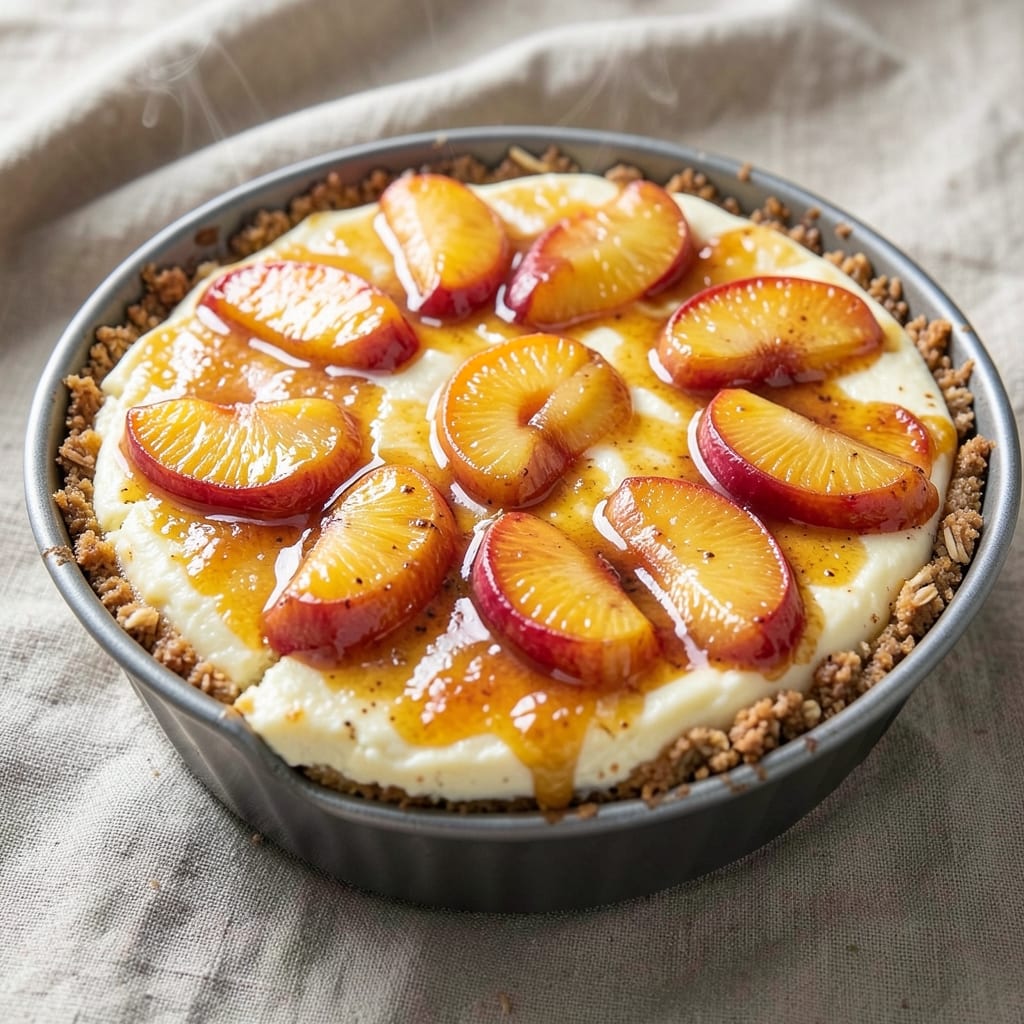
This baked peach cheesecake recipe transforms summer's sweetest fruit into a showstopping dessert with a golden peach crust and velvety cream center. The secret lies in blending ripe peaches with a buttery crumb topping, creating a texture that's crisp yet tender—perfect for balancing the rich, creamy cheesecake filling. I developed this recipe after years of testing, ensuring every bite delivers that perfect harmony of juicy peach and smooth, tangy cream.
The beauty of this dessert is its foolproof technique—no water bath required, just a single baking dish that handles both crust and filling. The peach crust isn't just decorative; it infuses flavor into every layer, while the cheesecake remains silky smooth thanks to a precise blend of cream cheese, eggs, and sugar. No special equipment needed—just a standard oven and patience for the perfect set.
What makes this recipe truly special is how it captures summer in every forkful: the caramelized peach notes in the crust, the luscious cream that melts on the tongue, and that first bite where flavors collide. It's elegant enough for company but simple enough for a weeknight treat, with variations for gluten-free or no-bake preferences if needed.
The result is a dessert that looks impressive but comes together with straightforward steps—no jiggling, no waiting hours for it to set. Whether you serve it warm with a scoop of vanilla ice cream or chilled for a refreshing finish, this baked peach cheesecake is the ultimate way to celebrate summer's bounty. Let's get baking!
Ingredients for baked peach cheesecake
Sweet summer peaches meet creamy cheesecake magic—just 13 ingredients for a showstopper.
| Ingredient | Amount | Notes |
|---|---|---|
| Ripe Peaches 🍑 | 3 cups | Pitted, peeled, and diced |
| All-Purpose Flour 🌾 | 1 cup | For peach crust |
| Granulated Sugar 🍚 | ¾ cup | Plus 2 tbsp for crust |
| Old-Fashioned Rolled Oats 🥣 | ½ cup | Blended into crumbs |
| Unsalted Butter 🧈 | ½ cup | Cold, cubed for crust |
| Salted Butter 🧈 | ½ cup | Melted for filling |
| Cream Cheese 🧀 | 16 oz | Full-fat, room temperature |
| Large Eggs 🥚 | 2 whole | Room temperature |
| Sour Cream 🥛 | ½ cup | Full-fat for creaminess |
| Vanilla Extract 🌿 | 1 tsp | Pure, high-quality |
| Lemon Juice 🍋 | 1 tbsp | Freshly squeezed |
| Ground Cinnamon 🌶️ | ½ tsp | For crust flavor |
| Vanilla Ice Cream 🍦 | 1 ½ cups | For serving (optional) |
Peaches are the star here, so pick the ripest ones you can find—they should give slightly when pressed. I always grab local farmers market peaches in summer, but frozen peaches work in a pinch (thaw and drain well). The crust gets its magic from blending oats into flour for texture—Bob's Red Mill rolled oats are my go-to. For the butter, Plugrá is my secret weapon—it stays cold longer when cutting into cubes. If you're gluten-free, swap the flour for almond flour (it'll be denser but still delicious).
No vanilla ice cream? Homemade whipped cream or caramel sauce works just as well. Running short on cream cheese? Substitute with mascarpone mixed with 2 oz cream cheese for similar texture. The lemon juice is non-negotiable—it brightens the whole dessert. Freshly squeezed is best, but bottled works in a bind. For the crust, if you don't have rolled oats, quick oats blended to powder will work (just pulse in a food processor). The peaches can be fresh, canned (drained well), or frozen—whatever you've got on hand.
This cheesecake keeps beautifully for 4 days in the fridge—if it lasts that long. The crust stays crisp for about 2 days, then gets softer. For make-ahead prep, bake the crust a day ahead and store covered at room temp. The filling sets best at room temperature for 1-2 hours after baking. Freeze portions for up to 3 months—just thaw in the fridge overnight. I always make a double batch because this disappears faster than you can say 'summer dessert'—trust me, you'll want leftovers.
Why You'll Love This Recipe
- No Fuss Assembly: I swear by this recipe because it’s basically a one-bowl wonder. You toss together flour, oats, and butter—no fancy mixing—then just fold in those juicy peaches and bake. The crust forms right in the pan, so no rolling or stressing over pie crusts.
- Summer in a Bite: That caramelized peach filling? It’s like summer magic—sweet, tangy, and just the right amount of gooey. The oats add this subtle crunch that cuts through the richness, and honestly? It’s the kind of dessert that makes you want to eat it straight from the oven, crust and all.
- Weeknight or Company: This cheesecake is my go-to for lazy nights and when I have guests over. Serve it warm with a scoop of vanilla ice cream for a casual vibe, or chill it for a few hours and top with whipped cream for something fancier. Either way, it’s always a hit.
- Leftovers That Last: Between us, I make this too much on purpose because it keeps perfectly for days. The peaches don’t get mushy, the crust stays crisp, and it reheats in minutes—great for lunches or when you just don’t feel like baking again. Plus, the oats stretch the recipe further without costing extra. Smart move.
Step-by-step instructions for baked peach cheesecake
Here's how to create a perfect balance of summer fruit crust and velvety cream center.
Prepare the Peach Crust
Preheat your oven to 350°F and line a 9-inch springform pan with parchment paper. In a food processor, combine the 3 cups ripe peaches, 0.5 cup old-fashioned rolled oats, 0.5 cup unsalted butter, 0.25 cup granulated sugar, and 0.5 tsp ground cinnamon. Pulse until the mixture forms a coarse, chunky texture with peach pieces still visible.
Press this mixture firmly into the bottom of your prepared pan, creating an even layer. Bake for 20 minutes until the edges are golden and the crust feels set to the touch. The peaches should release their juices, creating a fragrant base for your cheesecake. Let the crust cool completely before adding the filling—this prevents a soggy bottom.
Make the Cream Cheese Filling
In a large mixing bowl, beat the 16 oz cream cheese and 0.5 cup salted butter together until completely smooth and creamy. This step is crucial—any lumps will remain in your cheesecake. Gradually add the 0.5 cup granulated sugar and mix until fully incorporated.
Add the 2 whole large eggs, 0.5 cup sour cream, 1 tsp vanilla extract, and 1 tbsp lemon juice to the cream cheese mixture. Mix on low speed until just combined—overmixing incorporates too much air, which can cause cracks in the final product. The batter should be thick but pourable, with a smooth, velvety consistency.
Assemble and Bake the Cheesecake
Pour the cream cheese filling over the cooled peach crust, spreading it evenly to the edges. Place the springform pan on a baking sheet (to catch any potential overflow) and bake at 350°F for 45-50 minutes. The center should be slightly jiggly when done—it will continue setting as it cools.
Here's the thing—this cheesecake has a delicate texture, so I recommend checking it at the 40-minute mark. It's done when the edges are set but the center still has a gentle wobble. Remove from the oven and let it cool completely at room temperature, then refrigerate for at least 4 hours (overnight is even better) before serving. This resting period allows the flavors to meld and the texture to firm up perfectly.
Serve with Optional Ice Cream
Run a knife around the edge of the cheesecake to loosen it from the pan, then release the springform. Serve slices at room temperature for the best texture contrast. The peach crust will be warm and fragrant, while the cream center remains cool and silky.
For an extra-special touch, serve with 1.5 cups vanilla ice cream on the side. The cold ice cream creates a beautiful temperature contrast with the warm cheesecake, and the vanilla flavor complements the peach perfectly. Each bite should deliver a perfect balance of sweet, creamy, and tangy flavors with that delightful summer peach aroma throughout.
Pro Tips For Making Baked Peach Cheesecake
- Preheat Pan First: The oat crust clumps like glue if you skip this—trust me, I’ve seen it. Place your springform pan in a 350°F (175°C) oven for 10 minutes before adding the crust mixture. The dry oats absorb moisture instantly, so a warm pan guarantees a crumbly base instead of a sad, gummy mess.
- Peel Peaches Cold: After blanching peaches, plunge them into ice water for 2 minutes—this stops the cooking and makes peeling effortless. I used to rush this step and ended up with stubborn skins clinging to the fruit. Cold peaches slice neatly and release juice evenly when baked, so don’t skip the ice bath.
- Press Crust Firm: Pack the oat mixture into the pan using the back of a measuring cup or your palm—press it down until it’s tight, like you’re trying to make a crust for a blind tart. A loose crust spreads and burns at the edges while staying doughy in the center. This isn’t the prettiest method, but it’s the only way to get that buttery, crackly texture.
- Bake Until Edge Pulls: The cheesecake’s done when the center jiggles slightly and the edge pulls away from the pan. I learned this the hard way—overbaking turns the peaches into mush and the crust into cardboard. If it’s still wobbly after 10 minutes, tent it with foil and let it rest. Your future self will thank you.
Troubleshooting perfect results
Cracked Top Fix
If your cheesecake develops cracks during baking, it's usually from overmixing or temperature fluctuations. To prevent this, mix the filling on low speed just until combined, and avoid opening the oven door frequently. If cracks appear, don’t panic! Spread a thin layer of peach jam over them before serving—the sweetness will mask any imperfections while adding extra flavor. 💫
Soggy Crust Solution
A soggy crust happens when moisture from the filling seeps into the crust before it sets. Always let your peach crust cool completely before adding the filling—this prevents a mushy texture. For extra insurance, chill the crust in the fridge for 15-20 minutes before pouring in the cheesecake batter. If it still feels too wet, sprinkle a thin layer of powdered sugar between the crust and filling to create a barrier.
Peach Crust Too Dry
If your peach crust comes out dry and crumbly, it likely needs more moisture. Next time, increase the peach amount by ½ cup or add 1 tbsp lemon juice to the crust mixture. For a richer texture, replace 2 tbsp of the sugar with 2 tbsp brown sugar, which adds moisture while enhancing caramelization. 🍑
Cheesecake Too Dense
A dense cheesecake usually means the filling was overmixed or didn’t bake long enough. Ensure your cream cheese is at room temperature before mixing, and bake until the center is just slightly jiggly. If it’s still too thick after baking, let it rest at room temperature for 1-2 hours before refrigerating—this allows it to set properly without becoming dense.
Filling Not Setting
If your cheesecake filling stays too soft or doesn’t set at all, it likely didn’t bake long enough or the oven wasn’t hot enough. Always bake at 350°F and check for doneness at 40 minutes—the center should have a gentle wobble. For extra stability, refrigerate for 6-8 hours or even overnight. If it’s still too soft, try baking it for 5-10 more minutes at a lower temperature (300°F).
Peaches Too Watery
Excess moisture from peaches can make your crust soggy or dilute the filling. To fix this, pat the diced peaches dry with a paper towel before blending them into the crust. If using canned peaches, drain them well and let them sit in a colander for 10 minutes to remove extra liquid. For frozen peaches, thaw them first and drain any released water before using. 💧
Nutrition facts
Frequently asked questions
Can I use frozen peaches instead of fresh?
Yes, but you'll need to thaw and drain them first! Use 3 cups thawed frozen peaches (about 1.5 lbs), patting them completely dry with paper towels to remove excess moisture. This prevents a soggy crust. For extra flavor, add ½ tsp almond extract to the crust mixture to compensate for any lost freshness.
Why does my peach cheesecake have cracks?
Cracks usually appear from overmixing the filling or sudden temperature changes. Mix the batter on low speed just until combined, and avoid opening the oven door during baking. If cracks form, cover them with a thin layer of peach jam before serving—the sweetness will hide any imperfections while adding delicious flavor.
Can I make this gluten-free?
Replace the all-purpose flour with 1 cup almond flour for the crust. The texture will be denser but still delicious. For extra binding, add 1 tbsp ground flaxseed mixed with 3 tbsp water to the crust mixture. The cheesecake filling remains unchanged—it's naturally gluten-free!
How long can I keep this cheesecake?
The cheesecake stays fresh for 4 days in the fridge when stored properly in an airtight container. For longer storage, freeze individual slices wrapped in plastic wrap for up to 3 months. Thaw overnight in the fridge before serving. The crust stays crisp for about 2 days before softening slightly.
Can I bake this in a different pan size?
This recipe is designed for a 9-inch springform pan to achieve the perfect texture. For an 8-inch pan, reduce baking time by 5-10 minutes and for a 10-inch pan, increase by 10-15 minutes. Always check for doneness when the center has a gentle wobble. The crust-to-filling ratio may need adjustment for non-standard pans.