
Desserts
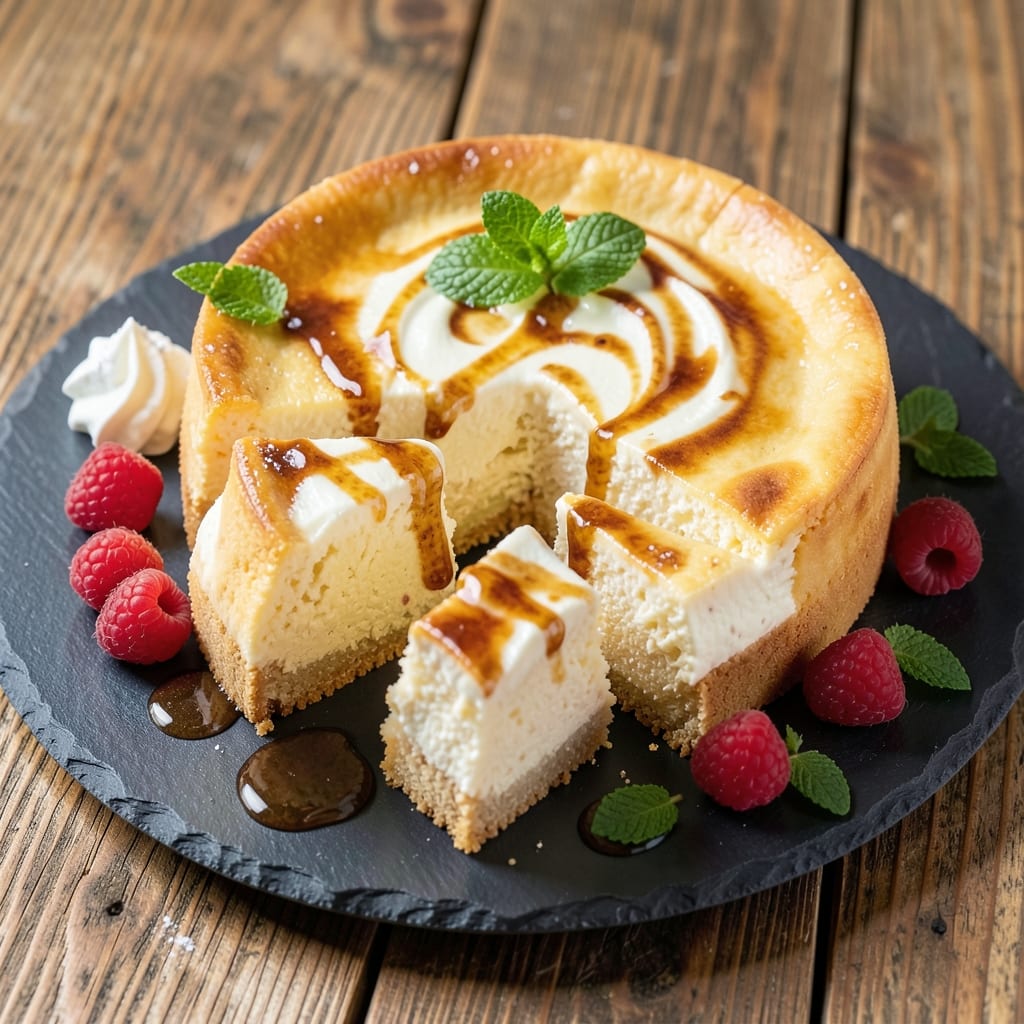
This baked cheesecake recipe with mascarpone cheese delivers restaurant-quality texture—silky smooth yet perfectly firm—without a single crack in sight. 💛 The secret lies in a foolproof water bath technique and precise ingredient ratios that prevent common baking disasters. I've perfected this version after years of trial and error, and it's become my go-to for gatherings where dessert must impress. What sets this recipe apart is the mascarpone's velvety richness combined with a sturdy graham cracker crust that holds up to slicing. The filling stays ultra-creamy while maintaining structure, thanks to a careful balance of cream cheese and mascarpone. Baking time is critical—just 50 minutes at 325°F ensures a golden top without overcooking. By the time it emerges from the oven, you'll have a cheesecake with a smooth, jiggly center that sets beautifully when chilled. The water bath prevents cracks while keeping the texture perfect, and the crust remains crisp at the edges. This is the kind of dessert that makes you look like a professional baker. Optional toppings like berry compote or chocolate ganache elevate it further, but even plain, it's undeniably delicious. Let's get started on creating your perfect slice!
Ingredients for baked cheesecake recipe with mascarpone cheese
Restaurant-quality texture starts with these precise ingredients—mascarpone's velvety richness meets foolproof technique.
| Ingredient | Amount | Notes |
|---|---|---|
| Full-Fat Cream Cheese 🧀 | 16 oz | Room temperature for blending |
| Mascarpone Cheese 🧀 | 12 oz | High-fat for ultra-smooth texture |
| Granulated Sugar 🍚 | 1 ½ cups | Superfine preferred for smoothness |
| Large Eggs 🥚 | 3 whole | Room temperature for even baking |
| Heavy Cream 🥛 | 1 cup | Full-fat for richness |
| Vanilla Extract 🌿 | 1 tbsp | Pure Madagascar preferred |
| Graham Cracker Crumbs 🍞 | 1 ½ cups | Fine texture for sturdy crust |
| Unsalted Butter 🧈 | ½ cup | Melted for crust binding |
| Diamond Crystal Kosher Salt 🧂 | ½ tsp | Fine grain for even distribution |
| Black Pepper 🌶️ | ¼ tsp | Freshly cracked for subtle depth |
| Lemon Zest 🍋 | 1 tbsp | Brightens the filling |
| Water 💧 | 1 cup | For water bath |
| Large Aluminum Foil 📄 | 1 sheet | For water bath wrap |
The mascarpone is non-negotiable here—Galbani or BelGioioso deliver that signature ultra-smooth texture. Room temperature is critical for both the cream cheese and mascarpone; take them out 30 minutes before mixing. For the crust, Honey Maid graham crackers give the best texture, but any sturdy graham will work. The secret weapon? Superfine sugar—it blends seamlessly without graininess. I always grab mine from Williams Sonoma when I need a big batch, but the regular grocery store stuff works fine for single recipes. If you're short on time, pulse graham crackers in a food processor for that perfect fine crumb.
No mascarpone? Double the cream cheese and add 2 tbsp sour cream for a close substitute. Short on graham crackers? Digestive biscuits or crushed gingersnaps work beautifully—just add 1 tbsp extra melted butter to the mix. The vanilla extract should be pure; imitation won't cut it here. For the water bath, use a deep baking dish that fits your springform pan snugly—Corelle or Pyrex work perfectly. The foil should be heavy-duty to prevent tearing when wrapping. And trust me on the room temperature eggs—they blend so much more smoothly than cold ones, preventing lumps in the batter.
This cheesecake tastes even better the next day once fully set. Store it covered at room temperature for 2 days or refrigerate for up to 5 days. For longer storage, wrap tightly in plastic and freeze for 3 months. The crust stays crisp if you keep it in an airtight container. I always slice mine 1 hour before serving—the texture is perfect then. And if you're feeling fancy, brush the crust with a little apricot jam before baking for that golden finish.
Why You'll Love This Recipe
- No Mixing Madness: I swear by this recipe because it’s all about blending—not beating. The mascarpone and cream cheese come together like a dream when you just fold them with a spatula, no stand mixer required. (Honestly, my blender’s seen better days, and this still turns out silky.)
- Rich Without the Guilt: That combo of mascarpone and full-fat cream cheese? It’s decadent but not heavy. The sugar caramelizes just enough to balance the tang, and the heavy cream adds a lightness that keeps it from feeling like a brick. (Yes, even on a Tuesday night.)
- Party in a Pan: This cheesecake bakes in one dish, so it’s effortless to take to potlucks or serve at gatherings. The crust? Optional. The slices? Always a hit. Between us, I’ve even used leftovers for breakfast toast—no one judges.
- Leftovers That Last: A full batch keeps for days, and it reheats beautifully. Slice it up for dessert, blend into smoothies for a creamy boost, or just eat it straight from the fridge. (I’ll be real: the fridge is where I go first.)
Step-by-step instructions for baked cheesecake with mascarpone
Here's how to achieve that signature ultra-smooth texture while keeping cracks at bay.
👨🍳 Step 1: Create the Perfect Crust Foundation
Preheat your oven to 350°F and line the bottom of a 9-inch springform pan with parchment paper. In a medium bowl, combine the 1.5 cups graham cracker crumbs and 0.5 cup melted unsalted butter. Mix until evenly moistened—it should hold together when pressed but not be soupy.
Press the mixture firmly into the bottom of your prepared pan, creating an even layer. Use the back of a measuring cup to compact it tightly against the sides. Bake for 10 minutes until lightly golden. This pre-bake prevents a soggy crust later. Let it cool completely before adding the filling—this prevents melting when the hot cheesecake goes in.
🍳 Step 2: Blend the Ultra-Smooth Filling
In a large mixing bowl, beat the 16 oz room-temperature full-fat cream cheese and 12 oz mascarpone cheese together on medium speed until completely smooth and homogeneous. This takes about 2-3 minutes—don't rush it. The mascarpone's high fat content creates that signature velvety texture, but only if properly incorporated.
Gradually add the 1.5 cups granulated sugar while continuing to mix until fully dissolved. In a separate bowl, whisk together the 3 whole room-temperature large eggs, 1 cup heavy cream, 1 tbsp vanilla extract, 0.5 tsp kosher salt, 0.25 tsp black pepper, and 1 tbsp lemon zest. Slowly pour this mixture into the cheese while mixing on low speed to prevent egg curdling.
🥘 Step 3: Assemble and Prepare Water Bath
Pour the filling over the cooled crust, spreading it evenly with a spatula. Tap the pan gently on the counter a few times to release any air bubbles that might have formed. This prevents surface cracks during baking.
Wrap the springform pan tightly with the large aluminum foil, creating a seal around the edges. Pour the 1 cup water into a deep baking dish large enough to hold your pan. Place the wrapped pan into the water bath—this gentle steam bath prevents sudden temperature changes that cause cracking.
🔥 Step 4: Bake with Precision
Bake at 350°F for 50-55 minutes until the edges are set but the center still jiggles slightly when gently shaken. The water bath should be bubbling gently throughout the bake. If you see steam escaping from under the foil, your seal isn't tight enough—press it down firmly.
Remove from the oven and let cool completely in the water bath for 1 hour before removing from the foil. Then chill in the refrigerator for at least 4 hours (overnight is best). This gradual cooling prevents cracks from forming as the cheesecake sets.
🍽️ Step 5: Unmold and Serve
Once completely chilled, run a thin knife around the edges to loosen. Release the springform clamp and carefully lift the outer ring. Slide the parchment paper out from underneath for easy removal. The cheesecake should release cleanly if properly baked.
Slice with a hot, clean knife for perfect edges. Serve at room temperature for the best texture contrast—cool filling against the slightly warm crust. Store leftovers covered in the refrigerator for up to 5 days, though I doubt it'll last that long with this creamy mascarpone filling!
Pro Tips For Making Baked Cheesecake Recipe With Mascarpone Cheese
- Preheat Like It’s Serious: Your oven needs 45 minutes to hit 325°F—no exceptions. I learned this the hard way when my first batch cracked because the pan was still cold. Use an oven thermometer to confirm; cheap ovens lie. And skip the broiler for the final 5 minutes—it’s a crack magnet.
- Whip Cream Cheese First: Beat the full-fat cream cheese and sugar together until smooth and pale yellow—about 3 minutes. Mascarpone’s fat content makes it clingy, so this step prevents lumps later. If your mixer struggles, microwave the cream cheese in 10-second bursts to soften it first.
- Underbake, Then Chill: Pull the cheesecake out when the center still jiggles slightly (about 50–55 minutes). The residual heat finishes cooking while you cool it. I used to overbake, and the result was dense and dry—like eating a brick of mascarpone. Let it sit 10 minutes before refrigerating.
- Room-Temp Everything: Take eggs, cream, and cheeses out of the fridge at least 1 hour before mixing. Cold ingredients shock the batter, leading to cracks or separation. Sounds tedious, but it’s the difference between a silky texture and a sad, grainy mess. (Yes, even if you’re impatient like me.)
Troubleshooting this recipe
Cracked Top Fix
If your cheesecake develops cracks during baking, it's usually from sudden temperature shifts. First, ensure your oven is fully preheated to 350°F—cold spots cause uneven cooking. For future bakes, add a ½ cup sour cream to the filling to improve stability. If cracks appear after baking, cover with raspberry jam or chocolate ganache—they'll disappear once topped! 💫
Soggy Crust Prevention
A soggy crust happens when moisture seeps through. Always pre-bake the crust for 10 minutes at 350°F before adding filling, and let it cool completely. For extra insurance, brush the crust with 2 tbsp apricot jam before adding the filling—it creates a moisture barrier. I've never had a soggy crust since using this trick!
Underbaked Center
An underbaked center means the cheesecake didn't reach 160°F internal temperature. Extend baking time by 5-10 minutes if needed, but never exceed 60 minutes total at 350°F. For a foolproof test, gently shake the pan—the center should jiggle slightly but not be liquid. If it's still runny, return to the oven for 5 more minutes.
Domed Cheesecake
Doming occurs when the center rises too much during baking. To prevent this, ensure your filling is at room temperature—cold filling causes uneven expansion. Also, don't overfill the pan; leave ½ inch headspace at the top. If doming happens, chill the cheesecake for 24 hours—it will settle naturally as it sets.
Grainy Texture
Graininess usually means the mascarpone wasn't blended long enough. Beat the cream cheese and mascarpone together for at least 3 minutes until completely smooth. For extra insurance, strain the batter through a fine-mesh sieve before pouring into the crust. Using superfine sugar also helps prevent graininess—it dissolves more easily than regular sugar.
Sticky Sides
Sticky sides happen when butter or filling escapes during baking. Always line your springform pan with parchment paper before adding the crust. If the sides stick after baking, run a thin knife around the edge to loosen, then refrigerate for 10 minutes before unmolding. This gives the cheesecake time to firm up slightly for easier release.
Nutrition facts
Frequently asked questions
Why does this recipe use both cream cheese and mascarpone?
The combination creates the perfect texture—cream cheese provides structure while mascarpone adds that signature ultra-smooth, velvety richness. The high fat content in mascarpone (typically 70%) makes the filling incredibly creamy without being too heavy. Using just cream cheese would make it denser, while mascarpone alone wouldn't hold its shape well.
Can I make this cheesecake without a water bath?
You can try, but you'll risk more cracks and potential doming. The water bath creates gentle steam that prevents sudden temperature changes—the main cause of cracks. For a no-water-bath version, reduce the oven temperature to 325°F and bake for 60-65 minutes, but monitor closely for doneness.
How do I know when the cheesecake is fully baked?
Look for three key signs: the edges should be set, the center should jiggle slightly when gently shaken (not liquid), and the internal temperature should reach 160°F. A toothpick inserted should come out with a few moist crumbs—not wet batter. Never rely on visual cues alone—the center might look set but still be underdone.
What's the best way to prevent cracks in the top?
Beyond the water bath, tap the pan gently on the counter before baking to release air bubbles, and make sure all ingredients are at room temperature. Adding ½ cup sour cream to the filling also improves stability. If cracks appear after baking, cover with berry compote or chocolate ganache—they'll disappear completely once topped!
Can I substitute mascarpone with something else?
For a close substitute, double the cream cheese and add 2 tbsp sour cream to maintain moisture. For a lighter texture, you could use 8 oz cream cheese + 4 oz ricotta cheese, though the flavor will be slightly different. The fat content in mascarpone is what creates that signature smoothness—nothing replicates it perfectly.