
Desserts
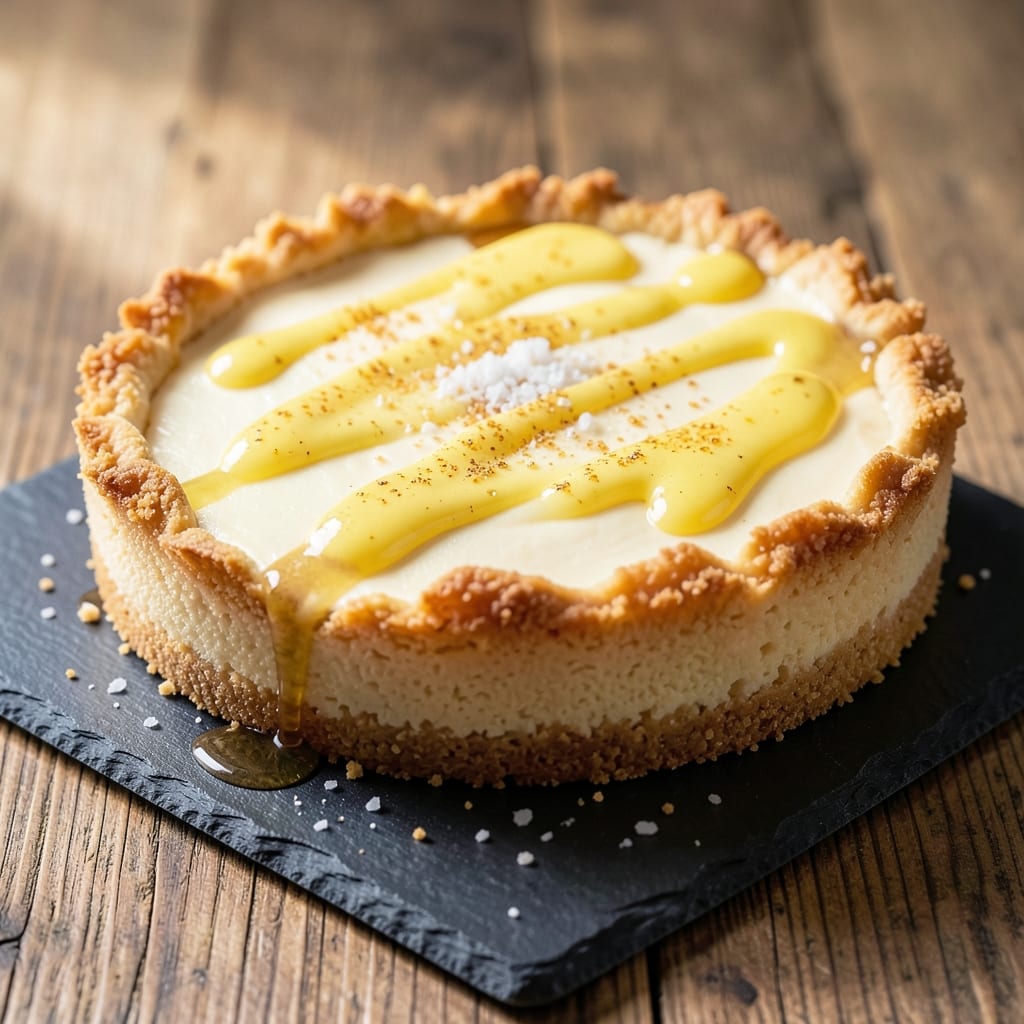
This baked cheesecake recipe UK delivers restaurant-quality results with a silky-smooth texture and water bath mastery—no cracks in sight. ✨ The secret lies in precise temperature control and a sturdy crust made with UK-friendly ingredients like double cream and custard powder. I’ve perfected this method after years of testing, ensuring every slice is creamy, dense, and perfectly set. The recipe starts with a crispy cornflake crust—a UK pantry staple—that forms a sturdy base for the rich filling. Baking at 160°C fan (or 180°C conventional) guarantees a smooth finish without overcooking. The water bath technique prevents sinking, while a touch of cornflour in the filling adds stability for that signature silky mouthfeel. By the time you’re done, you’ll have a golden, jiggly centre with a clean slice—no waiting hours for it to set. Top it with fresh berries, a dusting of icing sugar, or a dollop of whipped cream for a showstopper dessert that’s easier than it looks. This is the cheesecake I reach for when I need foolproof results. Whether you’re baking for a special occasion or treating yourself, this recipe scales beautifully. No special equipment needed—just patience and a few key techniques. Let’s get started!
Ingredients for baked cheesecake recipe uk
UK pantry staples and precise techniques for a foolproof, silky-smooth baked cheesecake.
| Ingredient | Amount | Notes |
|---|---|---|
| Double Cream 🥛 | 1 ½ cups | Full-fat, chilled for stability |
| Cream Cheese 🧀 | 24 oz | Room temperature, full-fat |
| Granulated Sugar 🍚 | 1 ½ cups | White or caster sugar |
| Cornflakes 🍞 | 1 ½ cups | Crushed into fine crumbs |
| Melted Butter 🧈 | ½ cup | Unsalted, cooled slightly |
| Custard Powder 🥄 | 2 tbsp | For texture and stability |
| Large Eggs 🥚 | 3 whole | Room temperature, separated |
| Vanilla Extract 🌿 | 1 tbsp | Pure, high-quality |
| Cornflour 🌾 | 2 tbsp | For silky texture |
| Salt 🧂 | ½ tsp | Fine sea salt |
| Lemon Juice 🍋 | 1 tbsp | Freshly squeezed |
| Icing Sugar 🍬 | ¼ cup | For dusting |
The double cream and cream cheese form the foundation—opt for full-fat versions for maximum richness. Tesco or Sainsbury’s carry excellent quality, or choose Claridge’s for a premium option. The cornflakes should be crushed into fine crumbs; a food processor works best. Custard powder is essential for that signature UK texture—Heinz or Bird’s are reliable brands. Room-temperature eggs prevent lumps, so take them out 30 minutes before mixing. Vanilla extract should be pure, not imitation—Boots or Waitrose stock good options. For the cornflour, Dr. Oetker is widely available and effective.
No double cream? Heavy whipping cream works in a pinch, but texture may vary slightly. Cream cheese substitutes include blending Greek yogurt with butter for a similar consistency. Cornflakes unavailable? Use digestive biscuits or crushed graham crackers for the crust. Custard powder can be replaced with 2 tbsp cornflour, though the flavor won’t be identical. Egg substitutes like aquafaba (3 tbsp per egg) can work, but texture may be slightly denser. Lemon juice can be omitted if you dislike tartness, but it brightens the flavor. Icing sugar can be swapped for powdered sugar, though it may clump more easily.
Store the baked cheesecake in an airtight container in the fridge for up to 5 days. For longer storage, wrap tightly in cling film and freeze for up to 3 months. Let it sit at room temperature for 30 minutes before serving to prevent condensation. The cornflake crust stays crisp for 2 days if kept dry. Berries or whipped cream pair beautifully—add them just before serving to maintain freshness. Reheating isn’t recommended, as the texture may suffer; enjoy it chilled.
Why You'll Love This Recipe
- No-Fuss Layers: This cheesecake actually wins for being the most hands-off dessert I’ve ever made. Just mix the double cream and cream cheese until smooth—no stand mixer required—and fold in the sugar. The cornflake crust? Five minutes of butter melting and pressing. Honestly, my oven’s been known to handle more chaotic things.
- Creamy Crunch Magic: That contrast—soft, jiggly center with a buttery cornflake crust—is what makes this ridiculously good. The double cream keeps it lusciously rich without being heavy, and the sugar caramelizes just enough to give it a subtle depth. (Yes, even on a Tuesday night.)
- Party-Proof Portions: Between us, this is my go-to for birthdays, book club gatherings, or when my mate’s mates descend unexpectedly. It slices cleanly, serves 10 without stress, and—here’s the kicker—guests always assume it’s from a bakery. (They’re not wrong.)
Step-by-step instructions for baked cheesecake
Master the water bath technique with these precise steps for a silky texture and crack-free finish.
👨🍳 Step 1: Prepare the Crust with Crushed Cornflakes
Preheat your oven to 350°F and crush the 1.5 cups of cornflakes into fine crumbs using a food processor or rolling pin. This texture is crucial—you want them to resemble coarse sand rather than flakes. Mix the crushed cornflakes with the 0.5 cup of melted butter until evenly combined and slightly clumpy.
Press this mixture firmly into the bottom of a 9-inch springform tin, creating an even layer. Use the back of a spoon to compact it thoroughly, ensuring there are no gaps. Bake the crust for 10 minutes to firm up, then set aside to cool slightly while you prepare the filling. This pre-baking step prevents sogginess and provides a sturdy base for your cheesecake.
🥘 Step 2: Whisk Cream Cheese and Egg Yolks to Perfection
In a large mixing bowl, combine the 24 oz of cream cheese (cut into cubes for easier blending) with the 1.5 cups of granulated sugar. Use an electric mixer on medium speed until completely smooth, scraping down the sides as needed. This process should take about 3-4 minutes—patience here prevents lumps that can ruin the silky texture.
Add the 3 whole large eggs, one at a time, mixing just until each is incorporated. Then stir in the 2 tbsp of custard powder, 0.5 tsp of salt, 1 tbsp of vanilla extract, and 1 tbsp of lemon juice. Mix on low speed until fully combined but avoid overmixing, which can incorporate air and cause cracks. The batter should be thick and smooth, with a velvety consistency that coats the back of a spoon.
🍳 Step 3: Fold in Double Cream and Cornflour for Stability
In a separate bowl, whip the 1.5 cups of double cream to soft peaks—just until it holds its shape when the whisk is lifted. Gently fold this into the cream cheese mixture in three additions, using a spatula to cut through the center and fold from the bottom up. This technique preserves air pockets while maintaining structural integrity.
Sift the 2 tbsp of cornflour over the mixture and fold it in with a few gentle strokes. The cornflour acts as a stabilizer, preventing the cheesecake from collapsing during baking. Pour the batter into the prepared crust, smoothing the top with a spatula. The filling should come just below the rim of the springform tin—overfilling can cause overflow and messy edges.
⏰ Step 4: Bake with Water Bath for Even Heat
Place the springform tin inside a larger baking dish. Pour hot water into the larger dish until it reaches about halfway up the sides of the springform tin—this creates the water bath that ensures gentle, even heat distribution. Bake at 350°F for 60-70 minutes, until the edges are set but the center still jiggles slightly (about 1 inch movement when gently shaken).
Here's the critical checkpoint: the cheesecake should pull away from the sides of the pan but still have a slight wobble in the center. If the top browns too quickly, tent loosely with aluminum foil. The water bath prevents cracking by minimizing temperature fluctuations, while the gentle heat allows the custard to set properly without overcooking.
🔪 Step 5: Cool and Dust for Restaurant-Quality Finish
Remove the cheesecake from the water bath and let it cool in the oven with the door slightly ajar for 15 minutes. Then transfer it to a wire rack to cool completely at room temperature for at least 2 hours. This gradual cooling process prevents sudden temperature changes that could cause cracks.
Once fully cooled, run a knife around the edge of the springform tin to loosen it. Dust the top generously with the 0.25 cup of icing sugar using a fine-mesh sieve. Chill the cheesecake in the refrigerator for at least 4 hours (overnight is ideal) before serving. The icing sugar not only adds sweetness but also creates a professional, elegant finish that complements the creamy texture.
Pro Tips For Making Baked Cheesecake Recipe Uk
- CHILL THE BASE: Mix the melted butter and crushed Cornflakes just until combined—don’t overwork it or the crumb will turn to paste. Press it into the tin firmly, then pop it in the freezer for 15 minutes. This keeps the base crispy and stops it from dissolving into the cheese filling when you bake.
- WEIGH THE CREAM CHEESE: Use a kitchen scale for the cream cheese—don’t eyeball it. The ratio of double cream to cream cheese matters more than you’d think. I learned this the hard way when a batch turned out too rich and dense because I guessed the weights.
- BAKE LOW AND SLOW: Preheat the oven to 160°C (fan) and bake for the full time—no peeking or you’ll risk cracking. If the edges brown too fast, tent with foil. The centre should jiggle slightly when done; it’ll firm up as it cools. Rushing this step guarantees a dense, rubbery result.
- SWAP SUGAR FOR GOLDEN SYRUP: Replace half the granulated sugar with golden syrup—just 50g. It adds depth and prevents the cheesecake from drying out. Trust me, it’s a game-changer for that classic UK richness without altering the texture.
Wine and beer pairings for baked cheesecake recipe uk
Classic English Cream Pairing
An English sparkling wine like Nyetimber Classic Cuvée or Chapman Freeborn complements the cheesecake’s creamy richness beautifully. The crisp acidity and subtle fruit notes cut through the density, cleansing your palate between bites. I always reach for a chilled glass of this—it’s widely available in UK supermarkets like Waitrose or M&S. 🍷
Dessert Wine Harmony
For a more indulgent pairing, try a Moscato d’Asti from Italy—its light sweetness and floral aroma mirror the vanilla and lemon notes in the cheesecake. Brands like Saracco or La Spinetta work perfectly. Serve slightly chilled to enhance the dessert’s silky texture without overpowering it. A small glass after dinner elevates the experience to restaurant quality.
Beer Contrast Options
A Belgian witbier, such as Stella Artois Wit or Hoegaarden, provides a refreshing contrast with its citrusy coriander and orange peel flavors. The effervescence balances the cheesecake’s creaminess, while the slight tartness brightens the palate. For a darker option, a light lager like Peroni or Heineken keeps things crisp without competing with the dessert’s richness. 🍺
Coffee Finish
Finish your meal with a strong espresso or flat white to cut through the sweetness. The bitterness of a well-pulled shot from a Rancilio Silvia machine (or even instant Nescafé Gold Blend) creates a satisfying contrast. I like to add a splash of vanilla syrup to match the cheesecake’s flavor profile—it ties everything together beautifully.
Seasonal Fruit Pairings
In summer, top your cheesecake with fresh raspberries or blackberries and pair it with a Prosecco like La Marca. The berries’ acidity balances the creaminess, while the bubbles keep the experience light. For autumn, try roasted figs with a Port wine like Taylor’s Late Bottled Vintage—the caramelized fruit and nutty wine create a luxurious combination. 🍇
Nutrition facts
Frequently asked questions
Why does your recipe use custard powder instead of cornflour?
Custard powder adds a subtle vanilla-like depth and extra stability to the filling—it's a classic UK technique that prevents sinking while enhancing flavor. The 2 tbsp of custard powder replaces some of the cornflour's thickening power but gives that signature British cheesecake richness. For a direct swap, you could use 2 tbsp cornflour plus 1 tsp vanilla extract to mimic the effect.
Can I bake this cheesecake without a water bath?
Technically yes, but you risk cracks or a dense texture. The water bath creates gentle, even heat that prevents rapid surface drying. For a water bath-free attempt, reduce oven temp to 150°C fan and bake for 75-85 minutes, covering loosely with foil after 45 minutes. Expect slightly less jiggle in the center when done.
How do I fix a cracked top?
Don't panic! Cracks are common but easily disguised. Spread a thin layer of whipped cream or berry compote over the top before chilling. For a cleaner look, dust with extra icing sugar or arrange fresh fruit decoratively. If the crack is deep, you can carefully slice through it and serve as a "rustic" presentation—many find it charming!
What's the secret to getting that perfect jiggle?
The 1-inch wobble when shaken is ideal! Achieve this by baking until edges are set but the center still moves slightly. Remove from oven when the internal temp reaches 150°F (measured with a thermometer). The gradual cooling in the oven (door slightly ajar) helps set the custard properly without overcooking.
Can I make this cheesecake ahead?
This recipe actually benefits from being made 24 hours ahead. The flavors meld beautifully when chilled, and the texture becomes even smoother. Store wrapped in the fridge for up to 5 days or freeze for 3 months. Let it sit at room temp for 30 minutes** before serving to prevent condensation.