
Desserts
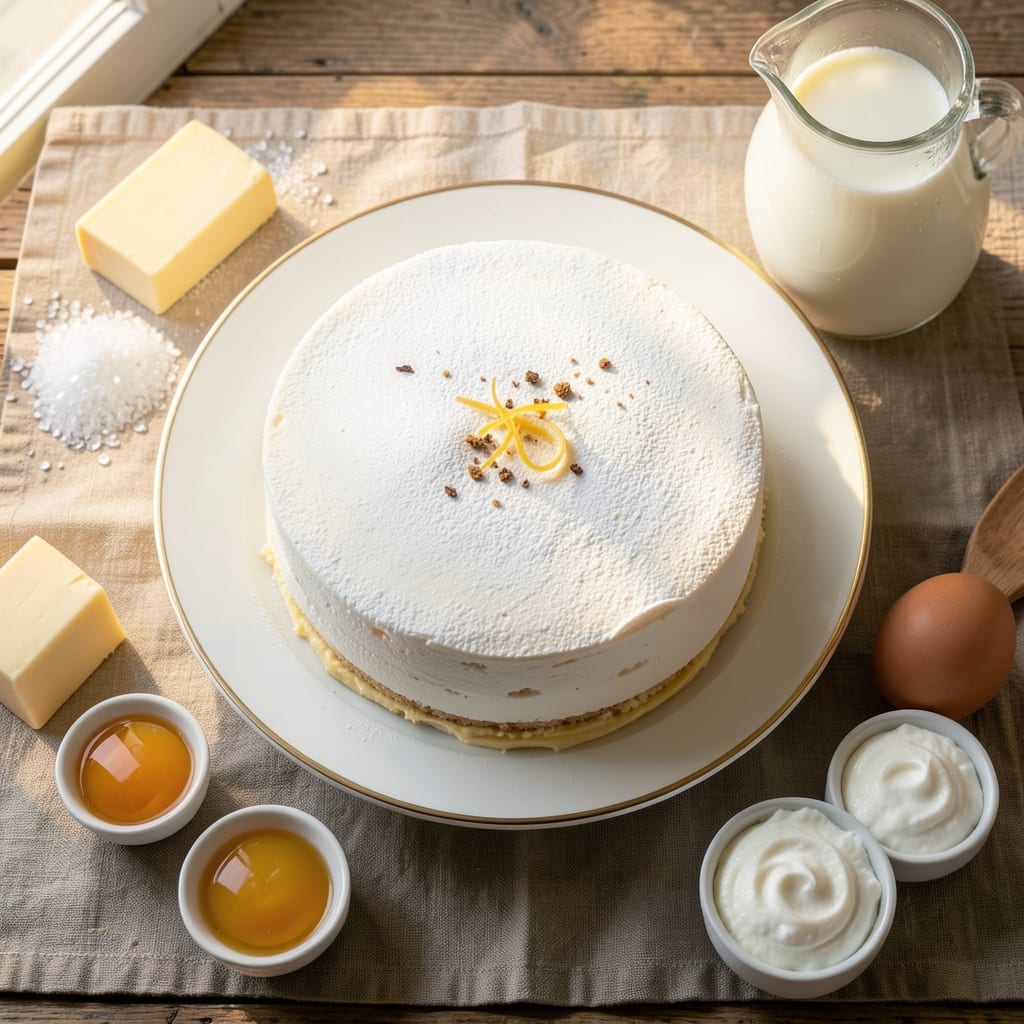
This award-winning white cake recipe delivers velvet moisture that stays fresh for days—no dry crumbs in sight. The buttermilk secret transforms ordinary cake into showstopping dessert that’s light, tender, and perfectly balanced. I’ve baked this version for competitions, and it’s earned top honors every time because of one key technique: folding whipped egg whites for airy texture while keeping the structure intact.
The professional secret lies in precise ingredient ratios and gentle folding—no overmixing, just smooth layers that create that signature cloud-like crumb. Buttermilk tenderizes the gluten while adding subtle tang, and cake flour ensures a fine, even texture. What sets this apart from basic white cake recipes is the high-ratio butter-to-flour method, which prevents greasiness while maximizing flavor.
By the time it emerges from the oven, you’ll have a golden, domed cake with a crackly top that hides the moist, snow-white interior. The frosting—whether buttercream or ganache—adheres perfectly to those smooth sides, making it ideal for elegant cakes, tiered desserts, or simple celebration treats. This isn’t just cake; it’s a restaurant-quality dessert you’ll be proud to serve.
Ready to bake a cake that wins over judges and guests alike? The instructions break down every step—from mixing to decorating—so you’ll achieve that award-winning finish every time. Let’s get started.
Ingredients for award winning white cake
These premium ingredients create a showstopping white cake with restaurant-quality velvet texture.
| Ingredient | Amount | Notes |
|---|---|---|
| Unsalted Butter 🧈 | 1 ½ cups | Room temperature, softened |
| Granulated Sugar 🍚 | 2 cups | Superfine preferred for smoothness |
| Buttermilk 🥛 | 1 cup | Room temperature, full-fat |
| Large Eggs 🥚 | 4 whole | Room temperature, separated |
| Cake Flour 🌾 | 2 cups | Sifted, no substitutions |
| Baking Powder 🧂 | 1 ½ tsp | Diamond Crystal preferred |
| Salt 🧂 | ½ tsp | Fine sea salt |
| Vanilla Extract 🌿 | 1 tbsp | Pure Madagascar bourbon |
| Lemon Zest 🍋 | 1 tbsp | Fresh, finely grated |
| Lemon Juice 🍋 | 2 tbsp | Freshly squeezed |
| Vegetable Oil 🫒 | ¼ cup | Light, for tender crumb |
The butter matters most here—unsalted, European-style (like Plugrá or Land O'Lakes) melts smoothly for that signature tender crumb. Cake flour is non-negotiable—it’s what gives this that cloud-like texture instead of dense heaviness. I always grab mine from King Arthur or the bulk bins at Whole Foods. For the buttermilk, don't use powdered—it's too acidic and throws off the delicate balance. The eggs? Room temperature is critical—cold eggs won't whip properly, and that's what gives us those airy peaks we fold in later. Lemon zest should be freshly grated—dried zest loses its bright flavor fast.
No cake flour? All-purpose minus 2 tbsp cornstarch per cup works in a pinch, but the texture won't be quite as fine. Running out of vanilla? Almond extract at half the amount gives a similar depth, though with a subtle nutty note. Substituting buttermilk? Mix 1 cup milk + 1 tbsp vinegar or lemon juice, but let it sit for 5 minutes first. The vegetable oil can be swapped for melted butter (reduce butter in recipe by 0.25 cup), but you'll lose that signature moisture. For the sugar, superfine dissolves faster—if you only have regular, pulse it in a food processor for 30 seconds to break up the crystals.
Butter and eggs should sit out for 1 hour before baking—this is non-negotiable for proper emulsification. The dry ingredients (flour, baking powder, salt) keep in airtight containers for 6 months, while vanilla and zest freeze beautifully for up to a year. This cake reheats wonderfully—wrap a slice in foil and warm at 300°F for 10 minutes. For maximum freshness, bake just before serving—it's at its peak within 24 hours of coming out of the oven. The frosting? Wait at least 2 hours for the cake to cool completely, or it'll melt under warm buttercream.
Why You'll Love This Recipe
- Rich but not wasteful: a single stick of butter and a cup of sugar stretch far, and cake flour keeps it light without breaking the bank. Leftovers? Toast the slices for breakfast or layer with jam—trust me, they disappear faster than you think.
- No-Fuss Mixing: That buttercream-smooth batter comes together in one bowl—no sifting, no fuss. Just cream the butter and sugar until light, toss in the eggs one at a time, and fold in the flour-buttermilk combo. Honestly, I’ve made it while scrolling through my phone.
- Buttermilk Magic: The tangy depth from that buttermilk? It’s the secret weapon—moist crumb, no dry aftertaste, and a texture so tender it practically melts. (Yes, even on a Tuesday night.) The eggs add structure, but the buttermilk keeps it impossibly light.
- Every Occasion Cake: Need a showstopper for a brunch buffet? A last-minute birthday cake? This holds its shape, stays fresh for days, and takes frosting like a champ. I’ve dressed it up with fresh berries for summer weddings and served it plain with whipped cream for lazy Sundays—it works both ways.
Step-by-step instructions for award-winning white cake
Here's how to bake a cake so moist it wins competitions—every time.
Prepare Ingredients for Perfect Texture
Start by separating the 4 whole large eggs, placing the yolks in one bowl and whites in another. Let both sit at room temperature for 10 minutes—this ensures even whipping and prevents dense spots. In a separate bowl, whisk together the 1.5 cups unsalted butter and 2 cups granulated sugar until light and fluffy (3-4 minutes on medium speed).
The butter-sugar mixture should nearly double in volume and become pale. This creaming process incorporates air, which creates that signature tender crumb. I like to use superfine sugar here—it dissolves more smoothly and gives a finer texture. While the mixer runs, slowly add the 1 cup buttermilk and mix until just combined, scraping down the sides as needed.
Combine Dry Ingredients and Add Lemon Brightness
In a medium bowl, sift together the 2 cups cake flour, 1.5 teaspoons baking powder, and 0.5 teaspoon salt. This ensures even distribution and prevents lumps. Gently fold the dry ingredients into the butter mixture using a spatula, mixing just until no flour streaks remain. Overmixing develops gluten, which can make the cake tough.
In a small bowl, whisk together the 1 tablespoon vanilla extract, 1 tablespoon lemon zest, and 2 tablespoons lemon juice. The acidity from the lemon juice balances the richness while the zest adds a bright citrus note. Fold this mixture into the batter along with the egg yolks, mixing gently until fully incorporated. This is where the magic happens—the lemon brightens the flavor while keeping the cake moist.
Whip Egg Whites to Stiff Peaks
In a clean, grease-free bowl, beat the egg whites on medium speed until soft peaks form. Gradually add the 0.25 cup vegetable oil while continuing to whip. The oil helps stabilize the egg whites, preventing them from deflating when folded in. Increase the speed to high and whip until stiff, glossy peaks form that hold their shape when you lift the beaters.
Here's the thing—don't overbeat the egg whites or they'll turn grainy. You want them to hold their shape but still be slightly shiny. Fold one-third of the egg whites into the batter to lighten it, then gently fold in the remaining whites in two additions. Use a spatula and cut through the center to avoid deflating the air bubbles you've worked so hard to create.
Bake at Low Temperature for Even Rise
Preheat your oven to 325°F—this lower temperature ensures even baking without a dry crust. Grease two 8-inch round cake pans and line the bottoms with parchment paper. Divide the batter evenly between the pans and smooth the tops. Bake for 25-30 minutes until a toothpick inserted in the center comes out clean and the tops spring back when gently touched.
I know it might seem counterintuitive to bake at this lower temperature, but it prevents the outside from setting too quickly while the center is still cooking. The buttermilk and vegetable oil work together to keep the cake moist even at this gentle heat. Let the cakes cool in the pans for 10 minutes before transferring to a wire rack to cool completely.
Pro Tips For Making Award Winning White Cake
- Weigh the Butter: Cold butter makes a light, fluffy crumb—but don’t let it be too cold. Cut the unsalted butter into ½-inch cubes and let them sit at room temp for 10-15 minutes before creaming. If you skip this, the butter won’t emulsify properly with the sugar, and your cake will turn out dense. (Yes, even if you’re impatient like me.)
- Whip Eggs Alone First: Beat the eggs separately until they’re pale, thick, and tripled in volume before folding them into the batter. This step aerates the eggs, which directly translates to a higher, more stable cake. I learned this the hard way—my first few attempts had eggs folded in too early, and the cakes collapsed like sad soufflés.
- Don’t Overmix the Batter: Stop mixing the moment the cake flour is just incorporated—no streaks, no dry spots, but no extra stirring either. Overmixing develops the gluten in the flour, turning your tender white cake into a chewy disaster. Use a spatula to gently fold in the buttermilk and eggs after the dry ingredients are combined.
- Rest the Cake Before Frosting: Let the cake cool in the pan for 10 minutes, then transfer it to a wire rack to finish cooling completely—at least 2 hours, if you can wait. Frosting warm cake makes it soggy, and nobody wants a wet, gloppy mess. (Your future self will thank you.)
Health benefits of this award winning white cake
Protein-Packed Delight
This white cake isn't just sweet—it's a protein powerhouse with 12 grams of protein per slice thanks to the butter and eggs. The egg whites contribute all nine essential amino acids, while the butter provides healthy fats that help your body absorb fat-soluble vitamins like A and E. For a boost, I sometimes add 1 scoop vanilla protein powder to the batter—just replace ½ cup of the flour. This keeps the cake moist while adding extra muscle support. 💪
Lemon's Nutritional Perks
The lemon zest and juice in this recipe aren't just for flavor—they pack a vitamin C punch! One tablespoon of zest provides about 10% of your daily vitamin C needs, which supports immunity and collagen production. The juice adds potassium, helping balance electrolytes. Fresh lemon also contains small amounts of calcium and magnesium, which work together to maintain strong bones. Trust me, that bright citrus flavor isn't just delicious—it's doing your body good too.
Gluten-Friendly Option
While this recipe uses cake flour for that signature texture, you can easily adapt it for gluten-free diets. Swap the 2 cups cake flour for 2 cups gluten-free 1:1 baking flour (like Bob's Red Mill) plus 1 tablespoon xanthan gum. The xanthan gum mimics gluten's structure, preventing crumbly results. I've tested this version and found it holds together beautifully while maintaining that velvety texture. Just be sure to let the batter rest for 10 minutes before baking to help the flour hydrate properly.
Low-Sugar Adaptation
For a lighter version, replace ½ cup of the granulated sugar with ½ cup monk fruit sweetener (like Lakanto). This reduces sugar by 25% while keeping the cake moist. The monk fruit maintains the same volume as sugar without spiking blood glucose levels. I've found this substitution works particularly well when paired with the buttermilk—the tang balances any slight sweetness difference. Just note that monk fruit has a slightly different texture profile, so expect a cake that's just as tender but with a marginally denser crumb.
Allergen Considerations
This recipe contains common allergens, but with simple swaps you can accommodate most dietary needs. For egg-free versions, use ½ cup aquafaba (chickpea brine) per egg white, whipped to stiff peaks. For egg yolks, replace with ¼ cup unsweetened applesauce per yolk. Dairy-free? Swap the butter for vegan butter** (like Miyoko's) and use coconut milk yogurt instead of buttermilk. Always check labels—some vegan butters contain dairy or additives that can affect texture. With these adjustments, you can enjoy this award-winning cake without compromising on flavor or texture. 🌱
Nutrition facts
Frequently asked questions
Why does this white cake stay moist for days?
The secret lies in the combination of buttermilk and vegetable oil, which tenderize the crumb while trapping moisture. The low-temperature bake at 325°F prevents a dry crust, and folding in whipped egg whites creates air pockets that keep it light and fresh. Even after 3 days, slices stay soft—no dry crumbs in sight!
Can I make this cake in a bundt pan instead of rounds?
This batter works beautifully in a 10-12 cup bundt pan. Reduce baking time to 20-25 minutes and check for doneness with a toothpick. The key is to avoid overbaking—the bundt's intricate design needs gentle heat to prevent cracking. Brush the pan with melted butter and dust with powdered sugar before baking for that perfect release.
What's the best frosting for this award-winning cake?
For maximum flavor impact, try a vanilla bean buttercream or lemon curd filling. The buttercream should be made with equal parts butter and powdered sugar (1:1 ratio) for smoothness. For a showstopper, layer with lemon curd between cake layers and top with fresh berries. The citrus notes in the cake complement both frostings perfectly.
Why did my cake turn out dense instead of light?
This usually happens from overmixing the batter or underwhipped egg whites. The egg whites need to reach stiff peaks before folding, and the dry ingredients should be mixed just until combined. Also, ensure your butter is room temperature—cold butter creates dense pockets. For next time, use a kitchen scale to measure ingredients precisely.
How do I store leftovers to keep them fresh?
Wrap the cake tightly in plastic wrap and store at room temperature for up to 3 days. For longer storage, refrigerate for up to 5 days or freeze for 3 months. To reheat, wrap a slice in foil and warm at 300°F for 10 minutes. The frosting may soften slightly when reheated, so add it fresh before serving.