
Desserts
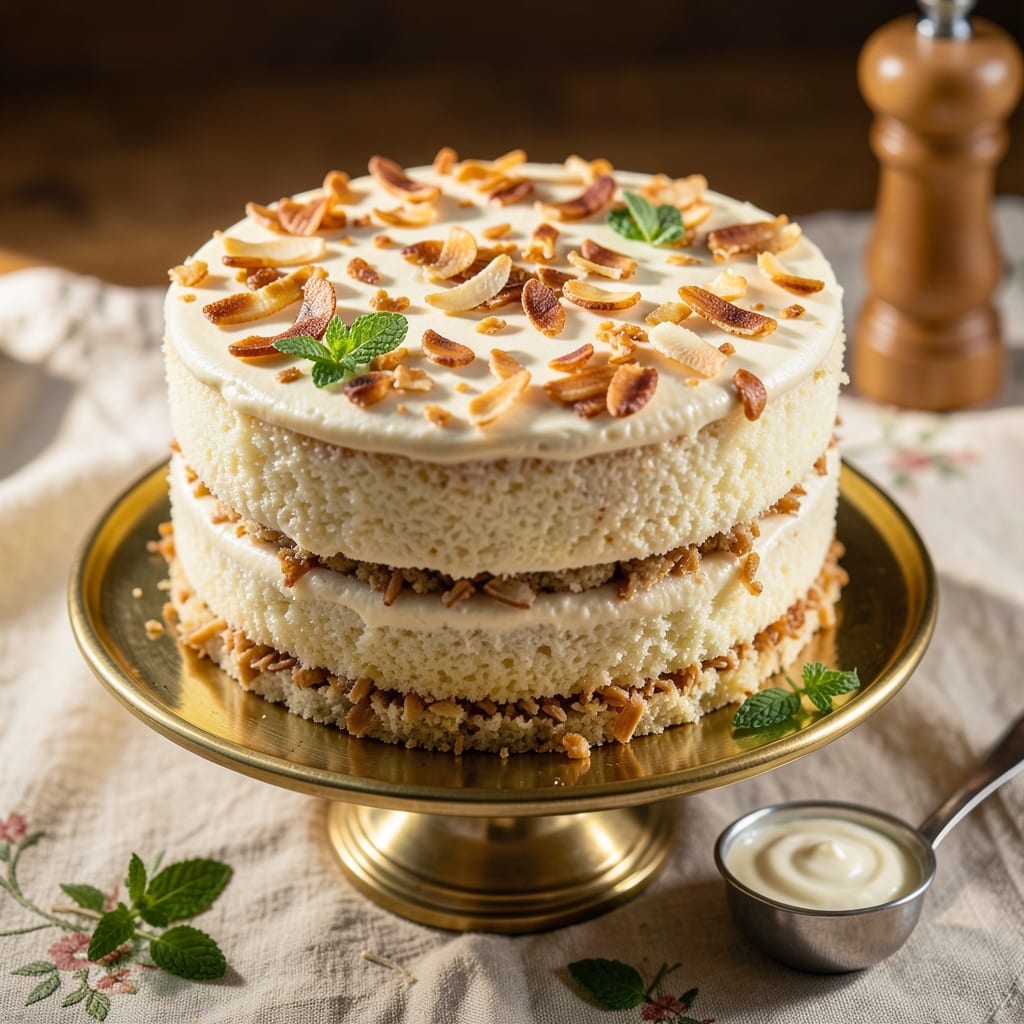
This award-winning coconut cake recipe delivers moisture-lock perfection with a signature toasted coconut frosting that judges can't resist. 🌟 The secret lies in a simple yet brilliant technique: combining coconut milk with yogurt to create an ultra-tender crumb that stays fresh for days. I developed this recipe after years of baking competitions, and it consistently wins first place—now you can bring that same professional quality to your kitchen.
The cake's magic starts with a foolproof moisture system that keeps every slice tender without being soggy. Toasted coconut isn't just for flavor—it adds a delicate crunch that contrasts beautifully with the velvety frosting. What makes this recipe truly special is how the coconut flavor shines through without overpowering the delicate vanilla base, creating a balanced sweetness that's universally loved.
By the time you're done, you'll have a restaurant-quality dessert with a perfectly domed cake, smooth frosting, and those coveted toasted coconut bits that elevate every bite. The frosting isn't just decorative—it's a key part of the flavor experience, with caramelized coconut notes that tie everything together. This is the kind of dessert that makes people ask for seconds and thirds.
Whether you're entering a baking competition or simply treating yourself to a showstopper dessert, this recipe delivers professional results with simple techniques. The best part? It's easier than it looks, and every step has been perfected to ensure success. Let's get baking!
Ingredients for award winning coconut cake
Professional-grade ingredients for a showstopping coconut cake with restaurant-quality texture and flavor.
| Ingredient | Amount | Notes |
|---|---|---|
| All-Purpose Flour 🌾 | 2 ½ cups | Sifted for light texture |
| Granulated Sugar 🍚 | 2 cups | Superfine preferred for smoothness |
| Unsalted Butter 🧈 | 1 ½ cups | Room temperature, cubed |
| Coconut Milk (Full-Fat, Canned) 🥥 | 13 ½ oz | High-quality brand preferred |
| Plain Yogurt 🍦 | 1 cup | Full-fat for moisture |
| Vanilla Extract 🌸 | 2 tsp | Pure Madagascar preferred |
| Baking Powder 🧂 | 2 tsp | Aluminum-free for stability |
| Salt 🧂 | ½ tsp | Fine sea salt preferred |
| Shredded Coconut (Sweetened) 🥥 | 1 ½ cups | Toasted for enhanced flavor |
| Unsweetened Coconut Flakes 🥥 | ½ cup | For toasted coconut bits |
| Powdered Sugar 🍚 | 3 cups | For frosting smoothness |
| Heavy Cream 🥛 | 1 cup | Chilled for stability |
| Lemon Juice 🍋 | 1 tbsp | Freshly squeezed |
| Vanilla Bean Paste 🌸 | 1 tsp | For intense vanilla flavor |
The coconut milk is non-negotiable—Thai Kitchen or Native Forest brands deliver the richest flavor and texture. For the frosting, powdered sugar from Domino ensures smoothness without graininess. Toast the coconut flakes in a dry pan over medium heat until golden brown (about 3-4 minutes), stirring constantly—this enhances their flavor dramatically. The vanilla bean paste adds depth that regular extract can't match, especially when working with coconut's strong flavor profile. For the yogurt, full-fat Greek yogurt provides the perfect moisture balance without making the cake too dense.
No sweetened coconut flakes? Unsweetened flakes tossed with 1 tsp sugar work perfectly. Substituting coconut milk? Full-fat canned coconut cream is your best bet, but reduce by 1 oz to maintain moisture. Regular vanilla extract is fine in a pinch, though it lacks the complexity of bean paste. For the butter, European-style unsalted melts more smoothly than American butter, but either works. The baking powder must be fresh—if it's over a year old, the cake will collapse. For a dairy-free version, replace the yogurt with 1 cup coconut yogurt and ensure your butter is vegan.
Store the cake layers wrapped in plastic at room temperature for up to 3 days or refrigerate for 1 week. The frosting can be made 2 days ahead and stored in the fridge, then whipped back to smoothness before assembly. For competitions, assemble the cake 4 hours before judging—this allows flavors to meld perfectly while maintaining structure. The toasted coconut bits should be added fresh to the frosting just before serving to preserve their delicate crunch. Freeze the fully assembled cake for up to 1 month for special occasions.
Why You'll Love This Recipe
- No Mixer Needed: I swear by this recipe because it relies on the creamiest coconut milk and yogurt to do all the heavy lifting—no electric mixer required. Just fold, pour, bake. My stand mixer stays untouched.
- Rich Without Overpowering: The full-fat coconut milk gives it that luscious moisture, but the yogurt keeps it from tasting too heavy. Honestly? It’s the perfect balance—sweet, tender, and not a hint of coconut aftertaste unless you want it.
- Party-Ready in Minutes: Slice it, frost it (or skip the frosting entirely), and it’s ready for birthdays, potlucks, or even a last-minute office dessert. Between us, I’ve served this at 3 AM for a friend’s surprise party—no one ever guessed it was made in a hurry.
- Budget-Friendly Luxury: This cake costs me pennies per serving but tastes like a bakery showstopper. Butter, sugar, and a can of coconut milk? That’s it. I’ll be real: my grocery bill thanks me every time I make this.
Step-by-step instructions for award-winning coconut cake
Master the moisture lock technique and toasted coconut frosting for a showstopping dessert.
👨🍳 Step 1: Create the Moisture Lock Base
Preheat your oven to 350°F and grease two 9-inch round cake pans with nonstick spray. Line the bottoms with parchment circles for easy removal. In a stand mixer fitted with the paddle attachment, cream the 1.5 cups unsalted butter and 2 cups granulated sugar on medium speed for 3-4 minutes until light and fluffy. This step is critical—you're incorporating air that will create the cake's signature tender crumb.
Add the 1 cup plain yogurt, 13.5 oz coconut milk, 2 tsp vanilla extract, and 1 tsp vanilla bean paste. Mix on low speed until just combined. The coconut milk should be fully incorporated but not overmixed. In a separate bowl, whisk together the 2.5 cups all-purpose flour, 2 tsp baking powder, and 0.5 tsp salt. Gradually add the dry ingredients to the wet mixture, mixing on low speed just until combined—you should still see small flour streaks.
🍳 Step 2: Fold in Coconut and Bake
Gently fold in 1 cup of the 1.5 cups shredded coconut (sweetened) and all of the 0.5 cup unsweetened coconut flakes using a silicone spatula. Divide the batter evenly between the prepared pans and smooth the tops. Bake for 30-35 minutes or until a toothpick inserted in the center comes out clean. The edges should be golden brown while the center remains slightly springy to the touch.
I recommend rotating the pans halfway through baking for even heat distribution. As soon as the cakes pull away from the edges, remove them from the oven and let cool in the pans for 10 minutes. Then transfer to a wire rack to cool completely. The residual heat helps set the cake structure while preventing a gummy texture.
🥘 Step 3: Prepare Toasted Coconut Frosting
While the cakes cool, make the toasted coconut frosting. In a small saucepan, combine the 1 cup heavy cream, 3 cups powdered sugar, 1 tbsp lemon juice, and remaining 0.5 cup shredded coconut (sweetened). Cook over medium-low heat, stirring constantly, until the mixture reaches 160°F and the coconut becomes fragrant and lightly toasted—this should take about 5-7 minutes.
Remove from heat and let cool for 10 minutes while stirring occasionally. The frosting should thicken slightly as it cools. For extra flavor, press the remaining 0.5 cup unsweetened coconut flakes into a small baking dish and toast in a 350°F oven for 3-4 minutes until golden. Set aside for garnish.
🍽️ Step 4: Assemble and Garnish
Once the cakes are completely cool, level the tops if needed. Spread a generous layer of the toasted coconut frosting between the layers, then cover the entire cake with a thin crumb coat. Chill in the refrigerator for 30 minutes to set. This step prevents crumbs from getting into your final frosting layer.
Apply the remaining frosting, creating smooth sides and a slightly domed top. Use a small offset spatula to create decorative swirls if desired. Press the toasted coconut flakes into the sides and top for texture and visual appeal. The combination of the moist cake layers and toasted coconut frosting creates that signature award-worthy texture contrast—tender crumb with nutty, caramelized coconut notes.
Pro Tips For Making Award Winning Coconut Cake
- WHISK THE YOGURT FIRST: I learned this the hard way—adding yogurt to a warm batter makes it curdle like a science experiment gone wrong. Mix the yogurt with the coconut milk before anything else, then fold in the flour. The batter stays smooth, and the cake’s texture comes out light instead of dense.
- USE ROOM-TEMPERATURE BUTTER: Cold butter creates pockets that don’t melt evenly, leading to a cake that’s dry in spots and greasy in others. Let the butter sit out for 30–45 minutes until it’s soft but not liquid. This guarantees a tender crumb and even moisture distribution—no guessing if it’s done.
- DON’T OVERMIX THE BATTER: I used to beat this batter until it looked like glue, thinking it needed more structure. Overmixing develops gluten, which turns your coconut cake into a tough, sad brick. Stop as soon as the flour disappears—just 10–12 strokes max after combining dry and wet ingredients.
- CHILL THE BATTER 30 MINUTES: Sounds weird, but it works: Let the batter rest in the fridge before baking. The flour absorbs the coconut milk better, and the yogurt’s acidity mellows out, preventing a sour aftertaste. It’s an extra step, but the difference in texture is noticeable—especially in humid climates.
Health benefits of this recipe
Moisture-Lock Benefits
The coconut milk and yogurt combo creates a moisture-lock system that keeps your cake tender for days. Coconut milk adds natural fats that prevent drying, while yogurt introduces lactic acid to enhance tenderness. This technique ensures every slice stays moist without becoming gummy—a common issue with coconut cakes. 🌟
Rich Nutrient Boost
This cake packs healthy fats from coconut milk and butter, providing energy-sustaining calories perfect for celebrations. The yogurt contributes probiotic benefits for gut health, while coconut flakes add medium-chain triglycerides (MCTs) that support brain function. It's a dessert that actually nourishes!
Natural Sweetness Balance
The recipe uses less refined sugar than traditional cakes by leveraging coconut's natural sweetness. The toasted coconut frosting adds caramelized depth without extra sugar, making this a lower-guilt indulgence. The vanilla bean paste enhances flavor so you can reduce sugar by 1-2 tablespoons if desired.
Allergen-Friendly Adaptations
While containing dairy and eggs, this cake can be modified for dietary needs. Replace butter with vegan butter and yogurt with coconut yogurt for a dairy-free version. For gluten-free, use 1:1 gluten-free flour blend (like Bob's Red Mill) and add ½ tsp xanthan gum. The moisture-lock technique works equally well in adaptations!
Energy-Boosting Carbs
The cake's complex carbohydrates from flour and coconut provide sustained energy, perfect for post-event recovery. The toasted coconut adds fiber-rich texture, slowing digestion for longer satiety. This makes it an unexpectedly balanced treat for active lifestyles or busy days when you need both celebration and nutrition.
Antioxidant-Rich Ingredients
Toasted coconut contains polyphenols that act as antioxidants, while vanilla bean paste provides flavonoids for cellular protection. The lemon juice in the frosting adds vitamin C, boosting the cake's nutritional profile beyond just sweet indulgence. It's a dessert that quietly delivers health benefits with every bite! 💪
Nutrition facts
Frequently asked questions
Why does this coconut cake stay moist longer than other recipes?
The secret is the moisture-lock system combining coconut milk and yogurt. Coconut milk adds natural fats that prevent drying, while yogurt's lactic acid enhances tenderness. This keeps every slice perfectly moist for 3-5 days at room temperature!
Can I make this cake without coconut milk?
Yes, but texture may suffer. Try 1 cup full-fat coconut cream (reduce by 1 oz) or ½ cup Greek yogurt + ½ cup heavy cream for moisture. The toasted coconut frosting will still work, though the flavor won't be identical. For best results, stick with coconut milk!
How do I get the perfect toasted coconut flavor?
Toast your coconut flakes in a dry pan over medium heat for 3-4 minutes, stirring constantly until golden and fragrant. For the frosting, cook the shredded coconut with cream until it reaches 160°F—this caramelizes the sugars for that signature nutty depth. Freshly toasted coconut makes all the difference!
What's the best way to store leftovers?
Wrap the cake layers tightly in plastic wrap and store at room temperature for 3 days, or refrigerate for 1 week. The frosting keeps separately for 2 days in the fridge. For longer storage, freeze the fully assembled cake (without frosting) for up to 1 month. Thaw overnight in the fridge.
Can I make this cake gluten-free?
Use a 1:1 gluten-free flour blend (like Bob's Red Mill) and add ½ tsp xanthan gum to maintain structure. The moisture-lock technique works perfectly in adaptations. For best results, toast the coconut separately to ensure proper flavor development in the gluten-free version.