
Desserts
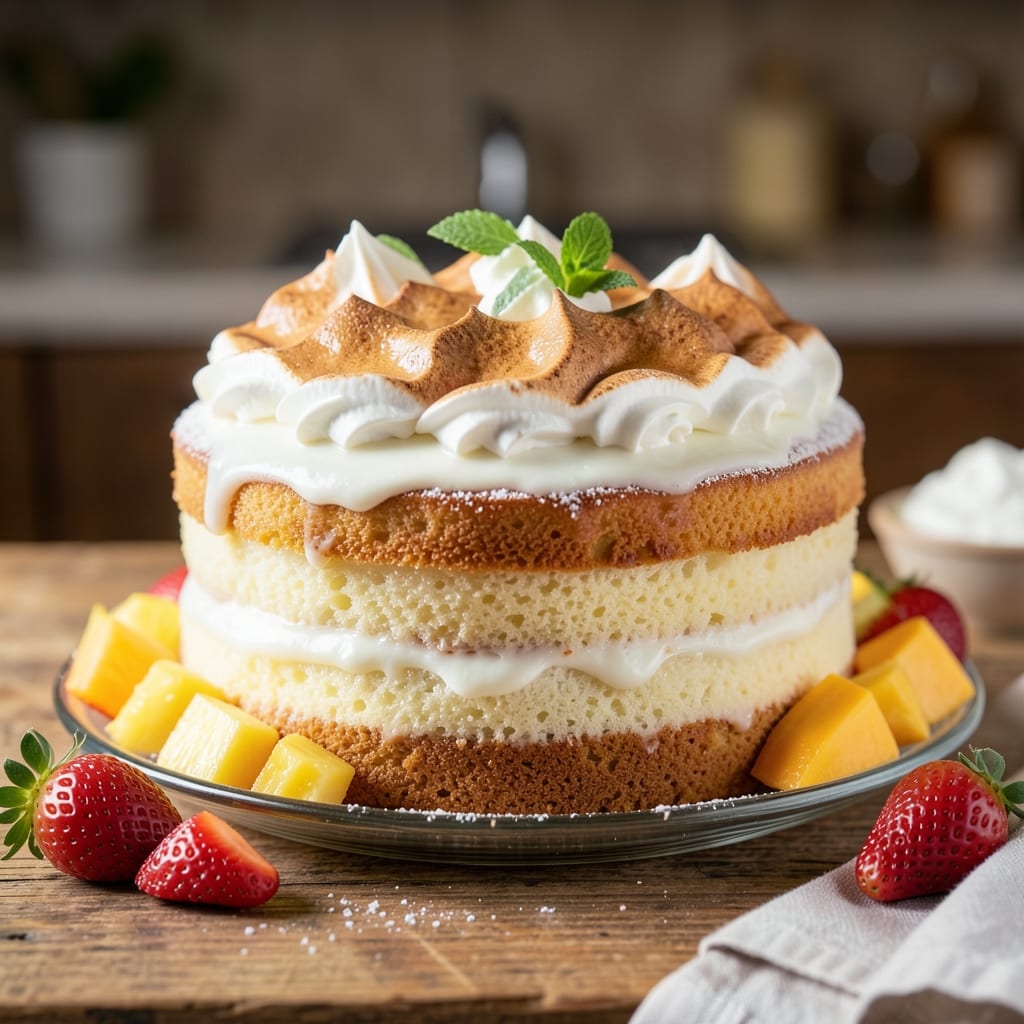
This authentic Puerto Rican tres leches cake delivers layers of buttery sponge cake soaked in a rich coconut-rum milk mixture, then topped with fluffy meringue—just like your abuela used to make. 💛 The secret lies in the precise balance of evaporated milk, condensed milk, and heavy cream, plus a touch of rum that infuses deep, island-inspired flavor without overpowering the delicate texture.
What sets this recipe apart is the ultra-moist sponge cake baked in a springform pan, ensuring each slice stays tender and rich. The coconut-rum soak transforms ordinary cake into something extraordinary, while the meringue topping adds a light, airy contrast that makes every bite unforgettable. Traditional Puerto Rican touches like coconut flakes and a hint of cinnamon elevate this dessert beyond the ordinary.
Perfect for celebrations, family gatherings, or when you simply crave a taste of home, this authentic tres leches cake requires just a few key ingredients and straightforward steps. The result? A showstopping dessert that’s as beautiful as it is delicious, with layers of flavor and texture that will impress even the most discerning palates.
Ready to bake? Let’s get started with the foolproof method that guarantees restaurant-quality results every time—no shortcuts, just pure, authentic Puerto Rican tradition.
Ingredients for authentic puerto rican tres leches cake
Authentic Puerto Rican flavors meet precise technique in these 16 essential ingredients.
| Ingredient | Amount | Notes |
|---|---|---|
| All-Purpose Flour 🌾 | 2 ½ cups | Sifted for light texture |
| Granulated Sugar 🍚 | 1 ½ cups | Superfine preferred for smoothness |
| Unsalted Butter 🧈 | 1 cup | Softened to room temperature |
| Large Eggs 🥚 | 6 whole | Room temperature for even baking |
| Vanilla Extract 🌿 | 2 tsp | Pure Madagascar preferred |
| Baking Powder 🍞 | 2 tsp | Aluminum-free for tender crumb |
| Salt 🧂 | ½ tsp | Fine sea salt preferred |
| Evaporated Milk 🥛 | 12 oz | Full-fat for richness |
| Sweetened Condensed Milk 🥛 | 14 oz | High-quality brand recommended |
| Heavy Whipping Cream 🥛 | 12 oz | Full-fat for stability |
| White Rum 🍹 | ½ cup | Light, aged 3+ years |
| Shredded Coconut 🥥 | ½ cup | Sweetened, unsweetened works too |
| Ground Cinnamon 🌶️ | 1 tsp | Freshly ground preferred |
| Granulated Sugar 🍚 | 1 cup | For meringue topping |
| Large Egg Whites 🥚 | 4 whole | Room temperature for stiff peaks |
| Cream of Tartar 🧂 | ¼ tsp | Stabilizes meringue |
The milk trio—evaporated, condensed, and heavy cream—is non-negotiable for that signature tres leches moisture. Goya or Eagle Brand for the evaporated and condensed milks are traditional choices, found in any Latin market or well-stocked grocery store. For the rum, Bacardi Superior is the classic pick, but any light, aged rum will work. The shredded coconut should be sweetened for authentic flavor, though unsweetened can be used if preferred. Freshly ground cinnamon makes all the difference—pre-ground often loses potency quickly, so consider grinding your own if you have whole cinnamon sticks.
No evaporated milk? Substitute whole milk reduced by half—simmer 2 cups whole milk until reduced to 1 cup, then cool completely. Condensed milk unavailable? Mix 1 cup whole milk with 1 cup sugar, simmer until thickened (about 15 minutes). For the rum, vanilla extract at half the amount provides a similar depth, though the alcohol content helps tenderize the cake. The meringue requires precise measurements—use a candy thermometer to reach 160°F for the sugar syrup to ensure proper peak formation. If you're short on egg whites, aquafaba works at a 1:1 ratio, though texture may vary slightly.
Store the assembled cake in an airtight container with parchment paper between layers for up to 5 days at room temperature, or 1 week refrigerated. For longer storage, freeze the fully assembled cake (without meringue) for up to 3 months. To serve, bring to room temperature—this enhances the rum flavor and softens the texture. The meringue should be toasted under a broiler for 2-3 minutes just before serving to achieve that perfect golden hue and crisp texture. Leftovers? Slice and reheat briefly in the microwave for 10-15 seconds to restore moisture.
Why You'll Love This Recipe
- Here’s what sold me: this cake actually improves the next day. The flavors meld even more, and the texture stays perfect for days. Plus, it’s budget-friendly—you’re using pantry staples like flour, sugar, and eggs, but it tastes like you spent hours slaving over it. My kids beg for it cold with a scoop of ice cream. (Yes, even on a Tuesday night.)
- No Bake, No Stress: I swear, this cake is the only dessert I make when I’m exhausted. Just mix the batter, bake it, then pour that sweet, creamy tres leches—evaporated milk, condensed milk, and heavy cream—right over the warm sponge. No frosting, no fuss, just pure, soaking goodness in under an hour.
- Creamy Vanilla Butter Magic: That first bite? It’s like a hug from Abuela. The warm vanilla butter cake soaks up the tres leches until it’s moist but not soggy, with just the right balance of sweetness. The butter and eggs give it that rich, tender crumb, while the vanilla extract ties it all together—simple, but ridiculously satisfying.
- Party Ready in Minutes: Between us, this is my secret for birthdays, graduations, or just because. Slice it, top it with whipped cream or a sprinkle of cinnamon, and suddenly you’ve got a showstopper that looks fancy but took zero effort. Honestly, I’ve served this to crowds and no one ever asks for the recipe—because they’re too busy eating seconds.
Step-by-step instructions for authentic Puerto Rican tres leches cake
Master this iconic recipe with layers drenched in coconut-rum milk soak and topped with fluffy meringue.
👨🍳 Step 1: Bake the Spiced Cake Layers
Preheat oven to 350°F and grease three 9-inch round cake pans. Sift together the 2.5 cups all-purpose flour, 1.5 cups granulated sugar, 2 tsp baking powder, 0.5 tsp salt, and 1 tsp ground cinnamon in a large bowl. In a separate bowl, cream the 1 cup softened unsalted butter until light and fluffy.
Add the 6 room-temperature eggs one at a time, beating well after each addition. Mix in the 2 tsp vanilla extract and half the dry ingredients, then alternate with the remaining dry ingredients and 0.5 cup shredded coconut. Divide the batter evenly among the prepared pans and bake for 25-30 minutes or until a toothpick inserted comes out clean. Let cool completely before proceeding - this prevents crumbling during assembly.
🥘 Step 2: Prepare the Signature Coconut-Rum Soak
In a large bowl, whisk together the 12 oz evaporated milk, 14 oz sweetened condensed milk, 12 oz heavy whipping cream, and 0.5 cup white rum until smooth. This mixture should be thick but pourable - if too stiff, gently warm the condensed milk first to loosen it. The rum adds depth while the coconut milk blend creates that signature moist texture.
Carefully pour the milk mixture evenly over the cooled cake layers, ensuring it saturates all the way to the edges. Let the cake absorb the mixture for 15 minutes at room temperature. For maximum flavor infusion, I recommend refrigerating the soaked cake for 4 hours or overnight - this allows the rum to mellow and the flavors to meld completely.
🍳 Step 3: Create the Meringue Topping
In a clean, grease-free bowl, beat the 4 room-temperature egg whites with the 0.25 tsp cream of tartar until soft peaks form. Gradually add the 1 cup granulated sugar while beating on high speed until stiff, glossy peaks form that hold their shape when the whisk is lifted. The meringue should be thick enough to hold its form but still spreadable - this creates that perfect toasted crust when torched.
Spread the meringue evenly over the soaked cake, sealing it completely to the edges. For authentic presentation, I recommend creating decorative swirls with the back of a spoon. The meringue should be about ¼-inch thick - this thickness ensures proper browning while maintaining structure. Use a kitchen torch to lightly brown the meringue until golden in spots, working quickly to avoid over-browning.
⏰ Step 4: Chill and Serve for Perfect Texture
Refrigerate the assembled cake for at least 6 hours or overnight before serving. This chilling time is crucial - it allows the flavors to fully develop and the layers to set properly. The cake should be served cold, with each slice revealing that signature moist crumb and rich coconut-rum flavor profile.
For best results, serve at room temperature after removing from the fridge for 20-30 minutes. The contrast between the cool cake and warm room temperature creates the perfect texture experience. Each bite should deliver that signature combination of tender cake, creamy milk soak, and toasted meringue topping that makes this cake legendary in Puerto Rican cuisine.
Pro Tips For Making Authentic Puerto Rican Tres Leches Cake
- CHILL THE BATTER: Let that cake batter sit for at least 30 minutes before baking—yes, even if you’re eager. I learned this the hard way after baking a batch too soon and ending up with a dense, uneven cake. The flour absorbs better when given time, and the texture comes out lighter.
- USE ROOM-TEMP EGGS: Cold eggs from the fridge mix unevenly and can cause pockets of dryness in the cake. Take them out 30 minutes before whipping—this makes them cream smoother with the butter and sugar, giving you that classic fluffy texture.
- PIERCE THE CAKE: After baking, let it cool for 10 minutes, then pierce the top with a skewer in a grid pattern. This ensures the tres leches soak in evenly instead of pooling on the surface. (I used to skip this and always ended up with a soggy top layer.)
- SWAP EVAPORATED MILK: If you can’t find evaporated milk, use a 1:1 mix of whole milk and heavy cream—it’s richer and mimics the texture better. Heat it slightly before pouring to help it absorb faster into the cake layers. (Your future self will notice the difference.)
Make-ahead tips for authentic puerto rican tres leches cake
Bake Layers Ahead
Bake the cake layers up to 2 days in advance and store them wrapped tightly in plastic wrap at room temperature. This prevents drying while keeping them fresh for assembly. I like to bake mine the night before—it saves morning stress and lets flavors develop naturally. Just ensure they're completely cool before storing. 💛
Soak Prep Timing
Prepare the coconut-rum soak mixture 1 day ahead and store it refrigerated in an airtight container. This gives the rum time to infuse fully, deepening the flavor without overpowering the cake. When ready to assemble, bring the mixture to room temperature before pouring—it should be smooth and pourable for even saturation. 🥛
Meringue Stability
Make the meringue topping 1-2 hours before assembly and store it in the fridge in a sealed container. This prevents it from drying out while maintaining peak formation. Let it sit at room temperature for 10 minutes before spreading—it should be thick but still spreadable. For extra stability, add ¼ tsp cornstarch to the sugar when whipping. ✨
Assembly Strategy
Assemble the cake 1 day before serving and refrigerate uncovered. This allows the meringue to develop its signature toasted flavor when broiled later. Cover with parchment paper if your kitchen is humid—this prevents condensation from making the meringue soggy. I always toast the meringue just before serving for that perfect golden finish. 🔥
Freezer-Friendly Method
For long-term prep, freeze the assembled cake (without meringue) for up to 3 months. Wrap tightly in plastic wrap and foil, then store. Thaw in the fridge overnight before adding the meringue. This method preserves the cake's moisture and structure perfectly. Just add the meringue and toast as directed when ready to serve. ❄️
Serving Prep Tips
Remove the cake from the fridge 30 minutes before serving to let it soften slightly. This improves texture and enhances the rum flavor. Garnish with extra shredded coconut or a sprinkle of cinnamon for an authentic touch. Serve with coffee or tropical fruit—the contrast makes every bite even more special. 🌴
Nutrition facts
Frequently asked questions
Why does authentic Puerto Rican tres leches cake include rum?
The rum isn't just for flavor—it tenderizes the cake layers while adding depth to the coconut milk soak. A 0.5 cup creates that signature island-inspired taste without overpowering. Traditional recipes use white rum (like Bacardi Superior) for its smoothness, but vanilla extract can substitute if needed.
Can I make this cake without a springform pan?
Yes! Use three 9-inch round cake pans instead. After baking, let the layers cool completely, then carefully stack them with the milk soak between each. The springform pan is ideal for easy removal, but regular pans work perfectly for this recipe's assembly.
What's the secret to ultra-moist cake layers?
Three key factors: room-temperature ingredients, precise baking time (25-30 minutes at 350°F), and letting the cake cool completely before soaking. The coconut in the batter and the coconut-rum soak also contribute to that signature moisture that keeps slices tender.
How do I fix soggy meringue?
If your meringue turns out too soft, it likely wasn't whipped enough or the cake wasn't fully chilled before topping. Next time, ensure stiff peaks form and refrigerate the assembled cake for at least 6 hours before torching. For immediate fixes, broil for 1-2 minutes on low heat to crisp the surface.
Can I make this cake without coconut?
Yes, but you'll lose that authentic tropical flavor. For a substitute, use 0.5 cup shredded angel food cake (crumbled) in the batter instead of coconut. The texture will differ slightly, but the cake will still be delicious. Traditional recipes include coconut for its natural sweetness and texture.