
Desserts
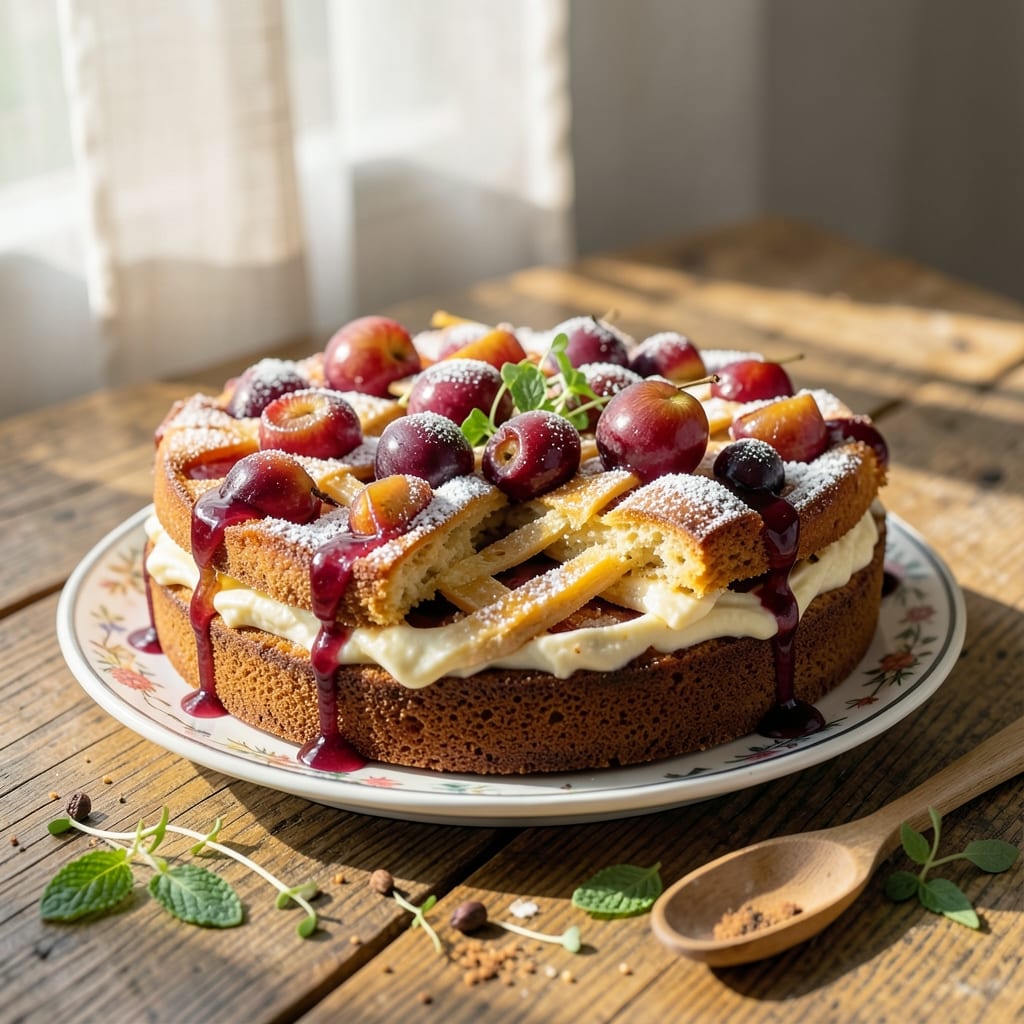
This authentic plum cake recipe transports you to the heart of Central Europe with its signature layers of tender dough, spiced plums, and warm cinnamon aroma. 🌟 The secret lies in the slow-baked layers—each one infused with sweet-tart plums and a whisper of vanilla and cardamom—that create a moist, golden cake with a rustic charm. Unlike its lighter American counterparts, this version stays dense and flavorful, perfect for slicing with tea or serving at holiday gatherings.
The traditional method calls for a simple yet precise approach: a buttery dough layered with plums that caramelize gently in the oven, creating pockets of jammy sweetness. No fancy equipment is needed—just a standard oven and patience, as the cake bakes low and slow to develop its signature depth. The spices, often a blend of cinnamon, nutmeg, and cloves, are what truly elevate this cake from ordinary to extraordinary.
What makes this recipe authentic is its balance—sweet enough to satisfy, but never cloying, thanks to the natural tartness of the plums. The finish? A light dusting of powdered sugar or a drizzle of honey glaze, adding just enough sparkle without overpowering the natural flavors. This is the kind of dessert that feels like a hug from your grandmother, with every bite telling a story of tradition and care.
For those looking to modernize, optional variations include swapping butter for vegan margarine or using dried plums instead of fresh. But at its core, this remains a timeless classic—one that honors the craftsmanship of European bakers while inviting you to create something truly special in your own kitchen.
Ingredients for authentic plum cake
European pantry staples meet summer fruit for this classic plum cake.
| Ingredient | Amount | Notes |
|---|---|---|
| All-Purpose Flour 🌾 | 3 cups | Sifted for light texture |
| Unsalted Butter 🧈 | 1 cup | Cold, cubed for dough |
| Granulated Sugar 🍚 | 1 ½ cups | White or light brown |
| Large Eggs 🥚 | 2 whole | Room temperature |
| Vanilla Extract 🍯 | 1 tbsp | Pure, not imitation |
| Fresh Plums 🍑 | 2 lbs | Pitted, halved, fresh or frozen |
| Ground Cinnamon 🌿 | 1 tbsp | Freshly ground preferred |
| Ground Nutmeg 🌶️ | ½ tsp | Freshly grated nutmeg |
| Ground Cloves 🌶️ | ¼ tsp | Lightly toasted |
| Cardamom Pods 🌿 | 4 whole | Lightly crushed |
| Powdered Sugar 🍚 | ½ cup | For dusting |
| Honey 🍯 | 2 tbsp | For glaze (optional) |
| Baking Powder 🍞 | 1 tsp | Aluminum-free |
| Salt 🧂 | ½ tsp | Fine sea salt |
The butter and flour are non-negotiable here—European-style unsalted butter (like Plugrá or President) gives that signature richness. If you can't find it, Land O'Lakes works in a pinch, but chill it first. For the plums, Italian prunes or fresh Damson plums are ideal, but any sweet-tart variety will do. Walmart or Trader Joe's usually carry frozen pitted plums if fresh aren't in season. The spices? Penzeys Spices for bulk, but the grocery store stuff is fine if it's fresh-smelling. Toast your whole spices (cardamom, cloves) in a dry pan for 30 seconds—trust me, it makes all the difference.
No vanilla extract? Seeds from 1 vanilla bean work wonders, or swap for 1 tsp vanilla sugar. Running low on plums? Dried plums soaked in warm water (like Mission brand) add depth without extra moisture. The dough needs to be cold when layered—chill it 30 minutes before baking, or the cake will spread too much. For a vegan twist, Earth Balance vegan butter and flax eggs (1 tbsp ground flax + 3 tbsp water) keep it authentic. And if you're short on powdered sugar, blend 1/2 cup granulated sugar in a food processor—it's not ideal, but it works.
This cake tastes even better the next day—cover loosely with plastic wrap and store at room temp for 3 days. For longer storage, wrap tightly in foil and freeze for 3 months. The glaze? Just mix the honey with 1 tsp warm water and drizzle right before serving. Leftovers? Toast slices lightly to revive the texture. And if you're feeling fancy, serve with whipped cream or vanilla ice cream—though purists will say the cake stands alone.
Why You'll Love This Recipe
- No-Fuss Mixing: I swear by the creamy butter-egg combo here—just cream, fold, bake. No food processor, no weird ratios, and that vanilla? It’s the secret to a tender crumb that doesn’t fight back.
- Plum Butter Magic: That caramelized plum filling (yes, it’s just sugar, plums, and butter) turns this into something special. The sugar’s edge balances the cake’s richness—like a hug for your taste buds.
- Weekend or Weeknight: Slice it warm for brunch, pack it for a picnic, or serve it at a potluck. The cake keeps well for days, and the filling? Even better the next day. (Between us, I’ve eaten it cold at midnight.)
- Pantry Staple Power: Flour, butter, sugar, eggs—if you bake, you’ve got this. No exotic ingredients, no last-minute grocery runs. Plus, the leftovers? Perfect for breakfast toast or a quick dessert fix.
Step-by-step instructions for European spice plum cake
Here's how to create that perfect balance of tender crumb, spiced warmth, and juicy plums.
👨🍳 Step 1: Mix the Spiced Dough
In a large mixing bowl, combine the 3 cups All-Purpose Flour, 1 tsp Baking Powder, 0.5 tsp Salt, 1 tbsp Ground Cinnamon, 0.5 tsp Ground Nutmeg, 0.25 tsp Ground Cloves, and the 4 whole Cardamom Pods. Sift the flour mixture together for a light, airy texture—this prevents dense pockets in your cake. In a separate bowl, beat the 1 cup Unsalted Butter and 1.5 cups Granulated Sugar until light and fluffy, about 3-4 minutes on medium speed.
Add the 2 whole Large Eggs, one at a time, mixing well after each addition. Then stir in the 1 tbsp Vanilla Extract. Gradually add the dry spice mixture to the wet ingredients, mixing just until combined. I like to use a wooden spoon here to avoid overmixing—you should still see some flour streaks. The dough will be slightly sticky, which is perfect for that moist crumb.
🍳 Step 2: Prepare the Plum Filling
While the dough rests, pit and halve the 2 lbs Fresh Plums, removing any tough stems. Toss the plum halves with 2 tbsp Honey to enhance their natural sweetness and prevent them from drying out in the oven. Arrange the plums cut-side up in a 9-inch round cake pan or similar size, leaving no gaps between them. This creates a beautiful, even layer of fruit that will caramelize beautifully.
Here's the thing—don't skip the honey. It helps the plums soften perfectly while adding subtle depth of flavor. If you're using frozen plums, thaw them first and pat them dry with a paper towel to prevent excess moisture in your cake.
🥘 Step 3: Assemble and Bake the Cake
Press the prepared dough evenly over the plum layer, smoothing the top with a spatula. The dough should be about ½-inch thick—press gently but firmly to create an even surface. Dust the top lightly with 0.5 cup Powdered Sugar for that classic European finish. Bake in a preheated 350°F oven for 45-50 minutes, until the top is golden brown and a toothpick inserted comes out clean.
I always check for doneness at the 40-minute mark—your oven might run hot, so start checking early. The cake should be set but still slightly springy in the center. If the top browns too quickly, tent it loosely with foil after 20 minutes to prevent over-browning.
⏰ Step 4: Cool and Serve
Remove the cake from the oven and let it cool in the pan for 10 minutes. Then transfer it to a wire rack to cool completely. The cooling process is crucial—it allows the flavors to meld and the texture to set properly. Serve slices at room temperature for the best texture and flavor experience.
This cake tastes even better the next day when the flavors have fully developed. The warm spices and juicy plums create a perfect harmony that's pure comfort food. Store leftovers wrapped in plastic at room temperature for up to 3 days, or refrigerate for up to 5 days. Enjoy with a dollop of whipped cream or a dusting of powdered sugar for that classic European touch.
Pro Tips For Making Authentic Plum Cake
- CREAM THE BUTTER SLOW: After burning three batches of cake because the butter was too warm, I learned to mix it with sugar over ice water in a bowl. The butter should feel cool but not solid—like a chilled stick that just gives slightly when pressed. This keeps the texture tender instead of greasy or dense.
- WEIGH YOUR FLOUR: Scooping flour from the bag packs in air, which means your cake will rise unevenly. Use a kitchen scale and measure flour by weight (typically 1 cup = 120g for this recipe). Pack it lightly into the measuring cup, then level it off—this keeps the crumb uniform and prevents a dry center.
- DON’T OVERMIX THE BATTER: The moment your batter looks like pancake batter, stop. Overmixing develops gluten, which makes plum cake tough instead of light. Mix just until the flour disappears—about 10-12 strokes with a spatula—and resist the urge to "get it all in." The cake’s delicate texture depends on this.
- LET THE BATTER REST: Pouring batter straight into the pan leads to a sunken center. Let it sit covered at room temperature for 30 minutes before baking. This lets the flour absorb moisture and the eggs firm up slightly—your cake will rise higher and hold its shape better. (Yes, even if you’re impatient like me.)
Regional styles of these flavors
Hungarian Mézeskalács
In Hungary, plum cake takes the form of mézeskalács, a twisted, spiral-shaped treat often served at Christmas markets. The dough here is enriched with sweetened condensed milk instead of butter, creating a caramelized crust that's crisp on the outside and soft inside. Use 2 cups sweetened condensed milk and reduce the sugar to 1 cup, then shape the dough into a spiral on a baking sheet. Brush with melted butter during baking for that signature glossy finish. 🌟
German Pflaumenkuchen
Germany's Pflaumenkuchen is a rustic, free-form cake where the plums are baked directly into a simple yeast dough. The secret? Sour cream replaces butter for a tender crumb, and the dough is rolled out thinly before being topped with plums and a lattice crust. For authenticity, use 1 cup sour cream and 1 tbsp lemon zest in the dough. Bake at 375°F for 30-35 minutes until the crust is golden and the plums are bubbling. 🍑
Austrian Topfenkuchen
Austrian Topfenkuchen swaps plums for quark (farmer's cheese), but the spice profile remains the same. The cake is denser and often served with a powdered sugar glaze and sour cream drizzle. For a plum variation, replace 1 cup quark with 1 cup mashed plums in the dough. Top with a layer of plums before baking, then dust with powdered sugar and toasted almonds for texture. 🌶️
Czech Hruškovník
The Czech version, Hruškovník, often includes pears alongside plums for a dual-fruit flavor. The dough is slightly sweeter, with 1.75 cups sugar and a pinch of saffron for a floral note. Arrange halved pears and plums in a star pattern on top before baking. The cake is best served warm with vanilla ice cream or a rum sauce. For saffron, use ¼ tsp threads steeped in 2 tbsp warm milk before adding to the dough. ✨
Italian Pasticcio di Prugne
Italy's Pasticcio di Prugne is a layered cake with savoiardi (ladyfingers) soaked in plum syrup. The syrup is made by simmering 2 cups plum juice with ½ cup sugar and 1 tsp vanilla until thickened. Layer savoiardi in a pan, pour the syrup over them, and top with a plum compote. Bake at 325°F for 40 minutes until golden. Serve with mascarpone cream for a luxurious finish. 🍯
Scandinavian Plommankaka
In Sweden and Norway, Plommankaka is a simple yet elegant cake with a cardamom-infused dough and a plum jam layer. The dough is rolled out thin, spread with 1 cup plum jam (homemade or store-bought), and rolled up like a jelly roll. Slice into thin rounds and bake at 350°F for 12-15 minutes. The cardamom here is essential—use 2 tsp ground cardamom in the dough for that signature Scandinavian warmth. 💛
Nutrition facts
Frequently asked questions
Can I use dried plums instead of fresh?
Yes, dried plums work beautifully! Soak 1 cup dried plums in warm water for 10 minutes to soften, then drain and chop them. Use the same amount as fresh plums, but reduce the honey to 1 tbsp since dried plums are naturally sweeter. Pat them dry before layering to prevent a soggy cake.
Why does my plum cake turn out dense?
Overmixing the dough or using warm butter are the most common culprits. Keep the butter cold and mix just until combined—lumps are fine! Also, ensure your baking powder is fresh (test it with a little water—it should bubble). Chill the dough for 30 minutes before baking to prevent spreading.
What’s the best way to store leftover plum cake?
Wrap it tightly in plastic wrap at room temperature for up to 3 days—the flavors deepen overnight! For longer storage, freeze slices in an airtight container for 3 months. Thaw at room temperature before serving. To revive stale slices, warm them briefly in a 300°F oven for 5 minutes.
Can I make this cake gluten-free?
Yes, but with adjustments. Replace the all-purpose flour with a 1:1 gluten-free baking flour blend (like Bob’s Red Mill) and add ½ tsp xanthan gum for structure. Use ½ cup almond flour mixed with 2.5 cups gluten-free flour for better texture. Expect a slightly denser result, and don’t skip the chilling step.
How do I know when the plums are perfectly cooked?
The plums should be tender but still hold their shape—no mushy centers! Check at 40 minutes by inserting a toothpick near the plums. It should come out clean, but the fruit should still feel slightly firm. If the top browns too fast, tent with foil after 20 minutes. The golden crust is a sign of doneness, but the plums are the star!