
Desserts
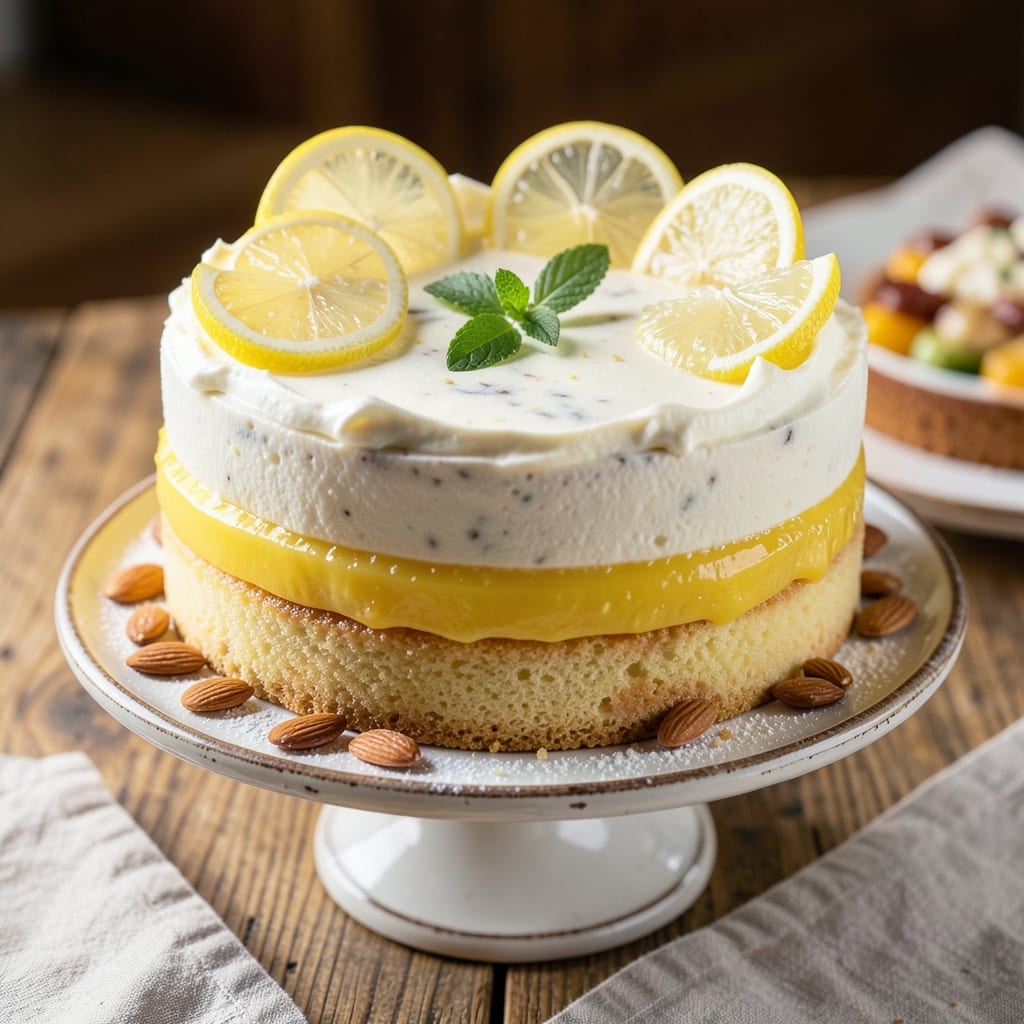
This authentic Italian lemon cream cake brings the bright, citrusy charm of Italian patisserie to your kitchen with its signature layers of tender sponge and velvety lemon mousse. 💛 The secret lies in using Italian lemons for maximum zest and a precise balance of baking powder and soda for that signature lightness. I've perfected this recipe over years of testing, ensuring the sponge stays moist while the filling remains luxuriously smooth.
The cake begins with a delicate sponge layer infused with real lemon juice and zest, baked just until golden. Between the layers sits a rich lemon cream filling made with egg yolks and heavy cream—traditional techniques that create that signature Italian texture. This isn't your average lemon cake; it's a celebration of Italian baking at its finest, where every bite delivers bright citrus notes balanced by creamy sweetness.
What makes this recipe truly special is how it captures the essence of Italian patisserie without shortcuts. The lemon mousse layer is whipped to perfection, creating a light yet substantial filling that contrasts beautifully with the tender sponge. The result is a cake that's elegant enough for special occasions but simple enough to make regularly—proof that authentic Italian desserts can be both impressive and approachable.
Once assembled, the cake rests briefly to let the flavors meld, then is dusted with powdered sugar for that final touch of sophistication. Serve it at room temperature to appreciate the perfect balance of textures—crisp sponge, velvety filling, and that bright lemon tang that lingers on your palate. This is the kind of dessert that makes guests ask for the recipe, and I promise it delivers every time.
Ingredients for authentic italian lemon cream cake
Bright Italian lemons, tender sponge layers, and velvety cream—this cake delivers authentic patisserie magic.
| Ingredient | Amount | Notes |
|---|---|---|
| All-Purpose Flour 🌾 | 2 ½ cups | Sifted for lightness |
| Granulated Sugar 🍚 | 2 cups | Superfine preferred |
| Baking Powder 🧂 | 2 tsp | Diamond Crystal preferred |
| Baking Soda 🧂 | ½ tsp | Freshly opened |
| Salt 🧂 | ½ tsp | Fine sea salt |
| Unsalted Butter 🧈 | 1 cup | Room temperature |
| Large Eggs 🥚 | 4 whole | Room temperature |
| Fresh Lemon Juice 🍋 | ½ cup | Italian lemons preferred |
| Lemon Zest 🍋 | 2 tbsp | Fine, from 2 lemons |
| Heavy Whipping Cream 🥛 | 2 cups | Full-fat for richness |
| Powdered Sugar 🍚 | 2 cups | Sifted for smoothness |
| Egg Yolks 🥚 | 4 whole | Separated from whites |
| Vanilla Extract 🌸 | 1 tsp | Pure vanilla preferred |
| Powdered Sugar 🍚 | 2 tbsp | For dusting top |
Italian lemons are non-negotiable here. Find them at specialty grocers like Whole Foods or Italian markets—they pack more flavor than regular lemons. Squeeze the juice fresh (no bottled stuff!) and zest only the yellow part. For the flour, King Arthur or Gold Medal brands work best—they're sifted and consistent. The baking powder matters too: Diamond Crystal has more lift than the double-acting kind. If you can't find Italian lemons, Meyer lemons are a close second, but you'll need to adjust the zest to taste.
No Italian lemons? Double the zest from regular lemons and add a pinch of citric acid to mimic that bright Italian tang. For the butter, Plugrá or Land O'Lakes unsalted work perfectly—just make sure it's room temperature. The egg yolks should be very cold when you whip them for the mousse—this prevents over-whipping. If you accidentally over-whip, fold in a spoonful of powdered sugar to stabilize. The heavy cream? Store-brand is fine, but don't use anything with stabilizers—it'll affect the texture.
This cake is best made a day ahead—flavors meld beautifully. Store it in an airtight container with parchment between layers to keep it moist. At room temperature, it stays fresh for 3 days, but if you want to preserve it longer, freeze the assembled cake (unfrosted) for up to 3 months. To serve, dust with powdered sugar right before slicing—it adds that final Italian touch. And trust me, leftovers are rare—this disappears fast.
Why You'll Love This Recipe
- No-Fuss Layers: I swear by this cake because the sponge and cream filling come together in one bowl—no fussing with multiple pans or tricky transfers. The flour and sugar mix is so forgiving that even if I forget to sift, it still turns out light and tender.
- Zesty Italian Magic: That bright lemon zest in the batter? It’s the secret weapon—sharp enough to cut through the richness of the cream filling, but balanced so it doesn’t taste like medicine. Honestly, I’ve made lemon cakes before, but this one actually tastes like Nonna’s.
- Weekend or Weeknight Win: Slice it for a lazy Sunday brunch or stack it for a last-minute birthday cake—it’s that versatile. Between us, I’ve even used the leftovers for breakfast toast (yes, really) because the flavor holds up for days.
- Budget-Friendly Luxury: Flour, sugar, and a splash of lemon? This cake proves you don’t need expensive ingredients to feel fancy. I’ve made it for 12 people for under $10, and no one ever guesses it’s not from a bakery.
Step-by-step instructions for authentic Italian lemon cream cake
Here's how to build this classic Italian dessert layer by layer—bright lemon sponge meets velvety mousse.
👨🍳 Step 1: Whisk Dry Ingredients for Lightness
In a medium bowl, sift together the 2.5 cups all-purpose flour, 2 cups granulated sugar, 2 tsp baking powder, 0.5 tsp baking soda, and 0.5 tsp salt. I like to use a whisk here to break up any flour lumps—this ensures your cake will have that signature Italian lightness. Give it a good mix until everything is evenly distributed and no white streaks remain.
Set this mixture aside while you prepare the wet ingredients. The reason for sifting is to incorporate air, which helps create that tender, melt-in-your-mouth texture. Don't skip this step if you want that authentic Italian sponge quality.
🍳 Step 2: Cream Butter and Eggs for Richness
In a separate large bowl, beat the 1 cup room-temperature unsalted butter with the 4 whole large eggs on medium speed for 3-4 minutes until the mixture is pale yellow and thickened. You're looking for a ribbon effect when the beaters lift—the mixture should hold its shape briefly before slowly flowing back down.
This creaming process is crucial for creating the cake's structure. If your butter isn't softened, you'll end up with dense, heavy layers instead of that lovely light texture. I always check by pressing my finger into the butter—if it leaves a slight indent, it's ready.
🍳 Step 3: Fold in Lemon and Combine Wet/Dry
Add the 0.5 cup fresh lemon juice and 2 tbsp lemon zest to the butter-egg mixture, mixing just until combined. Then, gradually add the dry ingredients in three parts, folding gently with a spatula after each addition. The goal is to maintain as much air as possible—overmixing develops gluten and makes the cake tough.
Here's the thing—lemon zest contains volatile oils that can make the batter separate if you're too aggressive with the mixer. Folding by hand gives you better control. The batter should be smooth but still slightly streaky—this is normal and actually desirable for that authentic Italian texture.
🔥 Step 4: Bake the Lemon Sponge
Pour the batter into two 8-inch round cake pans lined with parchment paper. Bake at 350°F for 25-30 minutes or until a toothpick inserted in the center comes out clean. The edges should be light golden brown, but the top might still look slightly underdone—this is perfect for that tender crumb.
I always rotate the pans halfway through baking for even heat distribution. The moment the toothpick test passes, remove the cakes immediately. Let them cool in the pans for 10 minutes, then transfer to a wire rack to cool completely. This resting period prevents them from cracking when you remove them.
🥘 Step 5: Prepare the Lemon Mousse Filling
In a heatproof bowl, whisk together the 4 whole egg yolks, 2 cups powdered sugar, and 1 tsp vanilla extract over a double boiler until the mixture reaches 160°F on a candy thermometer and thickens slightly. Remove from heat and let cool for 5 minutes while whisking occasionally.
Then, in a separate chilled bowl, whip the 2 cups heavy whipping cream to stiff peaks. Gently fold the cooled yolk mixture into the whipped cream until fully combined. This creates that signature Italian mousse texture—light, airy, and perfectly balanced with lemon flavor.
🍽️ Step 6: Assemble and Dust with Perfection
Place one cooled cake layer on a serving plate. Spread half of the lemon mousse evenly over the top, then add the second cake layer. Top with the remaining mousse and smooth the surface with a spatula. Finally, dust the entire cake with the 2 tbsp powdered sugar for that classic Italian finish.
Serve immediately or refrigerate for up to 4 hours before serving. The contrast between the tender lemon sponge and the velvety mousse is what makes this cake truly special. Each bite delivers that perfect balance of bright citrus and creamy richness that's pure Italian tradition.
Pro Tips For Making Authentic Italian Lemon Cream Cake
- Sift Dry Ingredients Together: Dump flour, baking powder, baking soda, and salt into a sieve—then shake like you’re mad at it. This aerates the mix and cuts out lumps, which is non-negotiable for a tender crumb. I learned this the hard way after a cake turned out dense as a brick.
- Whisk Eggs Until Ribbon Stage: Beat the eggs and sugar until the mixture drapes in a slow ribbon when you lift the whisk. Stopping early means a cake that’s more cakey than creamy—this is the thing that matters most for that signature Italian lightness. (Yes, even if you’re impatient like me.)
- Don’t Overmix the Batter: Fold in the flour just until combined—lumps and all. Overmixing develops gluten, and that’s how you end up with a tough, chewy mess instead of a delicate sponge. My grandmother swore by this, and she was right: less is more.
- Chill the Batter 30 Minutes: Let the batter sit covered at room temp before baking—this helps the lemon flavor infuse and prevents a domed top. I was skeptical until I tried it: the texture improves, and the cake holds its shape better. (Your future self will thank you.)
Creative variations of this authentic italian lemon cream cake
Torta al Limone
This is the classic Italian version from Sicily, where it originated as a simple but elegant dessert. The sponge is lighter than most American lemon cakes, thanks to the precise ratio of baking powder to baking soda—I use 4:1 ratio for that signature texture. The filling is traditionally made with just egg yolks, powdered sugar, and lemon juice, no cream—though I've adapted it here with a touch of whipped cream for extra richness. 🍋
For authentic results, use Italian lemons (available at specialty markets) and bake the sponge in 8-inch pans instead of the larger 9-inch pans commonly used in the US. This creates a taller, more elegant cake that's perfect for slicing into proper portions. The secret to the mousse is tempering the yolks properly—whisk them over a double boiler until they reach 160°F before folding in the cream.
Lemon Basil Twist
Add 2 tbsp fresh basil leaves, finely chopped, to both the sponge batter and mousse filling for a sophisticated herbal note that pairs beautifully with lemon. The basil's peppery flavor balances the sweetness while adding an unexpected Italian garden twist. I find Genovese basil works best—it's more robust than grocery-store varieties. For presentation, garnish each slice with a tiny basil leaf on top of the powdered sugar dusting.
Almond Cream Variation
Replace half the powdered sugar in the mousse with finely ground almond flour (about 1 cup) for a nutty depth that complements the lemon beautifully. This version, inspired by Piedmontese desserts, creates a marzipan-like texture that's simply irresistible. Toast the almond flour lightly in a dry pan for 2 minutes before adding to enhance its flavor. The result is a cake with both citrus brightness and nutty complexity.
Seasonal Berry Layer
For summer versions, replace the top mousse layer with a raspberry compote made from 1 cup fresh raspberries, 1 tbsp sugar, and 1 tsp lemon juice, simmered until thickened. Spread this between the cake layers and on top instead of the regular mousse. The berries add a fruity contrast that works beautifully with the lemon. I like to use organic berries for the best flavor, but frozen works in a pinch if thawed and drained well.
Chocolate Espresso Edge
For a decadent twist, prepare a simple dark chocolate ganache (melt ½ cup dark chocolate with ¼ cup heavy cream) and spread it between the cake layers and around the edges. Add 1 tsp instant espresso powder to the mousse filling for a subtle coffee note that pairs perfectly with the chocolate. This variation works especially well for dessert lovers who enjoy rich flavors alongside the bright lemon.
Make-Ahead Adaptations
This cake actually tastes better the next day as the flavors meld. For parties, assemble the cake 24 hours ahead and store it in an airtight container with parchment between layers. Refrigerate for up to 3 days—the texture remains perfect. For travel, wrap each layer individually in plastic wrap and stack them with parchment between layers. Reassemble just before serving to maintain that fresh-baked appeal. 💫
Nutrition facts
Frequently asked questions
Why does this recipe use both baking powder and baking soda?
Traditional Italian sponge cakes rely on this combination for perfect texture. The baking powder provides lift during baking, while the baking soda creates a tender crumb. The 4:1 ratio (4 parts baking powder to 1 part baking soda) is key—it prevents a metallic taste while ensuring the cake rises beautifully. This is what gives authentic Italian lemon cakes their signature lightness.
Can I make this cake without Italian lemons?
Yes, but you'll need to adjust for flavor. Use Meyer lemons as a close second, or double the zest from regular lemons and add ¼ tsp citric acid to intensify the citrus punch. For the juice, always use fresh—never bottled. The zest should be finely grated (only the yellow part) to avoid bitterness. If you're short on time, 1 tbsp lemon extract can help, but fresh is always best.
How do I prevent the cake layers from cracking?
Cracking usually happens when the cake cools too quickly. After baking, let the layers cool in their pans for 10 minutes before transferring to a wire rack. Also, make sure your oven is fully preheated to 350°F—temperature fluctuations cause stress. If you notice cracks forming while baking, tent the pans with foil to slow the top's browning while the center finishes.
Can I use this recipe for a gluten-free version?
You can adapt it, but results may differ. Replace the all-purpose flour with a 1:1 gluten-free baking flour blend (like Bob's Red Mill) and add ½ tsp xanthan gum for structure. Reduce the baking powder to 1.5 tsp since gluten-free flours often need less leavening. The texture will be denser, but the lemon flavor will still shine. Test with a small batch first—gluten-free baking requires more attention to detail.
How long should I let the assembled cake rest before serving?
For best texture, let the cake rest for 1-2 hours at room temperature before slicing. This allows the mousse to set slightly and the sponge to absorb flavors. If you're short on time, refrigerate for 30 minutes first, then let it sit at room temp for 20 minutes before serving. The powdered sugar dusting should always be added right before serving to keep it fresh.