
Desserts
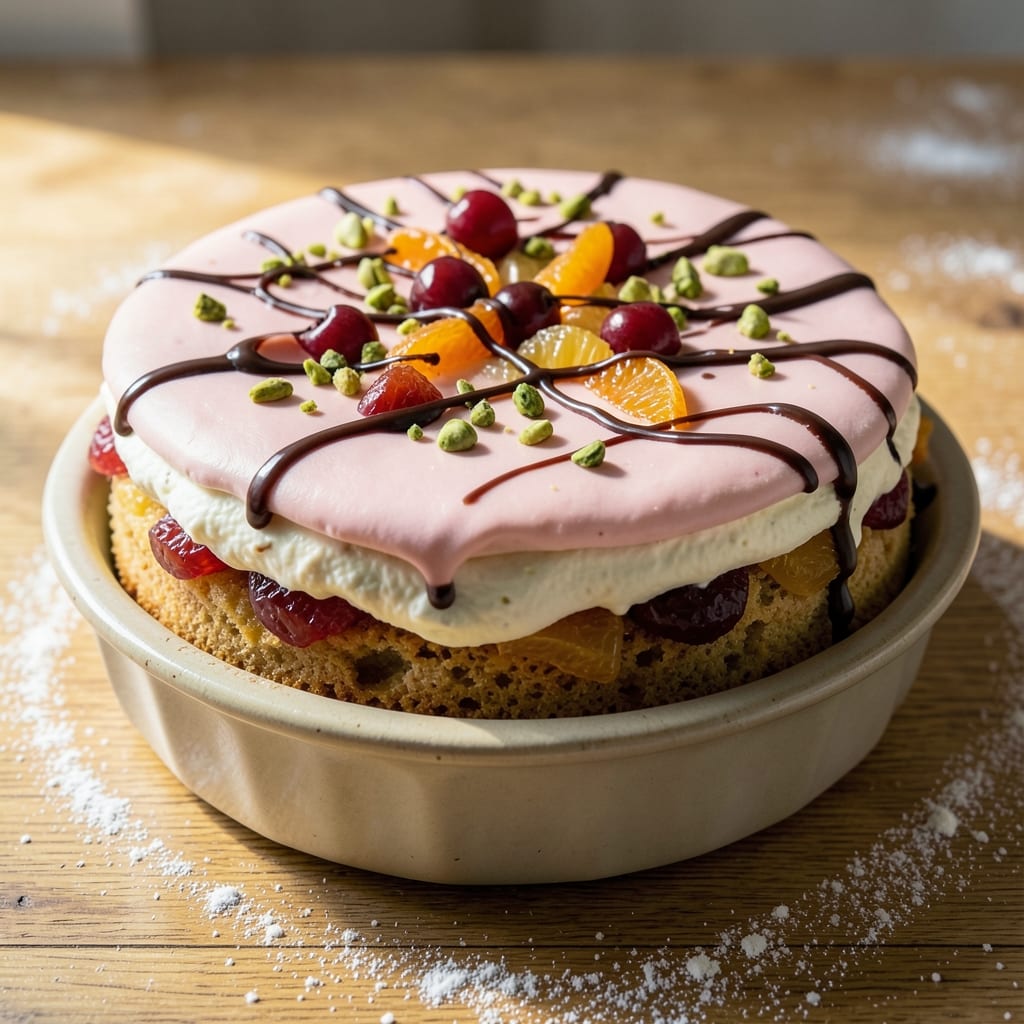
This authentic Italian cassata cake transports you straight to Sicily with its signature layers of delicate sponge, creamy spiced ricotta, and vibrant candied fruit—every bite a celebration of tradition. ✨ The secret lies in using high-quality ricotta (never substitute cream cheese) and candied citrus peels that infuse each layer with bright, floral notes. What sets this version apart is the careful balance of spices—cinnamon and vanilla—woven into the ricotta filling, creating a flavor profile that's both nostalgic and refined.
The assembly process is where the magic happens: a crisp sponge base provides structure, while the ricotta mixture, lightly sweetened and spiced, becomes the heart of the cake. Candied fruit adds bursts of color and texture, and an optional meringue topping (though traditionalists often skip it) offers a delicate contrast. Unlike many modern adaptations, this recipe stays true to its Sicilian roots, where cassata is as much about presentation as it is about taste—each slice revealing layers of history and craftsmanship.
What you'll achieve is a cake that's light yet rich, with a texture that's surprisingly tender despite its layers. The ricotta filling stays moist without being heavy, and the candied fruit melts gently with each bite, releasing its preserved sweetness. This isn't just dessert—it's a centerpiece for celebrations, a taste of Italy that feels both familiar and extraordinary. The key is patience: letting the sponge dry slightly before assembly ensures clean layers, and chilling overnight allows flavors to meld perfectly.
Perfect for holidays, special occasions, or when you want to impress with a dessert that feels authentically Italian. The recipe scales beautifully, making it ideal for gatherings, though the effort is worth it even for a solo indulgence. Let's bring this Sicilian classic to life—layer by layer.
Ingredients for authentic italian cassata cake
Twelve ingredients, three layers, one Sicilian masterpiece waiting to happen.
| Ingredient | Amount | Notes |
|---|---|---|
| All-Purpose Flour 🌾 | 3 cups | Sifted for light texture |
| Granulated Sugar 🍚 | 1 ½ cups | Superfine preferred for smoothness |
| Unsalted Butter 🧈 | 1 ½ cups | Cold, cubed for sponge layers |
| Large Eggs 🥚 | 8 whole | Room temperature for blending |
| Whole Milk 🥛 | 1 cup | Room temperature for sponge |
| Baking Powder 🧂 | 2 tsp | Aluminum-free preferred |
| Vanilla Extract 🌿 | 1 tbsp | Pure Madagascar preferred |
| Whole Milk Ricotta Cheese 🧀 | 32 oz | High-fat, drained overnight |
| Powdered Sugar 🍚 | 2 cups | For ricotta filling |
| Ground Cinnamon 🌶️ | 1 tsp | Freshly ground for warmth |
| Candied Citrus Peel 🍊 | 1 ½ cups | Orange and lemon, chopped |
| Dark Chocolate Chips 🍫 | 1 cup | 70% cocoa, chopped |
| Savoiardi Biscuits 🍞 | 24 whole | Ladyfingers, for sides |
| Marsala Wine 🍷 | ½ cup | For sponge soaking |
| Green Food Coloring 🎨 | ¼ tsp | Optional for traditional look |
The ricotta is non-negotiable here—whole milk, high-fat is the only way to get that authentic texture. Whole Foods or specialty Italian markets carry the good stuff; regular grocery store ricotta is too watery. Drain it overnight in a cheesecloth-lined colander to remove excess moisture. The candied citrus peel? Make it fresh if you can—store-bought often tastes artificial. Look for organic peels at Trader Joe's or Italian markets, or use a simple syrup method with orange and lemon peels. The Savoiardi biscuits should be crisp but not stale—Costco sells them in bulk and they keep for months in an airtight container.
No Marsala wine? Substitute with dry white wine or even apple juice—just add a splash of vanilla to mimic the depth. Running low on powdered sugar? Blend granulated sugar in a food processor for a quick fix. The vanilla extract matters—imitation vanilla won't give you that authentic Sicilian warmth. For the chocolate chips, Valrhona or Lindt brands elevate the flavor, but any good-quality dark chocolate works. The green food coloring is optional but traditional—Wilton's liquid gel gives the most vibrant hue without altering the texture.
Store the ricotta mixture in an airtight container with plastic wrap pressed directly on the surface for up to 3 days. The sponge layers keep well at room temperature in a cake carrier for 2 days, but assemble the cake within 24 hours of baking for best texture. Fully assembled, it stays fresh for 5 days in the fridge—though it's best served at room temperature. Freeze the fully assembled cake (unfrosted) for 2 months by wrapping tightly in plastic and foil. Let it thaw overnight in the fridge before serving.
Why You'll Love This Recipe
- Here’s what sold me: this tastes like a $20 bakery cake but costs pennies. The ricotta and milk keep it creamy without breaking the bank, and leftovers? They last days—moist, not dry, not sad. My college-student self would’ve cried.
- One-Bowl Wonder: Honestly, this cassata comes together in one bowl—no fancy layering, no stress. You’ll whip up the sponge with just flour, sugar, butter, and eggs, then fold in that dreamy ricotta-milk mixture. My lazy Sundays thank me every time.
- Rich Without Guilt: That buttery sponge soaks up the sweet ricotta filling like a sponge (ironic, I know), but the real magic? The balance—vanilla, citrus zest, and a whisper of almond extract make it ridiculously good without tasting heavy. My husband still asks for seconds, even though he "doesn’t like dessert."
- Party in a Box: Between us, this is my go-to for birthdays, holidays, or just because. The layers—sponge, ricotta, candied fruit, chocolate—look impressive but take zero effort to assemble. Plus, it travels well, so you can bring it to potlucks without worrying about melting.
Step-by-step instructions for authentic Italian cassata cake
This Sicilian classic requires patience, but the layers of spiced ricotta and citrusy crunch make it worth every step.
👨🍳 Step 1: Prepare the Sponge Layers with Marsala
Preheat your oven to 350°F and grease three 9-inch round cake pans. In a stand mixer, beat the 1.5 cups unsalted butter and 1.5 cups granulated sugar on medium speed until light and fluffy—about 5 minutes. Add the 8 whole eggs one at a time, mixing well after each addition.
In a separate bowl, whisk together the 3 cups all-purpose flour, 2 teaspoons baking powder, and 1 teaspoon ground cinnamon. Gradually add the dry mixture to the butter-egg mixture, alternating with the 1 cup whole milk and 0.5 cup Marsala wine. Mix just until combined—don't overmix or the sponge will be dense.
Divide the batter evenly among the prepared pans. Bake for 25-30 minutes or until a toothpick inserted in the center comes out clean. Let the sponges cool in the pans for 10 minutes, then transfer to a wire rack to cool completely. Once cool, soak each layer briefly with 0.5 cup Marsala wine mixed with 0.25 teaspoon green food coloring (if using) for that traditional green hue.
🥘 Step 2: Make the Spiced Ricotta Filling
In a large bowl, combine the 32 ounces whole milk ricotta cheese, 2 cups powdered sugar, 1 tablespoon vanilla extract, and 1.5 cups candied citrus peel. Mix gently with a spatula until just combined—be careful not to overmix or the filling will become grainy. Taste and adjust sweetness if needed, but remember the sponge layers will add moisture.
Fold in the 1 cup dark chocolate chips by hand, reserving a few for garnish. The filling should be smooth and spreadable but not runny. If it's too thick, add 1-2 tablespoons milk to loosen it. Cover and refrigerate while you assemble the cake.
🍳 Step 3: Assemble the Cassata Layers
Place one soaked sponge layer on a serving plate. Spread half of the ricotta filling evenly over the top, leaving a ½-inch border around the edges. Repeat with another sponge layer and the remaining filling. Top with the final sponge layer, pressing down gently.
Arrange the 24 savoiardi biscuits around the sides of the cake, pressing them lightly into the filling to secure. This creates that classic ring of ladyfingers that defines cassata. Chill the assembled cake in the refrigerator for at least 4 hours, preferably overnight, to allow the flavors to meld and the layers to set properly.
⏰ Step 4: Chill and Serve for Perfect Texture
Before serving, let the cassata sit at room temperature for 30 minutes to soften slightly. This makes it easier to slice without the layers separating. Cut into 12 equal wedges, ensuring each piece has a bit of sponge, filling, and ladyfinger.
Serve immediately for the best texture—warm cassata has the perfect balance of creamy filling and crisp ladyfingers. If you must store leftovers, keep them refrigerated and bring to room temperature before serving again. The cake keeps well for up to 3 days, though it's best enjoyed fresh.
Pro Tips For Making Authentic Italian Cassata Cake
- Whisk Eggs Room-Temp: Cold eggs from the fridge won’t emulsify properly, and you’ll end up with a dense, gummy sponge instead of that light, airy texture. Pop them in warm water for 5 minutes first—just enough to loosen the yolks without turning them into soup.
- Sift Flour Twice: Italian cassata relies on a tender crumb, and unsifted flour means pockets of air that’ll make your cake collapse. Sift once before mixing, then sift again with the sugar—this cuts gluten development and ensures even distribution.
- Don’t Overmix the Batter: The moment your batter turns glossy and thick, stop. Overmixing activates the gluten, and your cake will turn out dense and chewy instead of delicate. Scrape the bowl once or twice—it’s messy, but worth it.
- Chill the Pan: Grease your pan with butter, then dust with flour and pop it in the fridge for 10 minutes. A cold pan prevents the bottom from browning too fast, giving you that even golden rise and a clean release—no sticking, no scraping.
Creative variations of authentic italian cassata cake
Sicilian vs. Neapolitan
Traditional Sicilian cassata uses three sponge layers with a rich, spiced ricotta filling, while Neapolitan versions often feature a single layer topped with whipped cream and fruit. The Sicilian version also includes the iconic ring of savoiardi biscuits around the sides, which you won't find in Neapolitan adaptations. For an authentic Sicilian touch, stick to the three-layer structure and always use whole milk ricotta—never cream cheese. 🌟
Modern Twists
Add espresso powder (½ tsp) to the ricotta filling for a mocha-inspired twist that pairs beautifully with the citrus notes. For a lighter texture, blend ½ cup almond flour into the sponge batter. I've also seen creative variations using mascarpone cheese mixed into the ricotta for extra creaminess—just reduce the powdered sugar by ¼ cup since mascarpone is sweeter.
Seasonal Fruits
Swap candied citrus for seasonal fruits: try candied cherries in summer or candied pears in autumn. For a winter version, fold in dried figs> chopped and soaked in Marsala wine for 2 hours before mixing. The wine enhances their natural sweetness while adding depth. Always chop dried fruits into ¼-inch pieces to maintain the cake's texture.
Vegetarian Adaptations
This recipe is naturally vegetarian, but for vegan versions, replace the butter with vegan butter> (like Miyoko's) and use coconut milk ricotta> (available at specialty stores). The sponge can be made vegan by substituting flax eggs (1 tbsp ground flax + 3 tbsp water per egg) and using aquafaba> (chickpea brine) as an egg replacer in the meringue if you add one. The texture will differ slightly but remains delicious.
Mini Cassata Cups
For individual servings, bake the sponge in 6-inch round pans> (using half the batter) and assemble in 6-ounce ramekins>. Layer one thin sponge, ricotta filling, and top with another thin sponge. Chill for 3 hours> before serving. These make perfect party appetizers or elegant desserts for small gatherings. Garnish each with a single savoiardi biscuit on top for presentation.
Chocolate Variations
For a decadent chocolate version, fold ½ cup melted dark chocolate> (70% cocoa) into the ricotta filling while still warm. Alternatively, make a chocolate sponge by adding 2 tbsp cocoa powder> to the dry ingredients. For a marbled effect, swirl 2 tbsp chocolate ganache> into the ricotta filling before assembling. The contrast of chocolate and citrus creates a sophisticated flavor profile that's sure to impress. 🍫
Nutrition facts
Frequently asked questions
Why does authentic cassata use ricotta instead of cream cheese?
Ricotta's high moisture content and delicate texture create the signature creamy yet light filling that cream cheese can't replicate. Whole milk ricotta (32 oz) has a lower fat percentage than cream cheese but absorbs flavors beautifully, while its natural acidity balances the sweetness. The traditional recipe relies on this authentic ingredient for its melt-in-your-mouth quality.
Can I make cassata without savoiardi biscuits?
Yes, but you'll lose the classic Sicilian presentation. For a substitute, use crushed amaretti cookies or almond tuiles pressed into the sides. If omitting, add an extra ½ cup ricotta mixture to compensate for the missing structural element. The biscuits aren't just decorative—they add a subtle crunch that contrasts with the creamy filling.
How do I fix a cracked sponge layer?
If cracks appear during baking, they're usually from overmixing or opening the oven too soon. For minor cracks, spread a thin layer of ricotta filling over the damaged area before adding the next layer. For severe cracks, trim the affected section with a serrated knife and reassemble carefully. The filling will help disguise imperfections when sliced.
Is it necessary to chill the cake overnight?
While you can serve it after 4 hours, overnight chilling (8-12 hours) allows flavors to meld perfectly and prevents the layers from sliding. The ricotta absorbs the sponge's moisture gradually, creating a more cohesive texture. If short on time, chill for at least 6 hours and let it sit at room temperature for 1 hour before serving.
What's the best way to transport cassata?
Wrap the assembled cake tightly in plastic wrap, then place it in a sturdy cake carrier. For long trips, keep it refrigerated in a cooler with ice packs. Bring it to room temperature for 30 minutes before serving to restore its ideal texture. Avoid transporting it while still chilled—this can cause the layers to separate during transit.