
Desserts
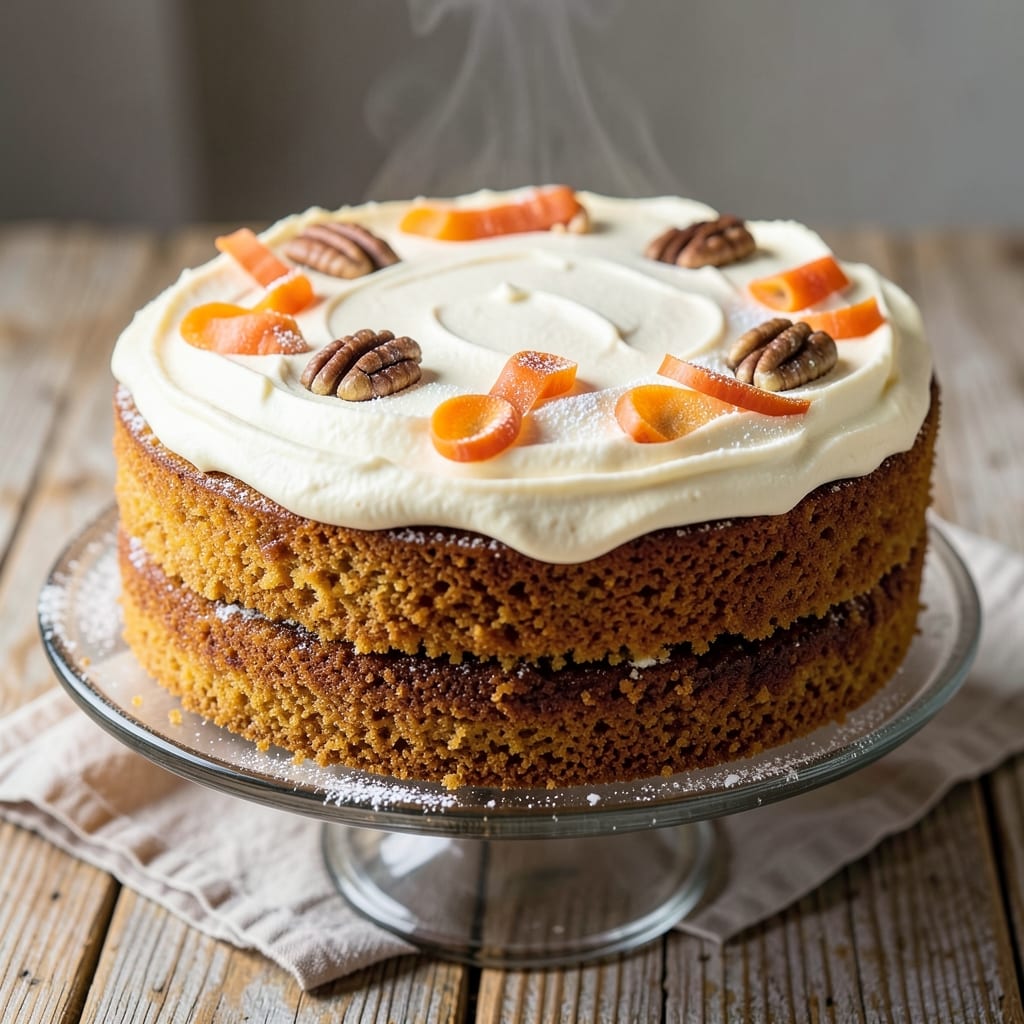
This authentic carrot cake recipe brings the classic flavors of home baking to life with walnut-studded crunch and velvety cream cheese frosting. The secret lies in a perfect balance of spices—cinnamon, nutmeg, and ginger—layered with tender carrots and moist cake texture that stands up to the rich frosting. I’ve baked countless versions, and this one consistently delivers that nostalgic, comforting taste without a single shortcut.
The cake’s foundation starts with a simple yet precise method: creaming butter and sugar until light and fluffy, then folding in shredded carrots and walnuts for texture. A touch of pineapple juice keeps the cake moist, while baking powder ensures a tender crumb. The walnuts add a satisfying crunch that contrasts beautifully with the soft cake layers. This isn’t just carrot cake—it’s a recipe that honors tradition while delivering restaurant-quality results at home.
What sets this recipe apart is the cream cheese frosting, a tangy-sweet contrast that ties everything together. It’s thick, spreadable, and perfectly balanced—not too sweet, not too heavy. The frosting pairs beautifully with the cake’s warm spices, creating a dessert that’s as impressive on the plate as it is delicious in every bite. Whether you’re baking for a celebration or a cozy weekend treat, this recipe delivers every time.
Ready to bake? The recipe includes step-by-step instructions for a foolproof cake and frosting, plus tips for customizing it to your taste. No special equipment is needed—just patience and a little love. Let’s get started on a slice of homemade perfection.
Ingredients for authentic carrot cake
Twelve carefully chosen ingredients transform into nostalgic carrot cake perfection with walnut crunch and velvety frosting.
| Ingredient | Amount | Notes |
|---|---|---|
| Unsalted Butter 🧈 | 1 cup | Softened to room temperature |
| Granulated Sugar 🍚 | 2 cups | Light brown preferred for depth |
| Large Eggs 🥚 | 3 whole | Room temperature for even mixing |
| Vanilla Extract 🌿 | 2 tsp | Pure Madagascar bourbon preferred |
| All-Purpose Flour 🌾 | 2 cups | Sifted for light texture (King Arthur brand) |
| Baking Powder 🧂 | 2 tsp | Aluminum-free for tender crumb |
| Ground Cinnamon 🌶️ | 2 tsp | Freshly ground for maximum aroma |
| Ground Nutmeg 🌿 | ½ tsp | Freshly grated nutmeg preferred |
| Ground Ginger 🌶️ | 1 ½ tsp | Freshly grated for warmth |
| Salt 🧂 | ½ tsp | Diamond Crystal kosher salt |
| Shredded Carrots 🥕 | 3 cups | Finely grated, no liquid drained |
| Pineapple Juice 🍍 | ½ cup | Freshly squeezed for moisture |
| Walnuts 🥜 | 1 ½ cups | Toasted and chopped for crunch |
| Cream Cheese 🧀 | 8 oz | Full-fat, Philadelphia brand preferred |
| Powdered Sugar 🍚 | 3 cups | Sifted for smooth frosting |
| Heavy Cream 🥛 | ½ cup | Cold for stable whipped texture |
The butter and sugar form the cake’s foundation—European-style unsalted butter from Land O’Lakes or Plugrá delivers the richest flavor. For the sugar, light brown sugar adds subtle molasses depth that complements the carrots beautifully. The eggs must be room temperature to emulsify properly; Whole Foods or local farmers markets often carry the freshest eggs. Vanilla extract is non-negotiable here—Madagascar bourbon offers the most complex flavor profile. When selecting flour, King Arthur or Gold Medal brands provide consistent baking results. The spices should be freshly ground or toasted—Penzeys Spices offers pre-ground options that still outperform grocery store basics.
No fresh ginger? Ground ginger at half the amount works in a pinch, though fresh delivers superior warmth. Substituting pineapple juice? Unsweetened applesauce or orange juice maintains moisture without altering flavor significantly. For walnuts, pecans or hazelnuts provide similar texture but different flavor profiles. The cream cheese frosting requires full-fat Philadelphia brand for proper consistency—Neufchâtel works but lacks the same tang. Powdered sugar should be sifted to prevent graininess; Domino brand is widely available and reliable. For a lighter frosting, reduce the powdered sugar by 0.25 cup and add an extra 2 tbsp of heavy cream.
Store cake layers in an airtight container at room temperature for up to 3 days or refrigerate for 5 days. The frosting can be made 2 days ahead and refrigerated, then whipped back to smooth consistency before use. Walnuts lose freshness quickly—toast and chop them fresh the day of baking for optimal crunch. For long-term storage, freeze the unfrosted cake layers for up to 3 months—thaw completely before frosting. The frosting freezes beautifully too, though it may need re-whipping after thawing.
Why You'll Love This Recipe
- No Mixer Needed: I swear by this recipe when I’m too tired to cream butter and sugar properly. Just melt the butter with sugar in a saucepan—it’s foolproof, and the texture comes out tender every time.
- Spice-Perfect Balance: That warm cinnamon and nutmeg blend? It’s not overpowering like some recipes I’ve tried. The vanilla extract ties it all together—subtle but just enough to make you lick the bowl.
- Birthday or Breakfast: Serve it with cream cheese frosting for a crowd-pleaser, or slice it cold for a midweek snack. Honestly, I’ve eaten it both ways—no regrets either time.
- Leftovers That Last: This cake keeps beautifully for days, and the flavor actually improves as it sits. Between us, I’ve reheated slices in the microwave with a pat of butter, and it’s still delicious. (Yes, even on a Tuesday night.)
Step-by-step instructions for authentic carrot cake
This classic recipe delivers moist crumb, warm spice notes, and that signature walnut crunch.
Cream Butter and Sugars for Light Texture
In a stand mixer fitted with the paddle attachment, beat the 1 cup unsalted butter and 2 cups granulated sugar on medium speed for 3-4 minutes until light and fluffy. You'll see the mixture nearly double in volume and become pale in color. This thorough creaming incorporates air, which creates that tender crumb we're after.
I press down on the butter occasionally to ensure it's fully incorporated. If you're using a hand mixer, work in 30-second bursts to prevent overheating. The butter should be completely smooth with no visible streaks of sugar remaining. This step makes all the difference in achieving that authentic, cake-like texture rather than a dense batter.
Add Eggs and Flavorings for Moisture and Depth
Add the 3 whole large eggs, one at a time, mixing on low speed for 30 seconds after each addition until fully combined. Then add the 2 teaspoons vanilla extract and mix for another 10 seconds. The mixture will appear slightly curdled, but don't worry—this will resolve once we add the dry ingredients.
Next, fold in the 0.5 cup pineapple juice using a silicone spatula. This liquid keeps the cake moist without making it dense. I like to press the spatula through the batter to ensure even distribution. The pineapple juice also adds subtle sweetness that complements the carrots beautifully. This is where the cake gets its signature moisture without needing extra oil.
Combine Dry Ingredients for Structure
In a separate bowl, whisk together the 2 cups all-purpose flour, 2 teaspoons baking powder, 2 teaspoons ground cinnamon, 0.5 teaspoon ground nutmeg, 1.5 teaspoons ground ginger, and 0.5 teaspoon salt. Sift the flour mixture directly into the wet ingredients to prevent lumps from forming.
Using the mixer on low speed, combine the dry ingredients with the wet mixture just until combined—about 30-45 seconds. You should still see some flour streaks, which indicates proper mixing without developing gluten. Overmixing here will make the cake tough. I like to scrape down the sides of the bowl with a spatula to ensure everything is evenly incorporated.
Fold in Carrots and Walnuts for Texture
Gently fold in the 3 cups shredded carrots and 1.5 cups toasted, chopped walnuts using a silicone spatula. Work carefully to avoid deflating the batter. The carrots should be finely shredded to distribute evenly, and the walnuts should be toasted to enhance their natural flavor and crunch. I press the spatula through the batter to ensure the carrots and walnuts are evenly distributed throughout.
This is where the cake gets its signature texture contrast—the moist, spiced crumb from the batter and the crunchy walnuts and shredded carrots. The walnuts should be evenly scattered, not clumped together. If you notice any dry spots in the batter, add a splash of pineapple juice to maintain moisture.
Bake for Perfect Doneness
Preheat your oven to 350°F and grease two 9-inch round cake pans or one 9x13-inch baking pan. Divide the batter evenly between the pans and smooth the tops. Bake for 25-30 minutes or until a toothpick inserted into the center comes out clean. The cakes should be golden brown on top and spring back slightly when touched.
I like to rotate the pans halfway through baking to ensure even browning. The cakes are done when they pull away from the edges of the pan and have a slight crust on top. Let the cakes cool in the pans for 10 minutes, then transfer them to a wire rack to cool completely before frosting. This cooling step is crucial for preventing the frosting from melting and sliding off the warm cake.
Prepare Cream Cheese Frosting
In a separate bowl, beat the 8 ounces cream cheese and 3 cups powdered sugar on medium speed until smooth and creamy. Add the 0.5 cup cold heavy cream and mix until fully incorporated. The frosting should be thick but spreadable. If it's too thick, add a tablespoon of milk or pineapple juice to loosen it.
This frosting is the star of the cake—its tangy sweetness balances the warm spices perfectly. I like to beat the cream cheese until it's completely smooth with no lumps, which ensures a silky texture. The cold heavy cream helps stabilize the frosting and gives it that light, airy quality. Spread the frosting evenly over the cooled cake layers, then decorate with additional chopped walnuts for extra crunch.
Pro Tips For Making Authentic Carrot Cake
- CREAM THE BUTTER SUGAR LONG: I learned this the hard way—skipping the 3-5 minute butter-sugar mix with a wooden spoon means you’ll end up with a dense, dry cake. Press the butter and sugar together until it looks like wet sand, not just crumbly bits. This incorporates air, which is non-negotiable for that classic light texture.
- GRATE CARROTS FINE AND DRY: Sounds weird, but it works: toss freshly grated carrots in a clean kitchen towel and squeeze out all the moisture before folding them into the batter. Lumpy or wet carrots sink to the bottom and turn your cake into a soggy mess. (Yes, even if you’re impatient like me.)
- DON’T OVERMIX THE BATTER: After combining wet and dry ingredients, give it one stir—just enough to break up flour streaks. Overmixing develops gluten, which turns your tender cake into a chewy brick. Stop when the batter looks slightly streaky, not smooth.
- BAKE UNTIL THE CENTER SPRINGS BACK: The toothpick test is overrated—tap the center gently with your finger. If it springs back slowly (not instantly), it’s done. I was skeptical until I tried it: pulling the cake too soon leaves a gummy middle, while overbaking dries it out. Aim for 25-30 minutes at 350°F, but trust your finger, not the timer.
Creative variations of this recipe
Spiced Rum Variation
For a boozy twist, add 1 tablespoon spiced rum to the frosting mixture after beating the cream cheese. I like to use Captain Morgan Original Spiced Rum—its caramel and cinnamon notes complement the cake’s warm spices beautifully. For an extra kick, fold in ½ teaspoon cinnamon and ¼ teaspoon nutmeg into the frosting. This variation works especially well for holiday celebrations or when you want to impress guests with a sophisticated dessert. 🍷
Coconut Carrot Cake
Swap out the walnuts for 1 cup toasted coconut flakes and add ½ cup unsweetened shredded coconut to the batter. Use ½ cup coconut milk instead of pineapple juice for moisture—this tropical twist keeps the cake moist while adding a subtle coconut aroma. Top the frosting with extra toasted coconut flakes for a beachy, vacation-inspired dessert. This version pairs perfectly with a mango or pineapple garnish. 🥥
Gluten-Free Adaptation
Replace the all-purpose flour with a 1:1 gluten-free baking flour blend like King Arthur Measure for Measure. Use 1½ teaspoons xanthan gum to improve texture, and reduce the baking powder to 1½ teaspoons. The cake will still be moist, but the crumb may be slightly denser. For extra tenderness, add ¼ cup applesauce to the batter. This version maintains all the classic flavors while being safe for gluten-sensitive guests. ✨
Vegan Cream Cheese Frosting
For a plant-based version, use 8 ounces vegan cream cheese (like Kite Hill) and replace the heavy cream with ½ cup coconut cream. Add 1 teaspoon lemon juice to brighten the flavor and 1 teaspoon vanilla extract for depth. The frosting will have a slightly tangier taste but still pairs beautifully with the cake’s warm spices. This option works well for vegan diets while keeping the dessert rich and creamy. 🌱
Layered Spice Profile
Experiment with different spice combinations to customize the flavor. Try ½ teaspoon cardamom for an exotic twist or ¼ teaspoon cloves for warmth. For a citrusy note, add 1 teaspoon orange zest to the batter. Each variation changes the cake’s character—cardamom adds floral complexity, while cloves bring a cozy, holiday feel. Adjust sweetness levels if using stronger spices like cloves. 🌶️
Nutrition facts
Frequently asked questions
Why does your recipe use pineapple juice instead of oil?
The pineapple juice keeps the cake moist without adding greasiness that oil can introduce. It also adds subtle sweetness that enhances the carrots' natural flavor while maintaining the cake's tender crumb. This traditional technique creates a lighter texture than oil-based versions.
Can I substitute walnuts with another nut?
Pecans or hazelnuts work well as substitutes, though they'll change the flavor profile slightly. Toast them first to enhance their natural taste. If you prefer a nut-free option, try adding ½ cup extra shredded carrots or ¼ cup dried cranberries for texture.
How do I prevent the cake from being too dry?
Overbaking is the most common cause of dryness. Always check for doneness with a toothpick at 25 minutes—it should come out with a few moist crumbs, not completely clean. If your kitchen runs hot, reduce the temperature to 325°F. For extra moisture, brush the cooled cake layers with simple syrup before frosting.
What's the best way to store leftover carrot cake?
Store unfrosted cake layers in an airtight container at room temperature for up to 3 days, or refrigerate for 5 days. The frosting keeps separately in the fridge for 2 days. For longer storage, freeze the unfrosted cake for 3 months—thaw completely before adding frosting.
Can I make this cake in a bundt pan?
Yes, but you'll need to adjust the baking time to 45-55 minutes at 325°F. The bundt shape requires longer baking and may need a toothpick test at the 40-minute mark. Reduce the batter by ¼ cup to prevent overflow. The cake will have beautiful ridges but may require extra frosting to cover completely.