
Desserts
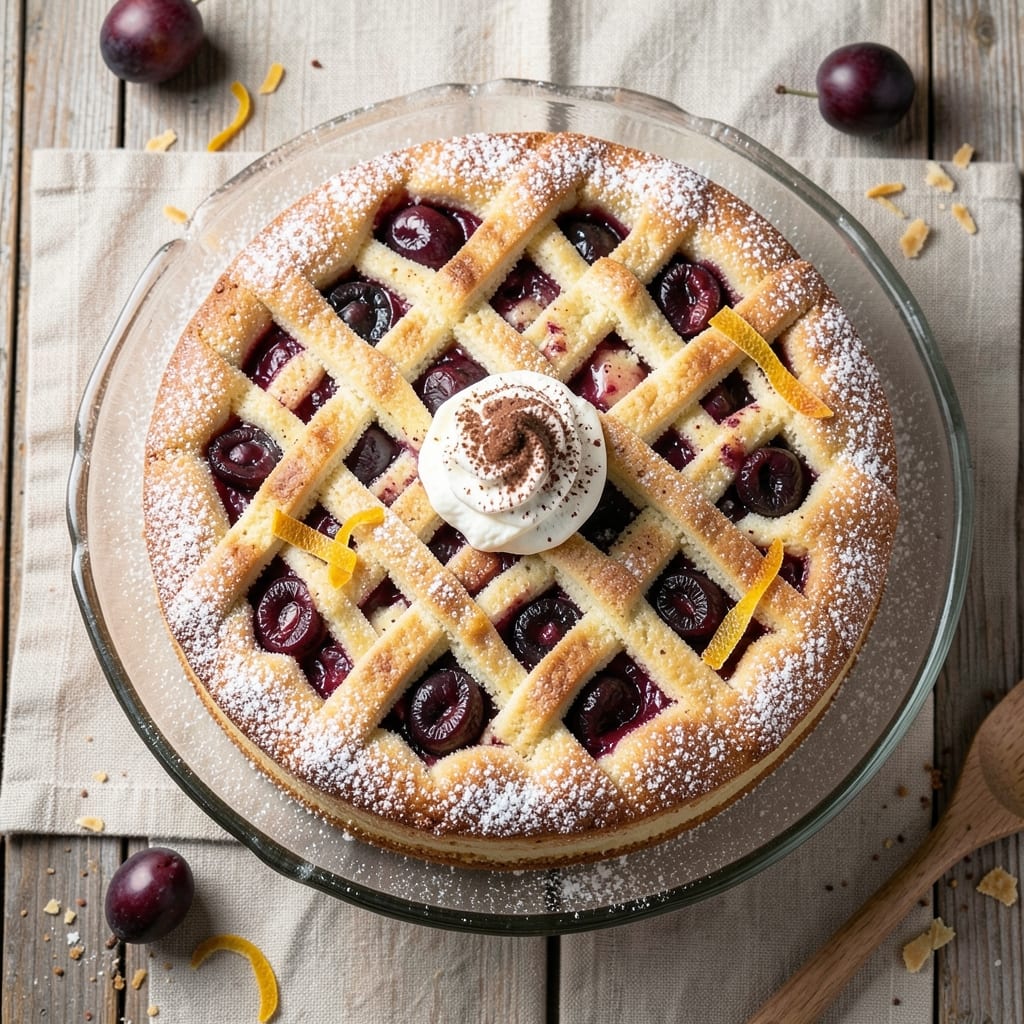
Austrian plum cake delivers layers of tender dough, juicy plums, and a rum-soaked richness that makes every slice feel like a taste of Vienna. The secret lies in the yeast-based dough—light yet sturdy enough to hold plums without collapsing—and the crunchy streusel crown that adds texture. I've perfected this recipe after years of testing, balancing traditional techniques with modern shortcuts to ensure success.
The dough starts with a simple yeast mixture, enriched with butter and eggs for that signature melt-in-your-mouth texture. Sour plums, pitted and lightly sweetened, create pockets of tangy-sweet flavor between the layers. The rum-soaked syrup ties everything together, infusing the cake with warmth and depth. Even if you're not in Austria, this recipe brings the cozy, spiced aroma of a Viennese café into your kitchen.
What makes this cake special is the contrast: the tender, slightly chewy dough, the juicy plums, and the crunchy streusel topping. Each bite delivers a symphony of textures and flavors, from the buttery richness of the dough to the bright acidity of the plums. The rum adds a sophisticated touch without overpowering, making this cake perfect for special occasions or as a comforting treat.
Baking time is about 45-50 minutes at 350°F, with a golden crust that signals perfection. The cake improves with age, developing deeper flavors as it sits, so making it a day ahead ensures the best results. Whether you're serving it at a gathering or enjoying a slice with coffee, this Austrian plum cake is a showstopper that never disappoints.
Ingredients for austrian plum cake
These 14 ingredients bring Vienna's cozy café charm to your kitchen—layered dough, juicy plums, and rum-soaked warmth.
| Ingredient | Amount | Notes |
|---|---|---|
| All-Purpose Flour 🌾 | 4 cups | Sifted for light texture |
| Granulated Sugar 🍚 | 1 ½ cups | White or light brown |
| Unsalted Butter 🧈 | 1 cup | Cold, cubed for streusel |
| Large Eggs 🥚 | 2 whole | Room temperature preferred |
| Active Dry Yeast 🍞 | ¼ oz | Or 2 1/4 tsp (1 packet) |
| Warm Milk 🥛 | 1 cup | 110°F for yeast activation |
| Sour Plums 🍑 | 2 lbs | Fresh or canned (drained) |
| Light Rum 🍹 | ½ cup | For syrup infusion |
| Vanilla Extract 🌿 | 1 tbsp | Pure vanilla preferred |
| Salt 🧂 | 1 tsp | Kosher or sea salt |
| Ground Cinnamon 🌶️ | 1 tsp | For streusel and dough |
| Allspice Berries 🍃 | ½ tsp | Crushed for streusel |
| Powdered Sugar 🍚 | ½ cup | For dusting top layer |
| Raisins 🍇 | ½ cup | Optional for extra sweetness |
The yeast is your secret weapon here—King Arthur or Bob's Red Mill work best for reliability. If your supermarket yeast is old (check the date!), toast it in the dry ingredients for 2 minutes to wake it up. For plums, Green Gage or Damson varieties are ideal—their tartness cuts through the richness. I always grab mine at Whole Foods when they're in season, but any firm, vibrant plums will do. Pitting them is tedious, so canned plums in juice save time (just drain well). The rum? Bacardi or Captain Morgan are my go-tos—they're affordable and pack enough flavor without overpowering.
No rum? Apple juice or orange liqueur works in a pinch, though the depth won't be quite the same. Subbing raisins for plums? Soak them first—they'll plump up and mimic the juiciness. The streusel topping is non-negotiable for that crunch, but if you're short on butter, cold coconut oil works too (just toast it with the spices first). For the dough, bread flour makes it extra sturdy if you're worried about plums sinking too much. And if your kitchen smells like rum while baking? That's a good thing—it means it's working!
The dough keeps 2 days wrapped in the fridge or 3 months frozen—make it ahead for stress-free baking. Pitted plums? Store them in a sealed container with a paper towel to absorb moisture for up to 5 days. The streusel loses crunch if made too early, so mix it fresh before baking. Slice the cake when it's completely cool—it sets up beautifully overnight. Leftovers? 3 days in the fridge or 2 months frozen, wrapped tightly in plastic. Trust me, the second day is even better—flavors meld like magic.
Why You'll Love This Recipe
- No Yeast Stress: I swear by this recipe because it’s one of those rare cakes that doesn’t demand perfect yeast handling. The butter and sugar create a rich, tender crumb whether you’re a baking pro or just measuring by eyeballs—honestly, I’ve made it twice with slightly expired yeast, and it still turned out moist and golden.
- Butter-Sugar Magic: That rich, caramelized top? Pure magic from the butter and sugar. The yeast gives it a subtle lift, but it’s the buttery depth that makes every bite feel like a hug—especially when you add those plums, which soak up the syrup like a dream. (Yes, even on a Tuesday night.)
- Leftovers That Last: This cake keeps beautifully for days, if you can resist slicing it all at once. I’ve wrapped portions in foil and reheated them straight from the fridge—still tender, still delicious. It’s my go-to for school lunches or when I need a quick dessert without the fuss.
- Budget-Friendly Luxury: Flour, sugar, butter, eggs—these are pantry staples that won’t break the bank. The yeast adds just enough lift to make it feel special, but the real star is how it stretches to feed a crowd without costing a fortune. My secret weapon for potlucks and holidays.
Step-by-step instructions for Austrian plum cake
Here's how to create layers of rum-soaked plum perfection with a crunchy streusel crown.
Prepare the Yeast Dough Base
In a small bowl, dissolve the 0.25 oz active dry yeast in the 1 cup warm milk (about 110°F) with 1 tablespoon granulated sugar from the total amount. Let it sit for 5-10 minutes until frothy—this confirms your yeast is active. If it doesn't bubble, start over with fresh yeast.
In a large mixing bowl, combine the 4 cups sifted all-purpose flour, remaining 1.5 cups granulated sugar, 1 teaspoon salt, and 1 teaspoon ground cinnamon. Mix with a wooden spoon until evenly distributed. Make a well in the center and add the yeast mixture, 2 whole large eggs, and 1 tablespoon vanilla extract. Using a dough hook attachment, mix on low speed until combined, then increase to medium and knead for 5-7 minutes until smooth and elastic. The dough should be slightly tacky but not sticky.
Layer and Infuse with Rum-Plum Filling
Divide the dough into 3 equal portions (about 12 oz each) and roll each into a 12-inch circle on a lightly floured surface. Transfer two circles to a 9x13-inch baking dish, leaving space between them. Spread 1 pound of the 2 lbs sour plums (pitted and halved) over the first layer, then pour ¼ cup of the 0.5 cup light rum evenly over the plums.
Place the second dough circle on top, sealing the edges by pinching with your fingers. Spread the remaining 1 pound plums and ¼ cup rum over this layer. Top with the final dough circle, sealing edges as before. Cover with a clean kitchen towel and let rise in a warm place for 1 hour or until doubled in size. The cake should spring back slowly when gently pressed.
Create the Crunchy Streusel Crown
In a medium bowl, combine 1 cup cold cubed unsalted butter, ½ cup granulated sugar, ½ cup all-purpose flour, ½ teaspoon ground cinnamon, and ½ teaspoon crushed allspice berries. Use a pastry cutter or your fingers to work the butter into the dry ingredients until the mixture resembles coarse crumbs with pea-sized butter pieces. Fold in the ½ cup raisins if using.
Sprinkle the streusel mixture evenly over the risen cake, pressing down lightly with your fingers to create a continuous layer. The streusel should cover the entire top completely—this creates that signature crunchy crown. Dust lightly with ½ cup powdered sugar for extra shine and sweetness.
Bake to Golden Perfection
Preheat your oven to 350°F. Bake the cake for 45-55 minutes until the top is deep golden brown and the edges pull away slightly from the pan. The cake should smell intensely of rum and cinnamon—this is your best indicator it's done. If the streusel isn't brown enough after 45 minutes, tent with foil and continue baking.
Remove from the oven and let cool in the pan for 15 minutes before transferring to a wire rack. The cake will sink slightly as it cools, but it should still maintain its structure. For the best texture, serve at room temperature after cooling completely. The rum-soaked layers will be moist and flavorful, while the streusel crown provides delightful contrast with every bite.
Pro Tips For Making Austrian Plum Cake
- SOFTEN BUTTER FIRST: Austrian plum cake relies on cold butter for flaky layers, but don’t pull it straight from the fridge—break it into cubes and let it sit at room temp for exactly 45 minutes before creaming. I used to rush this, and the dough turned greasy instead of tender. (Yes, even if you’re impatient like me, this makes a real difference.)
- WEIGH YOUR FLOUR: Scooping flour from the bag packs in air, which throws off the yeast’s rise. Use a kitchen scale for precise measurements—250g all-purpose flour is non-negotiable here. After burning three batches with uneven texture, I finally learned: tap the bowl gently to settle flour before mixing.
- DON’T OVERMIX THE DOUGH: Once you add the yeast mixture, stop folding after three gentle turns—the dough should look shaggy, not smooth. Overworking it develops gluten, and your cake will turn dense instead of light. I was skeptical until I tried it: the texture stays airy, just like the ones from Viennese bakeries.
- PROOF IN A WARM SPOT: The yeast needs 75°F (24°C) to activate properly—your oven with the light on works, but so does a turned-off oven with a bowl of hot water inside. Skip the fridge for proofing; cold slows it down too much, and your cake won’t rise evenly. (Your future self will thank you.)
Wine and beer pairings for this dish
Viennese Dessert Wines
Austrian plum cake shines with Grüner Veltliner or Riesling from the Wachau region—both wines balance the cake's sweetness with crisp acidity. I love F.X. Pichler's Grüner Veltliner for its peppery notes that complement the rum and cinnamon. Serve slightly chilled (50-55°F) to enhance the plum's tartness without overwhelming the streusel's crunch. 🍷
Spiced Austrian Beers
For beer lovers, try a Dunkelbier like Stiegl Brau's Dunkel—its caramel and toasted malt notes mirror the cake's streusel and rum. The malty sweetness contrasts beautifully with the plums' acidity. If you prefer lighter options, Austrian Märzen (like Eggenberg) works too, with its subtle spice that echoes the allspice in the streusel. Serve at 45-50°F for the best pairing.
Rum-Infused Pairings
The rum in the cake calls for a dark rum cocktail like an Old Fashioned with Bacardi 8-year or Diplomático Reserva Exclusiva. The caramel and vanilla notes in these rums amplify the cake's flavors. For a non-alcoholic option, spiced apple cider (warmed with cinnamon sticks) enhances the cake's warmth without competing. I often serve this during holidays—it's a crowd-pleaser! 🍹
Seasonal Wine Swaps
In summer, switch to a dry Riesling (like Hengst's Vinea) to cut through the cake's richness. For winter, a late-harvest Gewürztraminer (such as Weingut Kracher) adds floral notes that pair perfectly with the rum and plums. Both wines keep the cake's flavors vibrant while adding seasonal depth. Always chill dessert wines for 1-2 hours before serving.
Beer and Cake Pairing Tips
To avoid overpowering the cake, opt for low-alcohol beers (3-4% ABV) like Austrian Pilsner (e.g., Stiegl Pils). The crispness cleanses the palate between bites. For stronger beers, Belgian Dubbel (like Westmalle Dubbel) works—its dark fruit and caramel notes harmonize with the plums and streusel. Serve beer at 40-45°F to preserve its carbonation and flavor.
Nutrition facts
Frequently asked questions
Can I use canned plums instead of fresh?
Yes! Canned plums work perfectly—they save time and ensure consistent quality. Just drain them well and pat dry before layering. For extra flavor, add 1 teaspoon lemon juice to the canning liquid before draining to brighten the plums. Avoid plums packed in heavy syrup, as they may make the cake too moist.
How do I fix a cake that's too dense?
If your cake turns out dense, it's likely from overmixing the dough or underbaking. Next time, knead just until smooth (5-7 minutes) and bake until a toothpick comes out clean. For a quick fix, slice the cake horizontally, spread a thin layer of rum-soaked plum jam, and reassemble before serving.
Can I make this cake without rum?
Replace the 0.5 cup rum with 0.5 cup apple juice or orange juice for a kid-friendly version. For depth, add 1 teaspoon vanilla extract or 1 teaspoon almond extract to the syrup. The cake will still be delicious—just slightly less complex in flavor.
Why did my streusel turn out crumbly instead of crunchy?
Crumbly streusel usually means the butter melted too soon. Keep everything ice-cold when mixing, and bake the cake at 350°F for 45-50 minutes—don't overbake. For extra crunch, sprinkle the streusel with 1 tablespoon powdered sugar before baking to help it caramelize.
How long does this cake keep, and can I freeze it?
Store at room temperature for 3 days in an airtight container, or freeze for up to 3 months. Wrap tightly in plastic wrap, then place in a freezer bag. Thaw overnight in the fridge before serving. The cake actually improves with age—flavors meld beautifully after 24 hours!