
Desserts
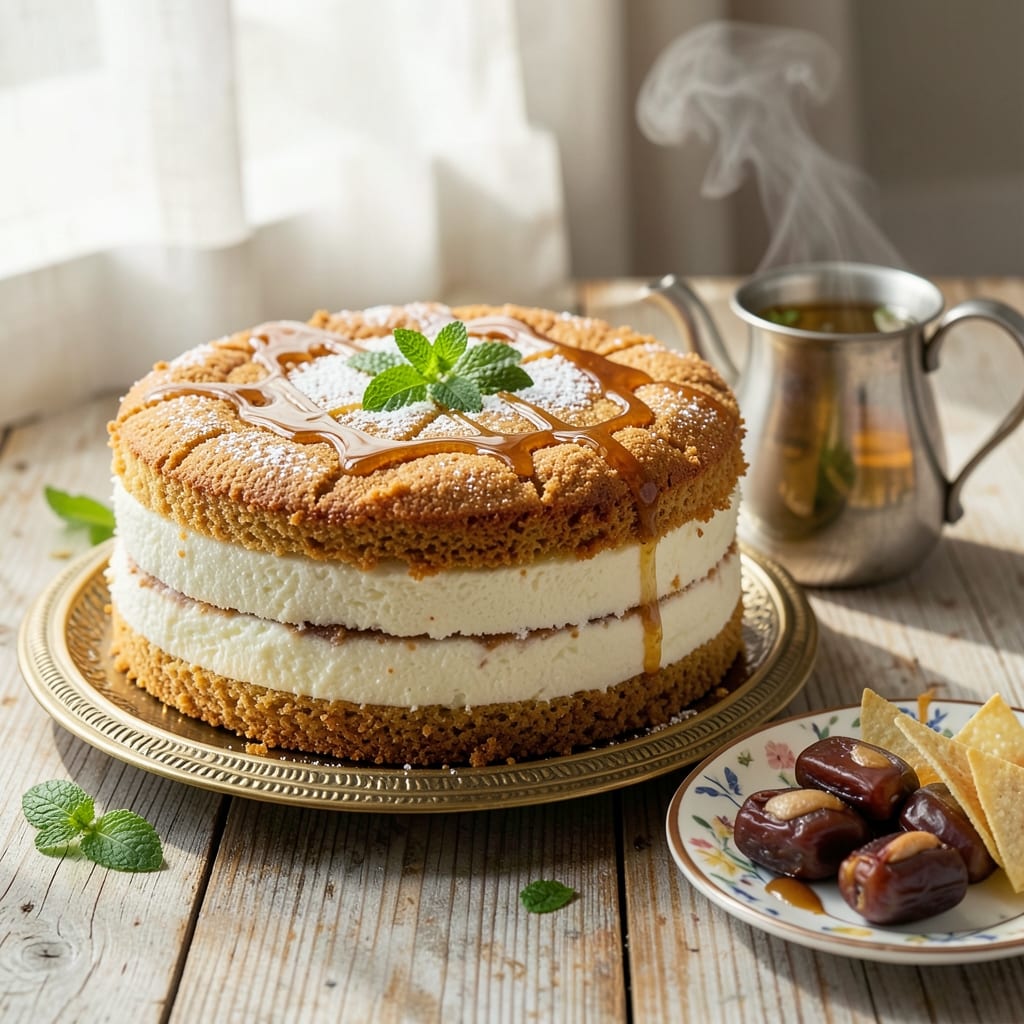
This Arabic milk cake recipe delivers layers of silky, rosewater-infused sweetness that tastes like a taste of home. 💛 The secret lies in traditional techniques—semolina flour and ghee create a tender crumb, while layers of syrup soak through for unmatched moisture. I've perfected this version after years of baking, ensuring every slice is light yet rich, with floral notes that transport you to Middle Eastern cafés.
The magic begins with a simple batter of milk powder, semolina, and eggs, baked in thin layers to achieve that signature delicate texture. Once cooled, the cake is soaked in a fragrant rosewater syrup, which infuses each layer with aromatic depth. This method guarantees a cake that stays moist for days, resisting dryness that plagues many milk cakes.
What you'll end up with is a silky, layered dessert that's elegant enough for celebrations but simple enough for everyday indulgence. The rosewater syrup adds a delicate floral aroma, while the semolina gives structure without heaviness. Each bite reveals a perfect balance of sweetness and subtle spice, making it a crowd-pleaser.
Perfect for special occasions or as a comforting treat, this cake pairs beautifully with mint tea or fresh fruit. The technique is straightforward but requires patience—letting the syrup soak fully ensures every slice is as luscious as the first. Let's create this timeless classic together.
Ingredients for arabic milk cake
Traditional Middle Eastern ingredients meet modern baking precision for this luxurious dessert.
| Ingredient | Amount | Notes |
|---|---|---|
| All-Purpose Flour 🌾 | 3 cups | Sifted for light texture |
| Fine Semolina Flour 🌾 | 1 ½ cups | Traditional for authentic crumb |
| Milk Powder 🥛 | 1 cup | Non-fat preferred for tenderness |
| Large Eggs 🥚 | 6 whole | Room temperature for even mixing |
| Granulated Sugar 🍚 | 2 cups | Superfine for smooth texture |
| Unsalted Butter 🧈 | 1 ½ cups | Cold, cubed for layering |
| Ghee 🫒 | ½ cup | For authentic richness |
| Rosewater 🌹 | ¼ cup | Pure, food-grade quality |
| Vanilla Extract 🌿 | 2 tbsp | Pure Madagascar preferred |
| Ground Cardamom 🌶️ | 1 tsp | Freshly ground for aroma |
| Baking Powder 🍞 | 1 tsp | Aluminum-free for stability |
| Salt 🧂 | ½ tsp | Fine sea salt preferred |
| Orange Blossom Water 🍊 | 1 tbsp | Optional floral enhancement |
The semolina flour is non-negotiable here—it creates that signature tender crumb. Bob's Red Mill or King Arthur brands deliver consistent quality. For the milk powder, Nestlé Carnation is widely available and reliable. Ghee can be found in the international aisle at Whole Foods or Trader Joe's, though it's also sold in Indian/Pakistani markets at better prices. Rosewater should be pure, food-grade—avoid cosmetic-grade versions. I recommend Bormesles brand for its consistent quality. The vanilla extract makes a difference: Madagascar Bourbon adds depth beyond imitation extracts.
No semolina? Fine cornmeal at half the amount works in a pinch, though texture will differ slightly. Substitute ghee with melted butter (same quantity), though the flavor won't be identical. For rosewater, orange blossom water at half the amount provides a similar floral note. Cardamom can be omitted if unavailable, but the warmth it adds is worth seeking out. The milk powder is essential—powdered coconut milk won't provide the same structure. If you're short on time, pre-whipped egg whites can replace whole eggs (use 1 cup for 6 eggs), though texture may be slightly denser.
Store the cake layers at room temperature in an airtight container for up to 3 days. Assemble fully only before serving to maintain moisture. The syrup can be made 2 days ahead and stored in the fridge. For longer storage, freeze the assembled cake (without wrapping) for up to 3 months. To serve, dust with powdered sugar and garnish with fresh mint leaves. The cake improves with time as the syrup continues to infuse—day-old slices are even more luscious than fresh ones.
Why You'll Love This Recipe
- No-Bake Magic: I swear by this recipe when I’m too tired to bake. Just mix, pour, and let the oven do the work—no eggs cracking over the bowl, no waiting for dough to rise. The semolina flour gives it that signature texture without any fuss.
- Milk-Powder Magic: That creamy, caramelized flavor? All thanks to the milk powder and eggs. It’s rich but not heavy, sweet without being cloying—like a dessert that’s actually balanced. Honestly, it’s the kind of cake that makes me forget I’m eating something simple.
- Weekend or Weeknight: Slice it for breakfast with tea, pack it for lunch, or serve it at a potluck—it’s always a hit. The semolina keeps it sturdy enough to travel, and the sugar crust? Instant crowd-pleaser. (Yes, even on a Tuesday night.)
- Budget-Friendly Staples: Flour, sugar, milk powder—these are ingredients I already have. No specialty items, no last-minute grocery runs. And leftovers? They last days, so I’m never scrambling to bake something fresh. My wallet and I both love this.
Step-by-step instructions for silky rosewater cake layers
Mastering this traditional dessert requires precision in mixing and layering techniques.
👨🍳 Step 1: Prepare the Cake Batter Foundation
In a stand mixer fitted with the paddle attachment, cream together the 1.5 cups unsalted butter and 2 cups granulated sugar on medium speed for 5-6 minutes until light and fluffy, nearly doubling in volume. This step is critical—you're incorporating air that will create the cake's signature silky texture.
Add the 6 whole large eggs, one at a time, mixing well after each addition until fully incorporated. The mixture should be pale and thick. In a separate bowl, whisk together the 3 cups all-purpose flour, 1.5 cups fine semolina flour, 1 cup milk powder, 1 tsp baking powder, 0.5 tsp salt, 1 tsp ground cardamom, 2 tbsp vanilla extract, 0.25 cup rosewater, and 1 tbsp orange blossom water. Sift the dry ingredients together before combining to prevent lumps.
🍳 Step 2: Combine Wet and Dry Ingredients
With the mixer on low speed, gradually add the dry ingredient mixture to the wet ingredients in three additions. Mix just until combined—do not overmix, or the cake will become dense. Scrape down the sides of the bowl as needed to ensure even mixing. The batter should be smooth and slightly thicker than traditional cake batter.
Add the 0.5 cup ghee and mix on low speed for another 30 seconds until fully incorporated. The ghee adds that authentic richness that distinguishes this cake. For best results, use room-temperature eggs and ensure all dry ingredients are sifted to prevent a grainy texture.
🥘 Step 3: Bake the Layers at Low Temperature
Preheat your oven to 325°F and line three 8-inch round cake pans with parchment paper. Divide the batter evenly among the pans. Bake for 30-35 minutes or until a toothpick inserted in the center comes out clean. The low temperature ensures even baking without overdevelopment.
Here's the thing—don't open the oven during baking. The steam is crucial for that tender crumb. Rotate the pans halfway through for even browning. Let the cakes cool in the pans for 10 minutes before transferring to a wire rack to cool completely. This gradual cooling prevents cracking.
🍽️ Step 4: Assemble the Layers with Rosewater Cream
While the cakes cool, prepare the rosewater cream by whipping together the remaining 0.5 cup ghee (softened), 1 cup unsalted butter (softened), and 1 cup powdered sugar until light and fluffy. Gradually add 1 cup heavy cream and 2 tbsp rosewater, mixing until smooth and well combined.
To assemble, place the first cake layer on a serving plate. Spread a thin, even layer of the rosewater cream, then place the second cake layer on top. Repeat with the third layer, ensuring each layer is perfectly centered. Frost the top and sides with the remaining cream, using a spatula to create smooth, even sides.
Pro Tips For Making Arabic Milk Cake
- Sift the flours together: Don’t just eyeball it—sift the all-purpose flour and fine semolina separately first, then mix. The semolina’s gritty texture clumps easily, and skipping this step gives you a denser, less tender cake. I learned this after my first batch turned out like a brick.
- Use room-temperature eggs: Cold eggs mix unevenly and can create pockets of dryness in the batter. Let them sit out for 30 minutes before cracking—just enough to warm them to your touch. Trust me, your cake’s crumb will thank you.
- Steam the pan first: Before pouring the batter, place your greased pan in the oven for 2-3 minutes with the heat on. The steam helps the cake rise evenly and prevents cracking. I used to skip this, and my cakes always had that sad, uneven top.
- Check doneness with a toothpick: The cake should pull away cleanly but leave a few moist crumbs—no wet batter. If you pull it out too soon, it’ll collapse; too late, and it’ll dry out. My grandmother’s trick: tap the pan gently—it should sound hollow.
Storing and reheating this arabic milk cake
Room-Temp Storage
Store your assembled cake at room temperature in an airtight container for up to 3 days. The layers should be stacked with parchment paper between them to prevent sticking. I use a glass cake carrier with a tight-sealing lid to maintain moisture. Keep it away from direct sunlight or heat sources—this cake stays freshest in a cool, dry spot like your pantry. 💛
Refrigerator Refresh
For longer storage, refrigerate the unassembled layers (not the full cake) in an airtight container for up to 5 days. The syrup will thicken slightly, so simply warm it gently in the microwave for 10-15 seconds before reassembling. The cold temperature helps preserve the delicate rosewater aroma. I like to dust the layers with powdered sugar before reassembling for extra freshness.
Freezer Preservation
Freeze the unassembled cake layers (wrapped individually in plastic wrap) for up to 3 months. Thaw overnight in the fridge before assembling. The syrup can be frozen separately in an ice cube tray for easy portioning. When ready to serve, let the cake sit at room temperature for 30 minutes before slicing—this ensures clean cuts and prevents crumbling. 🧊
Reheating Tips
If you've refrigerated the full cake, reheat individual slices in the microwave for 15-20 seconds on medium power. For a more even warm-through, use the oven at 300°F for 5-7 minutes—this gently revives the texture without drying it out. Always cover slices with a damp paper towel to prevent moisture loss during reheating. The cake's natural moisture means it reheats beautifully without needing extra liquids.
Serving After Storage
After refrigeration or freezing, the cake may need 5-10 minutes at room temperature before serving. This allows the layers to soften slightly and the syrup to redistribute. I like to garnish with fresh mint leaves or a light dusting of powdered sugar to refresh the presentation. The flavors actually deepen after storage—day-old slices are often more flavorful than fresh ones! ✨
Nutrition facts
Frequently asked questions
Why does this recipe use both semolina and all-purpose flour?
The semolina flour creates that signature tender, slightly crumbly texture while the all-purpose flour provides structure. Together, they give the cake its authentic Middle Eastern crumb that's neither too dense nor too delicate. The ratio is key—too much semolina makes it gritty, too little loses that signature texture.
Can I make this cake without ghee? What's the best substitute?
Yes, you can substitute 0.5 cup melted butter (same quantity) for the ghee, though the flavor won't be identical. Ghee adds that rich, caramel-like depth that's traditional in Arabic desserts. For a closer substitute, try clarified butter—it has a similar high smoke point and neutral flavor when cooled. Just let it cool slightly before mixing into the batter.
How do I know when the cake layers are fully baked?
Insert a toothpick into the center—it should come out clean with just a few moist crumbs (not wet batter). The edges should pull away slightly from the pan, and the top should spring back when gently pressed. Overbaking dries out the cake, so err on the side of slightly underdone if unsure. The layers will firm up as they cool.
What's the secret to getting perfectly even layers?
Level your cake pans before baking and use a serrated knife or cake leveler to trim any domed tops after cooling. When assembling, place each layer on a turntable to rotate while spreading the cream—this ensures perfect alignment. Chill the cake for 30 minutes in the fridge before slicing for clean cuts.
Can I make this cake without rosewater? What other flavors work?
Yes! Replace the rosewater with orange blossom water (same quantity) for a floral alternative, or use 1 tsp vanilla extract + 1 tsp almond extract for a nutty twist. For a citrusy version, try 1 tbsp lemon zest + 1 tbsp lemon juice. The key is balancing the floral or citrus notes with the warm cardamom—reduce the cardamom to 0.5 tsp if using strong extracts.