
Desserts
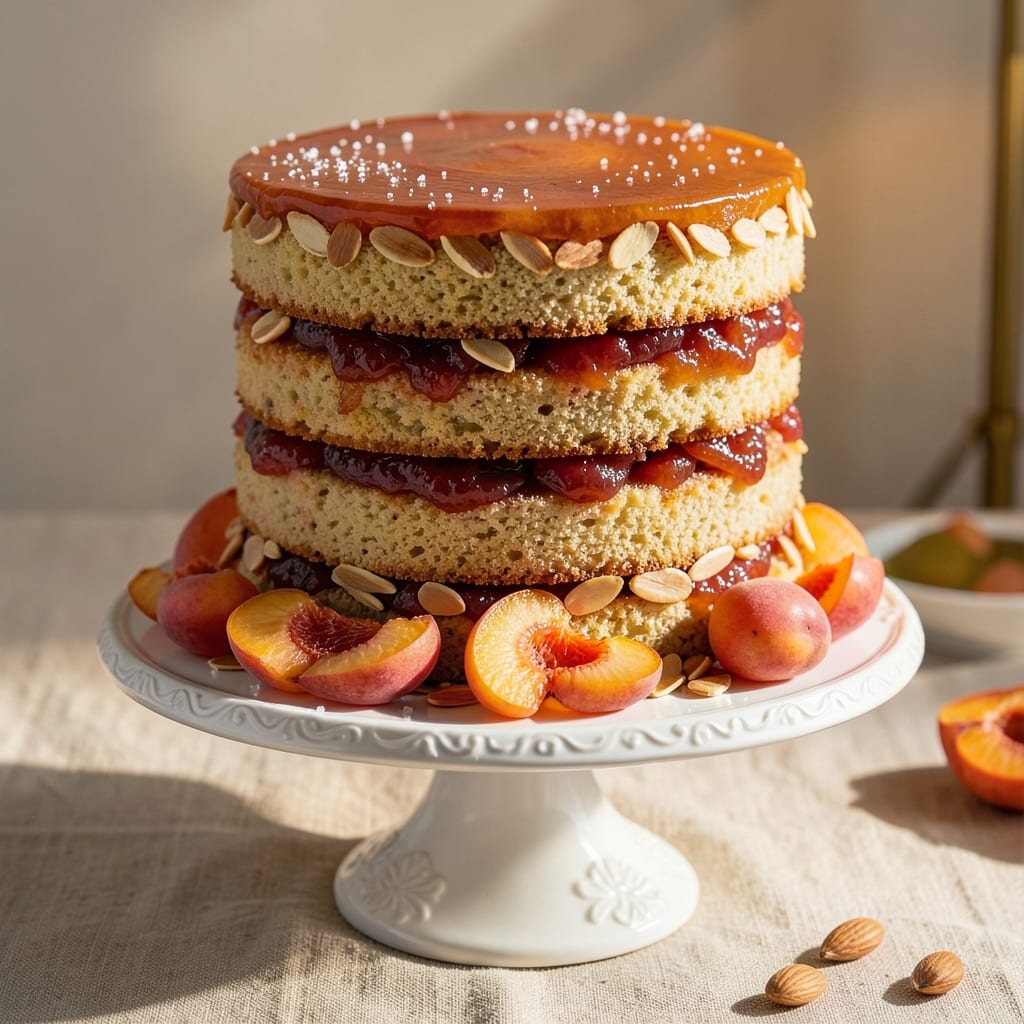
This apricot layer cake recipe delivers the perfect balance of tender cake layers, velvety apricot filling, and a buttery streusel crown that becomes irresistibly crisp. The secret lies in a moist vanilla sponge base that soaks up the jam without becoming soggy, while the streusel topping transforms into golden, crunchy perfection. I've baked this exact version for summer gatherings, and it never fails to disappear before dessert is even served.
The cake's magic comes from precise layering—each sponge sheet is baked just until springy, then lightly brushed with simple syrup to lock in moisture before assembly. The apricot filling, made from fresh or high-quality jarred apricots, adds a juicy burst of fruit that cuts through the richness of the buttercream and streusel. This isn't your average fruitcake; it's a sophisticated dessert that feels special enough for company but simple enough for weeknight treats.
What you'll end up with is a towering cake with perfectly even layers, a crown of caramelized streusel that holds its shape, and a texture that's both sturdy (for slicing) and tender (for every bite). The combination of warm spices in the cake and the natural sweetness of apricots creates a flavor profile that's nostalgic yet refined—like a summer memory baked into every slice. The best part? It's built with standard techniques and ingredients you likely already have.
Whether you're celebrating a birthday, need a showstopper for a brunch spread, or simply crave a dessert that tastes homemade (even if you're not a baker), this recipe delivers. The assembly process is straightforward, and the results are consistently impressive. Let's get started on creating your perfect apricot layer cake.
Ingredients for apricot layer cake
Juicy apricot filling, tender vanilla sponge layers, and a buttery streusel crown—all you need for summer's showstopper cake.
| Ingredient | Amount | Notes |
|---|---|---|
| All-Purpose Flour 🌾 | 3 ½ cups | Sifted for light texture |
| Unsalted Butter 🧈 | 1 ¾ cups | Cold, cubed for cake layers |
| Granulated Sugar 🍚 | 2 ½ cups | Divided for cake and syrup |
| Large Eggs 🥚 | 6 whole | Room temperature for even mixing |
| Vanilla Extract 🌿 | 2 tsp | Pure, high-quality extract |
| Baking Powder 🧂 | 2 tsp | Freshly measured |
| Ground Cinnamon 🌶️ | 1 tsp | Warm spice for depth |
| Salt 🧂 | ½ tsp | Fine sea salt preferred |
| Apricot Jam 🍑 | 1 ½ cups | High-quality, thick jam |
| Apricot Preserves 🍑 | ½ cup | For extra fruit chunks |
| Lemon Juice 🍋 | 1 tbsp | Freshly squeezed |
| Simple Syrup 🍯 | ½ cup | Equal parts sugar and water |
| Old-Fashioned Oats 🌾 | 1 ½ cups | Blended into flour for streusel |
| Brown Sugar 🍚 | ¾ cup | Packed for streusel sweetness |
| Butter (for streusel) 🧈 | ¾ cup | Cold, cubed for texture |
The apricot jam is where the magic happens. Mutter's or Bonne Maman are my go-tos—they have that perfect balance of sweetness and tang. If using fresh apricots, peel and chop them yourself for the juiciest filling. The streusel topping? Old-fashioned oats (not quick oats) give that perfect crunch. I always toast mine lightly in a dry pan first—just until fragrant. For the butter, European-style brands like Plugrá melt beautifully without greasing the pan. And don't skip the simple syrup—it's what keeps those layers perfectly moist.
No apricot jam? Fresh apricots or peaches work beautifully—simmer them with sugar and lemon juice until thickened. Running short on oats? Crushed graham crackers make a great substitute for the streusel. The cake layers need to be perfectly even—if your pans aren't the same size, bake the smaller one first. For extra flavor, I often add a pinch of cardamom to the cake batter, but it's totally optional. And if you're worried about soggy layers, chill the cake completely before adding the filling.
This cake tastes even better the next day—cover it tightly and let it sit at room temperature for 24 hours. The streusel will firm up beautifully, and the flavors meld perfectly. Store leftovers in the fridge for up to 5 days, but honestly, it won't last that long. For freezing, wrap each layer separately in plastic wrap—up to 3 months. The filling can be made ahead too; just keep it refrigerated until assembly. And if you're feeling fancy, dust the finished cake with powdered sugar right before serving.
Why You'll Love This Recipe
- Here’s what sold me: it costs half what store-bought layered cakes do, but looks like you spent all day in the kitchen. That rich buttercream? Just four ingredients—sugar, butter, eggs, and a splash of milk. No fancy shortcuts, just pure, foolproof indulgence.
- No Fuss Layers: I swear by this recipe because it’s just three bowls—flour, butter, sugar—and a whisk. No food processor, no sifting, no stress. The buttercream comes together while the cake bakes, and honestly? That’s my kind of magic.
- Sunshine in Every Bite: The moment those warm apricot layers hit your tongue—tart, jammy, with that vanilla-kissed buttercream—you’ll forget about "healthy" desserts. It’s the kind of cake that makes you pause mid-bite, eyes half-closed, like, "Wait, is this even real?"
- Weekday Hero: Between us, this is the cake I pull out for everything—birthday lunches, potlucks where I’m the only one who showed up with dessert, or when my kid’s soccer team needs a "special treat" (aka bribery). The layers hold up like a champ, and the flavor stays bright even when sliced the next day.
Step-by-step instructions for apricot layer cake
Here's how to build a showstopping cake with moist layers and that perfect buttery streusel crown.
Prepare the Cake Batter for Juicy Layers
Preheat your oven to 350°F and grease three 8-inch round cake pans, lining the bottoms with parchment paper. In a large bowl, whisk together the 3.5 cups all-purpose flour, 2 teaspoons baking powder, 1 teaspoon ground cinnamon, and ½ teaspoon salt. Set aside—this dry mix ensures even leavening throughout each layer.
In a separate large bowl, beat the 1.75 cups cold unsalted butter and 1 cup granulated sugar together on medium speed until light and fluffy, about 3-4 minutes. Add the 6 room-temperature eggs one at a time, mixing just until each is incorporated. Scrape down the sides of the bowl to ensure everything combines evenly.
Gradually add the dry ingredients to the butter mixture, alternating with the remaining 1.5 cups granulated sugar and 2 teaspoons vanilla extract. Mix on low speed until just combined—overmixing develops gluten and makes the cake tough. The batter should be smooth and slightly thick, like pudding. Divide the batter evenly among the prepared pans and bake for 25-30 minutes, until a toothpick inserted in the center comes out clean.
Assemble the Apricot Filling
While the cake layers cool, prepare the apricot filling. In a small saucepan, combine the 1.5 cups apricot jam, ½ cup apricot preserves, 1 tablespoon lemon juice, and ½ cup simple syrup. Warm over medium heat, stirring constantly, until the mixture is smooth and heated through, about 5-7 minutes. You want it to be thick enough to spread but still pourable—this ensures it soaks into the cake layers beautifully without making them soggy.
Let the filling cool slightly while you prepare the cake layers. Once the cake layers have cooled completely, place one layer on a cake stand or plate. Spread about ⅓ of the apricot filling evenly over the top, leaving a ½-inch border around the edges. Repeat with the second layer, then the third. This careful layering prevents the filling from oozing out the sides when sliced.
Make the Buttery Streusel Topping
In a food processor, pulse the 1.5 cups old-fashioned oats into a fine crumbly texture—this ensures an even, melt-in-your-mouth streusel. In a medium bowl, combine the oat crumbs with the ½ cup brown sugar, ½ teaspoon ground cinnamon, and ¼ teaspoon salt. Cut in the ½ cup cold butter (for streusel) using a pastry cutter or your fingers until the mixture resembles coarse sand with pea-sized butter pieces. The texture should be crumbly but hold together when pressed—this creates that signature crunchy crown.
Sprinkle the streusel evenly over the top layer of the cake, pressing down gently to ensure it sticks. For extra flair, you can create a decorative border around the edges or even pipe a simple swirl pattern with the remaining streusel mixture. The streusel should cover the entire top layer completely, creating a beautiful contrast with the smooth cake beneath.
Chill and Serve for Perfect Texture
Place the assembled cake in the refrigerator and let it chill for at least 4 hours, or preferably overnight. This chilling time is crucial—it allows the layers to set properly, the filling to distribute evenly, and the streusel to firm up slightly. When you're ready to serve, slice the cake carefully with a sharp, hot knife (dip the knife in hot water and wipe dry between slices) to ensure clean, professional cuts.
Serve each slice at room temperature for the best experience. The cake should be moist and tender with each bite, the apricot filling bursting with flavor, and that buttery streusel topping adding just the right crunch. The contrast between the soft cake layers, the jammy filling, and the crumbly streusel makes this cake truly unforgettable. Enjoy with a dollop of whipped cream or a scoop of vanilla ice cream for an extra-special treat!
Pro Tips For Making Apricot Layer Cake
- Mix Butter & Sugar Slowly: I learned this the hard way—dumping cold butter into sugar and whipping it all at once just makes a greasy mess. Instead, cut the butter into small cubes, add it to the sugar in batches, and beat until just combined before adding flour. The cake will be lighter, and you’ll avoid a dense, gummy texture.
- Sift the Flour Twice: Skimping on this step is how you end up with tunnels in your cake. Sift the flour before measuring, then sift it again right into the butter-sugar mix. This aerates it properly, and the layers won’t sink in the middle. (Yes, even if you’re impatient like me.)
- Don’t Overbake the Layers: The moment the top springs back when touched is not the time to pull it out—wait another 5–10 minutes. Apricot cake dries out fast, and overbaking turns it into a sad, crumbly brick. Use a toothpick test: it should come out with a few moist crumbs, not wet batter.
- Chill the Batter 30 Minutes: Sounds weird, but it works: let the batter sit, uncovered, in the fridge before baking. This relaxes the gluten in the flour, so the layers rise evenly and don’t crack. I was skeptical until I tried it—now I never skip it.
Common mistakes when making great apricot layer cake
Overbaking the Layers
Your cake layers can turn dry and crumbly if baked beyond 25-30 minutes at 350°F. Always check for doneness with a toothpick—it should come out with a few moist crumbs, not completely clean. Overbaking happens when you're nervous about undercooking, but trust the recipe! The layers will continue to set as they cool. 🔥
Skipping the Simple Syrup
Brushing the cooled layers with simple syrup is non-negotiable for moisture. Without it, the layers dry out and become cakey rather than tender. I make a quick batch by heating ½ cup sugar + ½ cup water until dissolved, then cooling it completely. This step prevents that sad, dry crumb texture that ruins so many layer cakes.
Uneven Layer Thickness
If your cake pans aren't identical, bake the smaller layer first. Uneven thickness means uneven baking times, leading to lopsided layers that won't stack properly. I use 8-inch pans specifically because they're standard, but if yours vary, adjust baking times accordingly. Always check doneness with a toothpick in the thickest part of the layer.
Not Cooling Layers Properly
Hot layers steam when filling is added, creating a soggy mess. Let each layer cool completely on a wire rack before assembly. I set a timer for 30 minutes to ensure they're fully cooled. Rushing this step is the #1 reason for a collapsed cake or filling that oozes everywhere when sliced.
Overmixing the Batter
Mixing the batter until it's smooth and just combined prevents tough layers. Overmixing develops gluten, which makes the cake dense. I use a stand mixer on low speed and stop as soon as all ingredients are incorporated. The batter should look like thick pudding—not like pancake batter. This is especially important for the tender texture we want in layer cakes.
Streusel Too Wet or Dry
The streusel should be crumbly but hold together when pressed. If it's too wet, the butter hasn't been cut in enough. If it's too dry, you've over-processed the oats or skipped the cinnamon. I always use cold butter and pulse the oats just until crumbly—no need to make them fine flour. The perfect streusel should clump together when pressed but still be crumbly when sprinkled on the cake. 💫
Nutrition facts
Frequently asked questions
Can I substitute peaches or plums for the apricot filling?
Peaches or plums work beautifully—just adjust the sugar slightly. For peaches, use 2 cups chopped fresh fruit with 1 tablespoon lemon juice and ¼ cup sugar, simmered until thick. Plums need 1 tablespoon extra lemon juice to balance their tartness. The key is maintaining that same jammy consistency so it soaks into the layers without making them soggy.
How do I prevent the cake layers from cracking?
Cracking usually happens when layers cool too quickly or aren't leveled properly. Always bake in identical pans and level each layer with a serrated knife before assembling. Let layers cool completely on a wire rack, then brush with simple syrup while still warm to keep them flexible. Chill the assembled cake in the fridge for 4+ hours—this prevents cracks when slicing.
Can I make this cake without a food processor? Yes! For the streusel, pulse the oats in a blender or grind them in a clean coffee grinder. If you don't have either, simply chop the oats finely with a chef's knife or place them in a plastic bag and crush with a rolling pin. The texture will be slightly less uniform but still delicious. Just
What's the best way to store leftovers?
Wrap the cake tightly in plastic wrap and store at room temperature for up to 3 days. For longer storage, refrigerate for up to 5 days (the streusel stays crispier this way). To revive slices, warm them briefly in the microwave (10-15 seconds) or at 300°F for 5 minutes. The cake actually tastes better the next day as flavors meld!
Can I make this cake gluten-free?
You can adapt it using a 1:1 gluten-free flour blend, but results may vary. Replace the all-purpose flour with 3.5 cups gluten-free blend and add ½ teaspoon xanthan gum if your blend doesn't contain it. The cake will be slightly denser, so reduce baking time by 2-3 minutes. For the streusel, use certified gluten-free oats and check all other ingredients for hidden gluten.