
Desserts
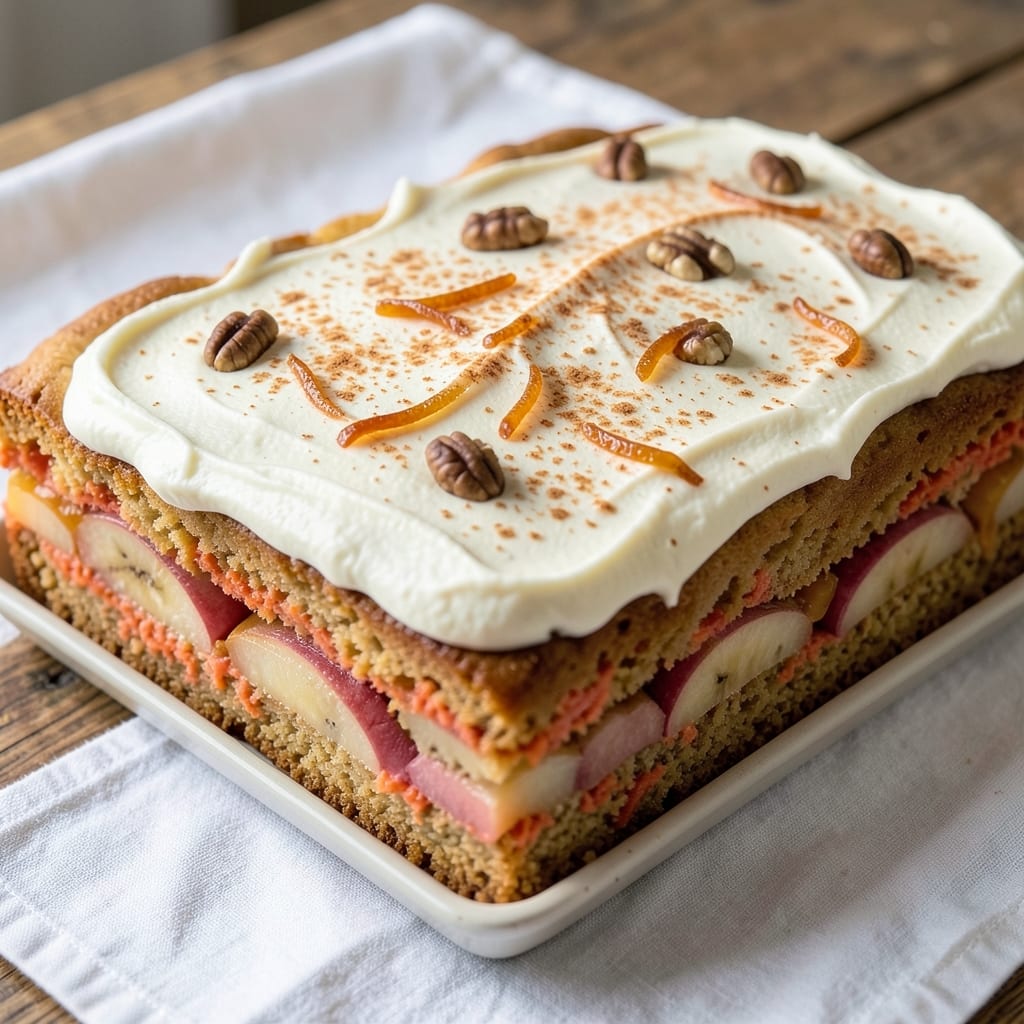
This apple banana carrot cake recipe transforms everyday fruit into a moist, triple-layered dessert that sneaks in vegetables without sacrificing sweetness. 🍏 The secret lies in balancing the natural moisture of bananas and apples with the subtle earthiness of grated carrots, creating a texture that's tender yet sturdy enough to hold its shape. What makes this recipe stand out is how it turns simple pantry staples into a cake that's both comforting and nutritious—perfect for health-conscious bakers who don't want to compromise on flavor.
The cake's magic comes from a foolproof mixing method that incorporates the grated vegetables and fruit without making the batter too wet. A warm spice blend of cinnamon and nutmeg complements the sweetness while adding depth, and the optional cream cheese frosting ties everything together with a velvety finish. Unlike dense fruit cakes, this version stays light and airy, with just enough structure to hold slices neatly on a plate.
What you'll end up with is a cake that's rich in natural sweetness but balanced by the carrots' subtle crunch and the bananas' creamy texture. The layers create a satisfying contrast—soft cake, tender fruit, and a hint of vegetable that disappears with each bite. This recipe is ideal for brunch gatherings, potlucks, or even a special dessert when you want something wholesome yet indulgent.
For those looking to adapt, simple swaps like applesauce or Greek yogurt can make this vegan-friendly, while a sprinkle of nuts on top adds extra crunch. The frosting can be adjusted for richness or sweetness, ensuring every version stays true to its balanced, fruit-forward foundation.
Ingredients for apple banana carrot cake
Pantry staples meet fresh produce for a cake that's both nutritious and indulgent.
| Ingredient | Amount | Notes |
|---|---|---|
| All-Purpose Flour 🌾 | 2 ½ cups | Sifted for light texture |
| Granulated Sugar 🍚 | 1 ½ cups | White or light brown |
| Light Brown Sugar 🍚 | ½ cup | Packed for moisture |
| Unsalted Butter 🧈 | 1 cup | Room temperature, full-fat |
| Large Eggs 🥚 | 2 whole | Room temperature |
| Vanilla Extract 🌿 | 1 tbsp | Pure extract preferred |
| Ground Cinnamon 🌶️ | 2 tsp | Freshly ground preferred |
| Ground Nutmeg 🌶️ | ½ tsp | Freshly grated for depth |
| Baking Soda 🧂 | 1 tsp | Pure baking soda |
| Salt 🧂 | ½ tsp | Fine sea salt |
| Ripe Bananas 🍌 | 3 medium | Mashed, no brown spots |
| Apples 🍎 | 2 medium | Peeled, finely grated |
| Carrots 🥕 | 3 medium | Peeled, finely grated |
| Plain Greek Yogurt 🥛 | ½ cup | Full-fat for creaminess |
| Whipped Cream Cheese 🧀 | 8 oz | Room temperature, full-fat |
| Powdered Sugar 🍚 | 2 cups | Sifted for smooth frosting |
| Lemon Juice 🍋 | 1 tbsp | Freshly squeezed |
The bananas and apples are the heart of this cake—ripe bananas with brown spots actually work best for extra sweetness. Grab Honeycrisp or Fuji apples from the store; they hold up well when grated. Carrots? Orange ones have more natural sweetness, but regular carrots work too. The Greek yogurt keeps the cake moist without making it dense—full-fat makes all the difference here. For the butter, Land O'Lakes or Plugrá are reliable choices, but any good-quality unsalted butter will do.
No Greek yogurt? Applesauce or sour cream works in a pinch, though the texture will be slightly different. Short on bananas? Substitute with mashed sweet potato—it adds moisture and a subtle sweetness. The frosting can be made vegan by swapping the cream cheese for cashew cream or coconut yogurt, though it'll have a lighter texture. Diamond Crystal baking soda is my go-to for baking, but any brand works. For the apples and carrots, a box grater with fine holes is ideal—no food processor needed unless you're prepping a big batch.
The grated apples and carrots keep best in the fridge for 3 days if stored in an airtight container with a paper towel to absorb moisture. The cake layers themselves stay fresh for 4 days wrapped tightly, but the frosting is the first to go—eat within 2 days for best texture. For make-ahead prep, bake the layers and freeze them unfrosted for up to 3 months. Just thaw overnight before assembling.
Why You'll Love This Recipe
- I’ll be real: this recipe uses things I already have. No specialty flours, no weird extracts—just flour, sugar, butter, and whatever’s in my fruit bowl. The eggs bind it all together without needing extra fuss, and leftovers? They disappear faster than my willpower on a sugar crash. Budget-friendly and delicious? That’s my kind of win.
- No Muffin Tin Needed: I swear by this recipe because it’s the only cake I’ll bake when I’m too tired to fuss. Just mix the flour, sugars, and softened butter—no creaming required—then fold in grated apples, mashed banana, and shredded carrots. The texture stays tender without being gummy, and honestly? The kids (and my picky husband) don’t even notice it’s "healthy."
- Sweet-Savory Balance: Between us, the combo of brown sugar’s caramel depth and the natural sweetness of the fruit is chef’s kiss. The apples add a subtle tartness, the banana keeps it moist, and the carrots? They bring this earthy, almost cake-like richness that makes it taste like dessert and something your grandma would serve with tea.
- Lunchbox Hero: Here’s what sold me—this cake holds up perfectly for meal prep. Slice it into squares, wrap in parchment, and toss in a bag. The butter keeps it from drying out, and the natural sugars mean no one’s begging for juice boxes by 10 AM. (Yes, even on a Tuesday night.)
Step-by-step instructions for apple banana carrot cake
Here's the method for a moist, triple-layered cake with hidden veggies that actually taste delicious.
👨🍳 Step 1: Prepare the Fruit and Veggie Mixture
Peel and finely grate the 2 medium apples and 3 medium carrots using a box grater or food processor. Transfer to a bowl and squeeze out any excess moisture with a clean kitchen towel—this prevents a soggy cake. In a separate bowl, mash the 3 medium ripe bananas until completely smooth with no lumps. Combine the mashed bananas with the grated apple and carrot mixture and set aside.
I like to mix the fruits and vegetables right before combining with the wet ingredients. This keeps them fresh and prevents the carrots from turning orange in the batter. The texture should be uniform—no large chunks of apple or carrot should remain.
🍳 Step 2: Cream Butter and Sugars Together
In a large mixing bowl, beat the 1 cup unsalted butter (room temperature) with the 1.5 cups granulated sugar and 0.5 cup light brown sugar on medium speed for 3-4 minutes until light and fluffy. You'll see the mixture nearly double in volume and become pale in color. This step is crucial—it incorporates air that will make your cake tender and moist.
Scrape down the sides of the bowl with a spatula to ensure even mixing. The butter should be completely smooth with no graininess. If it looks too thick, let it sit at room temperature for another 5 minutes before proceeding.
👨🍳 Step 3: Add Eggs, Yogurt, and Flavorings
Add the 2 whole large eggs one at a time, mixing well after each addition. Then stir in the 0.5 cup plain Greek yogurt, 1 tbsp vanilla extract, 2 tsp ground cinnamon, 0.5 tsp ground nutmeg, 1 tsp baking soda, and 0.5 tsp salt. Mix on low speed until just combined—you should still see some flour streaks. Overmixing develops gluten and can make the cake dense.
Here's where the magic happens: the yogurt adds moisture and tenderness, while the spices create that warm apple pie flavor. The baking soda ensures a good rise. Mix the fruit and veggie mixture into the batter until evenly distributed. The batter will be thick but pourable.
🥘 Step 4: Bake the Triple Layers
Preheat your oven to 350°F and grease three 8-inch round cake pans or line them with parchment paper. Divide the batter evenly among the pans. Bake for 25-30 minutes or until a toothpick inserted in the center comes out clean. The edges should be golden brown, but the tops might still look slightly underdone—they'll firm up as they cool.
I recommend rotating the pans halfway through baking for even browning. Let the layers cool in the pans for 10 minutes, then transfer to a wire rack to cool completely. This gradual cooling prevents cracking and ensures clean layers for assembly.
🍽️ Step 5: Assemble and Frost the Cake
In a mixing bowl, beat the 8 oz whipped cream cheese with the 2 cups powdered sugar and 1 tbsp lemon juice until light and fluffy. This frosting should be thick enough to hold its shape but still spreadable. Divide the frosting between three layers: one for between the cake layers and two for the top and sides.
Place the first cake layer on a serving plate and spread a generous layer of frosting. Add the second layer, then frost again. Top with the final layer and spread frosting over the sides and top. Chill in the refrigerator for 1 hour before serving to let the frosting set. The cake keeps well in the fridge for up to 5 days or can be frozen for 3 months.
Pro Tips For Making Apple Banana Carrot Cake
- Cream Butter Properly: I learned this the hard way—softened butter and sugar that just fold together leave a cake with weird pockets. Use a stand mixer and beat the butter and sugars on medium-high for at least 3 minutes until it’s pale and fluffy, not just "combined." That extra time ensures the gluten in the flour gets properly coated, which means a tender crumb instead of a dense one.
- Grate Carrots Fine: Skip the food processor—it turns carrots into mush. Use a box grater (or microplane) and get them down to rice-like texture, not shreds. Too big? They’ll stay chewy and unevenly cooked. Too fine? They’ll turn into carrot paste. Aim for somewhere in between—like the texture of a finely diced onion.
- Don’t Overmix Wet Ingredients: Once you add the eggs and milk (or buttermilk), mix just until combined—maybe 10-12 strokes with a spatula. I used to think more mixing = better binding, but that’s how you end up with a cake that’s tough as a boot. Overmixing develops gluten, and this cake’s job is to be soft and moist, not a gluten workout.
- Test for Doneness Early: This cake’s dense, so it won’t spring back like a vanilla cake. Instead, insert a toothpick at the center 10 minutes before the recipe’s suggested time—it should come out with moist crumbs, not wet batter. If it’s sticky, bake another 5-7 minutes. Overbaking dries it out, and there’s no bringing it back.
Common mistakes when making great apple banana carrot cake
Overmixing the Batter
This is the #1 mistake I see in fruit-heavy cakes—overmixing develops gluten in the flour, leading to a dense, chewy texture instead of the tender crumb we want. Once you've combined all ingredients, mix just until the flour disappears. The batter should look thick but still pourable, with a few streaks remaining. I recommend using a hand mixer on low speed for 30-45 seconds after adding all ingredients—any longer and you'll regret it. 🥄
Skipping Moisture Control
The grated apples and carrots release liquid that can make your cake gummy if not handled properly. Always squeeze out excess moisture with a clean kitchen towel before mixing into the batter. I like to spread the grated mixture on a towel, fold it over, and press gently. For extra insurance, let the grated veggies sit in a colander for 10 minutes before using—this removes about 25% of the liquid without losing flavor.
Uneven Baking
Triple-layer cakes are notorious for uneven baking when pans aren't rotated. Place your cake pans on the middle rack and swap their positions halfway through baking (15 minutes in). I also recommend checking for doneness at 22 minutes—the cake is done when a toothpick comes out with a few moist crumbs (not wet batter). Overbaking dries out the layers, especially with the fruit content. The edges should be golden while the centers still look slightly underdone—they'll firm up as they cool.
Room-Temp Ingredients
Using cold butter or eggs is a surefire way to get dense layers. Let your butter sit at room temperature for 1-2 hours until it's soft but still holds its shape when pressed. For eggs, simply place them in warm water for 5 minutes to bring them to room temperature. Cold ingredients don't blend properly, leading to pockets of unmixed batter that affect texture. I keep my eggs in the fridge until right before mixing, then let them warm up while I prep everything else.
Frosting Too Early
Assembling the cake while layers are still warm causes the frosting to melt and create a soggy bottom. Always let your cake layers cool completely before frosting—this takes about 2 hours at room temperature. For extra insurance, chill the layers for 30 minutes in the fridge before assembling. The frosting should be at room temperature too—cold frosting sets too quickly and can crack. If you're in a hurry, let the frosting sit at room temperature for 20 minutes before using.
Ignoring Pan Prep
Greasing your cake pans isn't enough—you need to line them with parchment paper circles to prevent sticking and ensure clean layers. Cut three 8-inch circles from parchment and place them in the bottom of each pan. Grease the parchment lightly with butter or oil. I also dust the pans with 1 tsp flour after greasing to create an extra barrier. Without proper prep, the cake will stick to the pans, making it nearly impossible to remove clean layers for assembly. 🧂
Nutrition facts
Frequently asked questions
Can I make this cake without eggs?
For a vegan version, replace the 2 eggs with 2 tablespoons ground flaxseed mixed with 6 tablespoons water (let it sit for 5 minutes to thicken) or 1/2 cup unsweetened applesauce. The cake will be slightly denser but still moist. For best results, also swap the Greek yogurt for 1/2 cup coconut yogurt.
How do I store leftover cake?
Wrap the cake tightly in plastic wrap and store at room temperature for up to 2 days, or refrigerate for 5 days. For longer storage, freeze the unfrosted layers for 3 months. Thaw overnight in the fridge before frosting. The frosting should be added fresh for the best texture.
What's the best way to reheat slices?
Warm slices in the microwave for 10-15 seconds or at 300°F for 5-7 minutes until heated through. Avoid high heat—it can dry out the fruit. For extra moisture, brush with a little lemon juice before reheating. The frosting may soften slightly but stays delicious.
Can I substitute other fruits?
Yes! Try 1 cup grated pear or 1/2 cup mashed sweet potato for extra moisture. For tropical flavor, use 1 cup grated pineapple (drained well) or 1/2 cup mashed mango. Just reduce any extra liquid by squeezing the mixture in a towel first to maintain the right texture.
Why did my cake turn out dense?
This usually happens from overmixing (developing gluten), cold ingredients, or skipping moisture control. Mix just until combined, use room-temperature butter and eggs, and always squeeze excess liquid from grated veggies. Another tip: don't overfill the pans—batter should reach 2/3 full for proper rising.