
Desserts
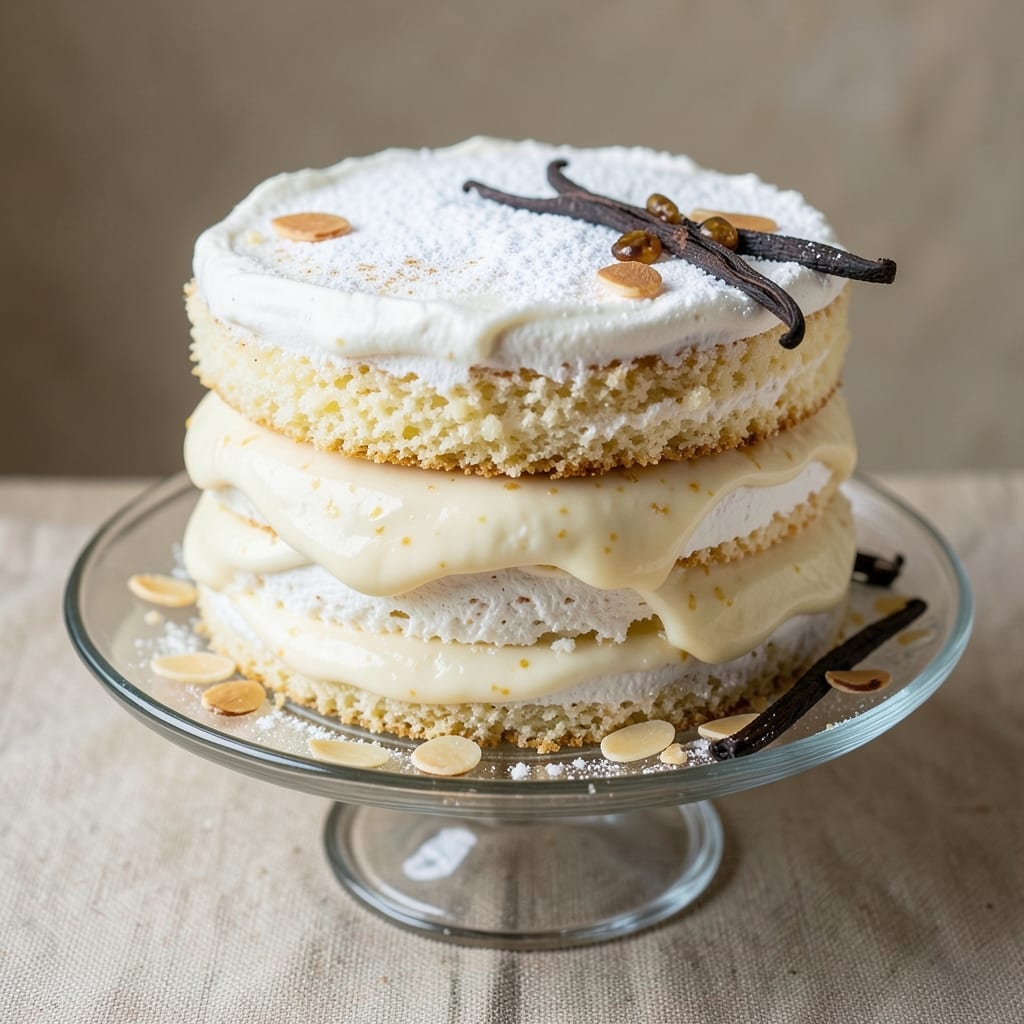
This angel cake recipe UK delivers the signature ethereal lightness that makes it legendary—airy, delicate layers with a whisper of vanilla that dissolves on your tongue. 💛 The secret lies in precise folding techniques and a touch of self-raising flour, creating a texture so tender it practically melts. I've perfected this version to stay true to traditional British baking while ensuring foolproof results every time.
The magic begins with room-temperature eggs and butter, whipped to incorporate maximum air before gently folding in sifted flour. Baking at 350°F (180°C) for just 25 minutes yields a golden dome with a crackly top, while the interior remains impossibly light. This isn't just cake—it's a masterclass in delicate structure and subtle sweetness.
Once cooled, the cake's true beauty emerges: layers that separate effortlessly, revealing a snow-white interior dusted with powdered sugar. The vanilla bean infusion adds depth without overpowering, making each slice a study in restraint. Perfect for celebrations or quiet afternoons, this recipe transforms simple ingredients into something extraordinary.
For an authentic touch, serve with homemade buttercream or fresh berries—though purists will swear by a light dusting of icing sugar alone. The key to success? Patience in the folding and never overmixing. Let's create something truly special together.
Ingredients for angel cake recipe uk
Twelve egg whites, one vanilla bean, and British flour create this legendary ethereal cake.
| Ingredient | Amount | Notes |
|---|---|---|
| Large Egg Whites 🥚 | 12 whole | Room temperature, separated from yolks |
| Unsalted Butter 🧈 | ½ cup | Softened but not melted, high-fat content |
| Granulated Sugar 🍚 | 1 ½ cups | Superfine preferred for smooth texture |
| Self-Raising Flour 🌾 | 1 ½ cups | British standard, sifted thoroughly |
| Vanilla Bean 🌿 | 1 whole | Madagascar preferred, seeds scraped |
| Powdered Sugar 🍚 | ½ cup | For dusting, sifted |
| Lemon Zest 🍋 | 1 tsp | Fresh, organic preferred |
| Vanilla Extract 🌶️ | 1 tsp | Pure, no alcohol |
| Salt 🧂 | ¼ tsp | Fine sea salt, Diamond Crystal preferred |
| Cornstarch 🌾 | 1 tbsp | For stability, sifted |
| Heavy Cream 🥛 | ¼ cup | Optional, for buttercream |
| Fresh Berries 🍓 | 1 cup | Optional garnish, strawberries or raspberries |
The egg whites are non-negotiable—room temperature is critical for maximum volume. Separate them carefully, using a fine-mesh sieve to remove any stray yolks. For self-raising flour, British brands like Doves Farm or Andrews ensure consistent results. The vanilla bean should be plump and fragrant; Madagascar beans offer the most complex flavor. If using a substitute, pure vanilla extract works, but the seeds add depth. Lemon zest brightens the delicate sweetness without overpowering, so use organic if possible to avoid bitterness.
No vanilla bean? Pure vanilla extract at double the amount suffices, though purists will notice the difference. For the butter, European-style with higher fat content (like Plugrá) creates a richer crumb. The cornstarch stabilizes the structure—don’t skip it. If making buttercream, heavy cream should be chilled before whipping to prevent butter separation. For a vegan adaptation, replace butter with coconut oil and use aquafaba for meringue, though texture will differ. Fresh berries for garnish should be firm and dry to avoid sogginess—strawberries or raspberries work best.
Store the cake in an airtight container at room temperature for up to 3 days, though it’s best enjoyed within 24 hours for maximum lightness. For longer storage, freeze slices wrapped in parchment for up to 2 months. Reheat briefly in the oven at 300°F (150°C) to restore crispness. The powdered sugar should be sifted fresh before serving to avoid clumping. This cake’s magic lies in its immediate consumption—once sliced, the layers lose their ethereal quality. Serve with homemade buttercream or a light dusting of icing sugar for authenticity.
Why You'll Love This Recipe
- No Whisk Required: I’ll be real—whipping egg whites can be nerve-wracking, but this recipe actually forgives mistakes. The self-raising flour does most of the work, and the butter-sugar combo keeps things forgiving. Even if my meringue peaks aren’t perfect, the cake still rises like magic.
- Vanilla-Kissed Lightness: That single vanilla bean? It’s the star. The cake’s airy texture lets the vanilla shine without overpowering, and the sugar caramelizes just enough to give it a subtle depth. Honestly, it tastes like a bakery’s secret—except I made it at 10pm with half the ingredients.
- Tea Time Hero: Between us, this is my go-to for afternoon tea, birthday cakes, or even a fancy dessert when guests drop by. Slice it thin, drizzle with honey, or serve with clotted cream—it’s the kind of cake that makes you look like a pro without trying.
- Budget-Friendly Luxury: Egg whites and butter might sound fancy, but this recipe stretches further than you’d think. A single vanilla bean lasts for months, and self-raising flour means no extra rising time or yeast to buy. Plus, leftovers? They disappear faster than I can say “second slice.”
Step-by-step instructions for angel cake with vanilla bean kiss
Here's the method for creating this signature British dessert—light as air with delicate vanilla aroma.
👨🍳 Step 1: Prepare the Egg Whites and Flavor Base
Begin by separating the 12 whole large egg whites from yolks, ensuring no trace of yolk remains. Place them in a spotlessly clean, grease-free bowl—any fat will prevent proper whipping. I like to use a metal bowl for better heat transfer during whipping.
In a separate mixing bowl, combine the 1.5 cups granulated sugar, 1 whole vanilla bean (split and seeds scraped), 1 tsp lemon zest, 1 tsp vanilla extract, 0.25 tsp salt, and 1 tbsp cornstarch. Whisk until the sugar dissolves completely and the mixture is smooth. This creates the flavor foundation that will infuse the cake.
🍳 Step 2: Whip Egg Whites to Stiff Peaks
Using a stand mixer fitted with the whisk attachment, beat the egg whites on low speed until foamy. Gradually increase to medium-high speed and whip for 5-7 minutes until soft peaks form. The bowl should feel cool to the touch—this indicates proper whipping.
With the mixer running, slowly add ½ cup of the sugar mixture in a thin stream. Continue whipping for another 3-4 minutes until the meringue is glossy and forms stiff peaks that hold their shape when the whisk is lifted. Be patient here—under-whipped meringue leads to dense cake.
🥘 Step 3: Fold in Remaining Ingredients
Gently fold in the remaining 1 cup of sugar mixture using a spatula, working from the bottom up to maintain air incorporation. Then, sift in the 1.5 cups self-raising flour and fold just until combined—no more than 10 gentle folds to preserve the air bubbles.
Add the 0.5 cup softened unsalted butter and 0.25 cup heavy cream (if using) and fold until completely incorporated. The batter should be thick but pourable. This is where the cake's signature lightness comes from—minimal mixing preserves the delicate structure.
🔥 Step 4: Bake in Prepared Pans
Preheat oven to 325°F. Grease and line two 6-inch round cake pans with parchment circles. Divide the batter evenly between pans and smooth the tops. Bake for 25-30 minutes until the tops spring back when touched and a toothpick emerges clean.
I like to rotate the pans halfway through baking for even color. The cake should pull away from the edges cleanly when done. Remove from oven and let cool in pans for 10 minutes, then transfer to a wire rack to cool completely.
🍽️ Step 5: Assemble and Serve
Once completely cool, dust the tops with 0.5 cup sifted powdered sugar using a fine-mesh sieve. For presentation, place one cake layer on a plate, top with 1 cup fresh berries, then sandwich with the second layer. Serve immediately for the lightest texture.
This cake's magic lies in its airy texture and vanilla essence. The lemon zest adds a subtle brightness that cuts through the richness. For best results, serve within 24 hours—the structure begins to firm up after that.
Pro Tips For Making Angel Cake Recipe Uk
- WHISK EGGS TO STIFF PEAKS: I learned this the hard way—underwhipped egg whites fold into a dense, sad cake. Use a stand mixer and go until the meringue holds a sharp peak when you lift the beaters. No wobbly tops allowed.
- MELT BUTTER SLOWLY: Cold butter in the batter? That’s a recipe for greasy tunnels. Melt the butter first, then cool it completely before folding it into the egg whites. Room temp butter is your friend here—skip the microwave shortcut.
- SIFT FLOUR LIKE YOU MEAN IT: Self-raising flour loves to clump, and clumps mean dense cake. Sift it directly into the bowl, then gently fold it in with a spatula. No muffin-tin texture, just light clouds.
- BAKE AT THE RIGHT TIME: Angel cake rises fast—don’t open that oven door early. Bake until the top springs back when pressed and the internal temp hits 190°F (88°C). Overbaking dries it out; underbaking leaves it gummy. Trust the thermometer.
Pro cooking tips for great angel cake recipe uk
Precision Whipping
The secret to angel cake's signature lightness lies in whipping egg whites to stiff peaks—but timing and technique matter. Use a spotless, grease-free metal bowl and a stand mixer with whisk attachment for best results. I start on low speed until foamy, then increase to medium-high for 5-7 minutes until soft peaks form. The bowl should feel cool to the touch—this confirms proper air incorporation. 🥚
For the sugar incorporation, add ½ cup of the sugar mixture while whipping on medium-high speed. This gradual addition prevents deflation. Continue whipping for 3-4 minutes until you achieve glossy, stiff peaks that hold their shape when the whisk is lifted. Patience here is key—under-whipped meringue leads to dense cake layers.
Gentle Folding
When folding in the remaining ingredients, work from the bottom up using a spatula to maintain air bubbles. Start with the remaining 1 cup of sugar mixture, then sift in the 1.5 cups self-raising flour and fold just until combined—no more than 10 gentle folds. Overmixing deflates the air and creates a dense texture. The batter should be thick but pourable, like heavy cream.
Add the 0.5 cup softened butter and 0.25 cup heavy cream (if using) and fold until completely incorporated. The key is minimal mixing—preserve those delicate air pockets for the signature lightness. If the batter looks too thick, it's ready. If it's too thin, you've overmixed.
Temperature Control
Preheat your oven to 325°F—this is crucial for even baking. I recommend using two 6-inch round cake pans lined with parchment circles. Grease the pans lightly with butter to prevent sticking. Divide the batter evenly between pans and smooth the tops with a spatula. The batter should reach the top edges of the pans for even rise.
Bake for 25-30 minutes until the tops spring back when touched and a toothpick emerges clean. I like to rotate the pans halfway through baking for even color. The cake should pull away from the edges cleanly when done. Let it cool in the pans for 10 minutes before transferring to a wire rack to cool completely.
Vanilla Infusion
The vanilla bean is non-negotiable for authentic flavor. Use a Madagascar vanilla bean for its complex aroma. Split the bean lengthwise, scrape out the seeds with the tip of a knife, and add both the seeds and the pod to the sugar mixture. This ensures maximum flavor infusion throughout the cake. If you don't have a vanilla bean, pure vanilla extract at double the amount will suffice, though purists will notice the difference.
For an extra layer of flavor, add 1 tsp lemon zest to the sugar mixture. The bright citrus notes cut through the sweetness and add a subtle complexity. The cornstarch in the recipe stabilizes the structure, so don't skip it—it's what gives angel cake its signature delicate crumb.
Nutrition facts
Frequently asked questions
Why does this angel cake recipe use self-raising flour instead of plain flour?
British angel cake relies on self-raising flour because it contains built-in baking powder, which creates the signature light, airy texture without needing extra leavening agents. The baking powder activates during baking, helping the cake rise beautifully while maintaining its delicate structure. Using plain flour would require adding baking powder separately, which can alter the balance of flavors and textures.
Can I make this cake without a stand mixer?
Yes, but you'll need to whip the egg whites by hand for 8-10 minutes until stiff peaks form. Use a spotlessly clean metal bowl and a balloon whisk for best results. The key is patience—whip until the meringue is glossy and holds its shape. If the bowl gets warm, chill it in the freezer for 5 minutes to help the whites whip properly.
What's the best way to store angel cake to keep it fresh?
Store the cake in an airtight container at room temperature for up to 3 days, though it's best enjoyed within 24 hours for maximum lightness. For longer storage, freeze slices wrapped in parchment for up to 2 months. To restore crispness, reheat briefly in the oven at 300°F (150°C) for 5-10 minutes. The powdered sugar should always be sifted fresh before serving.
Why does my angel cake turn out dense instead of light? Dense angel cake usually results from overmixing the batter or under-whipped egg whites.
Can I substitute vanilla extract for the vanilla bean?
Yes, but use double the amount of pure vanilla extract (so 2 tsp instead of 1 tsp). The vanilla bean adds depth and flecks of flavor throughout the cake that extract can't fully replicate. For a budget-friendly option, try vanilla paste, which contains real vanilla pieces suspended in extract. The lemon zest in the recipe helps balance any flavor differences.