
Desserts
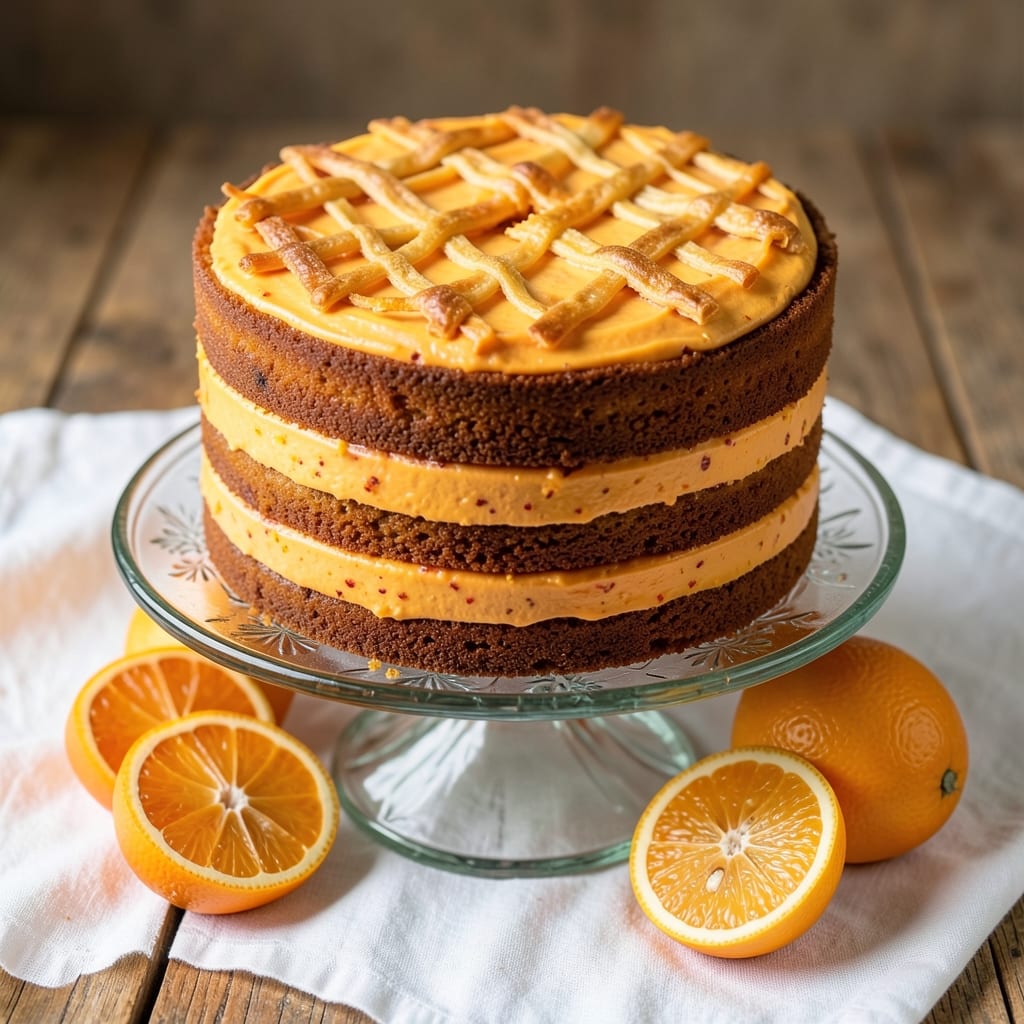
This Amish orange cake recipe delivers layers of bright citrus and buttery crunch that will become your new Sunday tradition. 💛 The secret lies in its signature streusel crown—crispy, caramelized, and studded with orange zest—that transforms a simple cake into something extraordinary. I’ve baked this version for family gatherings, and it’s always the first to disappear.
The recipe combines classic Amish baking techniques with vibrant orange flavor, using freshly zested citrus and a touch of juice for that signature tang. The cake itself is tender and moist, while the streusel topping adds a satisfying crunch that balances the citrusy layers perfectly. What makes it special is how the streusel caramelizes into a golden crown, giving the cake both texture and visual appeal.
What you’ll end up with is a showstopping dessert that’s rich in flavor and tradition—ideal for celebrations or a cozy afternoon treat. The layers stay moist for days, and the streusel topping keeps its crunch even when sliced. This isn’t just a cake; it’s a taste of Amish baking culture, brought to life in your own kitchen.
Serve it warm with a scoop of vanilla ice cream or dusted with powdered sugar for a touch of elegance. The recipe is designed to impress, yet it remains approachable for home bakers. Let’s get baking!
Ingredients for amish orange cake
Eight ingredients for the cake, four for the streusel crown—simple but spectacular.
| Ingredient | Amount | Notes |
|---|---|---|
| All-Purpose Flour 🌾 | 3 cups | Sifted for light texture |
| Granulated Sugar 🍚 | 2 cups | White or light brown |
| Orange Zest 🍊 | 2 tbsp | Freshly grated from 2 oranges |
| Orange Juice 🍊 | ½ cup | Freshly squeezed, no pulp |
| Unsalted Butter 🧈 | 1 cup | Room temperature, full-fat |
| Large Eggs 🥚 | 3 whole | Room temperature, separated |
| Vanilla Extract 🌿 | 2 tsp | Pure vanilla preferred |
| Baking Powder 🧂 | 2 tsp | Aluminum-free recommended |
| Salt 🧂 | ½ tsp | Fine sea salt |
| Old-Fashioned Oats 🌾 | 1 ½ cups | Blended into flour |
| Light Brown Sugar 🍚 | ½ cup | Packed, for streusel |
| Chopped Walnuts 🥜 | ½ cup | Toasted for extra flavor |
| Powdered Sugar 🍚 | ½ cup | For dusting, optional |
| Vanilla Ice Cream 🍦 | 2 cups | For serving, optional |
The oranges are everything here. Navel oranges work best—their sweetness balances the cake's richness. Grab two fresh ones from Whole Foods or your local market, and zest them right before baking. The juice should be bright orange, not cloudy. For the streusel, old-fashioned oats give that signature crunch—quick oats get mushy. Toast the walnuts in a dry pan for 3-4 minutes until fragrant. The butter? Full-fat, unsalted (like Plugrá) makes all the difference in that buttery streusel crown.
No fresh oranges? Bottled orange juice works in a pinch, but add a splash of lemon juice to mimic fresh zest. Substitute walnuts for pecans or almonds if you prefer—just toast them first. Running low on vanilla extract? Vanilla bean paste gives you seeds plus liquid. The cake batter should be thick but pourable—if it's too stiff, add a splash of milk. For a gluten-free version, swap the flour for a 1:1 baking blend, but expect a denser texture. The streusel should hold together when pressed but still crumble easily—if it's too wet, add more oats.
This cake keeps beautifully—3 days covered at room temperature, or 5 days in the fridge. Wrap tightly in plastic wrap to preserve moisture. The streusel stays crisp for 2 days if stored separately. For serving, dust with powdered sugar right before slicing—it melts into the streusel and adds that restaurant touch. Leftovers? Reheat slices in a 300°F oven for 5-7 minutes to revive the streusel's crunch. Freeze the whole cake (unfrosted) for 3 months—thaw overnight at room temp.
Why You'll Love This Recipe
- No Zest Required: Honestly, I keep a bottle of orange zest in my pantry just for this cake—but if you don’t, the fresh orange juice and butter still deliver that bright, buttery punch. The flour and sugar do the heavy lifting, and honestly? You won’t miss it.
- Bright Without Bitterness: The orange zest and juice here? They’re the stars. No overpowering tartness—just a warm, citrusy glow that lingers like a good memory. The butter softens it into something so tender, you’ll forget it’s "healthy" (yes, even with the sugar).
- Weeknight or Celebration: Between us, this cake is my go-to for anything. Need a quick breakfast? Slice it up. Hosting a brunch? Stack it with frosting. Even my picky teenager asks for seconds—(yes, even on a Tuesday night).
- Budget-Friendly Magic: Flour, sugar, butter, oranges—these are pantry staples, people. No fancy ingredients, no last-minute grocery runs. And the leftovers? They keep for days, so you’re basically baking a free dessert for the week.
Step-by-step instructions for Amish orange cake
Here's how to bake this showstopper with bright citrus layers and a buttery streusel crown.
👨🍳 Step 1: Prep the Orange Zest and Streusel
First, let's get the orange zest ready. Use a fine grater to zest 2 oranges (about 2 tablespoons of zest). I like to mix this with the 0.5 cup orange juice right away—this keeps the zest fresh and prevents it from drying out. Set this citrusy mixture aside for later.
In a food processor, pulse the 1.5 cups old-fashioned oats, 0.5 cup light brown sugar, 0.5 cup chopped walnuts, and 2 teaspoons baking powder until you get a coarse crumbly texture. Don't over-process or it'll turn into flour! This is your streusel topping that'll crown the cake like a buttery halo.
🍳 Step 2: Mix the Cake Batter
Preheat your oven to 350°F and grease two 9-inch round cake pans. In a large mixing bowl, cream together the 1 cup room-temperature butter and 2 cups granulated sugar until light and fluffy—about 3-4 minutes with an electric mixer. You'll know it's ready when the mixture nearly doubles in volume and looks pale.
Add the 3 whole eggs one at a time, mixing well after each addition. Then stir in the 2 teaspoons vanilla extract, the prepared orange zest mixture, and the 0.5 teaspoon salt. Sift in the 3 cups all-purpose flour all at once and mix on low speed just until combined—don't overmix or your cake will be tough.
🥘 Step 3: Layer and Streusel
Divide the batter evenly between your prepared cake pans. I use a kitchen scale for precision here—each pan should get about 1½ cups of batter. Bake for 25-30 minutes or until a toothpick inserted in the center comes out clean. The edges should be golden brown but the tops might still look slightly underdone.
While the cake bakes, sprinkle the streusel mixture evenly over the top of one of the still-warm cake layers. This is the secret to that perfect Amish streusel crown—it needs to be warm so it bakes into the cake rather than staying on top like a dry topping.
⏰ Step 4: Assemble and Frost
Let both cake layers cool in their pans for 10 minutes, then transfer to a wire rack to cool completely. Once cooled, level the tops if needed. Spread a thin layer of vanilla ice cream (yes, ice cream!) on the bottom layer—this is the classic Amish trick for ultra-moist layers. Place the streusel-topped layer on top.
For the frosting, beat the remaining 2 cups vanilla ice cream with 0.5 cup powdered sugar until smooth. This creates a light, creamy frosting that won't be too heavy. Spread it over the entire cake, then dust with extra powdered sugar if you like. Chill for 30 minutes before serving to let flavors meld.
Pro Tips For Making Amish Orange Cake
- Zest Fresh, Use Fast: I learned this the hard way—store-bought orange zest sits in my pantry like a sad, dried-up ghost. For real Amish orange flavor, zest a fresh navel orange right before mixing. If you’re using bottled juice, add a splash of fresh-squeezed juice too—it makes a noticeable difference.
- Butter at Room Temp: Cold butter in this cake is a no-go. Take it out of the fridge 30 minutes before starting, or microwave it in 10-second bursts until it’s soft but not melted. Lumpy butter means uneven texture, and nobody wants a cake that fights back.
- Check Doneness with a Toothpick: The cake’s done when a toothpick comes out clean—or, if you’re feeling fancy, with just a few moist crumbs. Overbaking dries it out, and underbaking leaves it gummy. I used to pull it too soon, thinking it’d keep cooking—wrong. Let it ride.
- Skip the Extra Eggs: Some recipes add an extra egg for richness, but this one’s already balanced. Too many eggs make the cake dense. Stick to what’s written unless you’re testing a new variation. Trust the original—it’s been proven.
Common mistakes when making perfect results
Overmixing the Batter
The most common mistake I see is overmixing the cake batter after adding the flour. Once you sift in that 3 cups all-purpose flour, mix just until combined—about 10-15 strokes with a spatula. Overmixing develops gluten, which makes your cake tough instead of tender. I've ruined perfectly good cakes by turning them into dense bricks, and it's always because I got impatient and kept stirring. 💛
Skipping the Ice Cream Layer
This is a dealbreaker for that classic Amish moistness! The thin layer of vanilla ice cream between cake layers isn't just a trendy Instagram hack—it's a traditional technique that keeps the cake moist for days. I've seen people substitute with jam or frosting, but nothing beats the creamy texture and subtle vanilla flavor that ice cream provides. Trust me, your cake will dry out faster without it.
Uneven Streusel Distribution
The streusel crown should be evenly distributed over the warm cake layer, but I've seen people either pile it all in the center or sprinkle it too thinly. Aim for a ¼-inch thick layer across the entire top. If you pile it high in the middle, it'll bake unevenly and create a dry, thick section. For even distribution, use a fine-mesh sieve or sprinkle in concentric circles starting from the outer edge.
Incorrect Baking Time
Baking time varies by oven, but most recipes say 25-30 minutes. The biggest mistake is taking the cake out too early because the tops look done. The edges should be golden brown, but the centers might still look slightly underdone. If you pull it out too soon, the cake won't be fully set and will collapse when you try to layer it. Always check with a toothpick—it should come out with a few moist crumbs, not wet batter.
Room-Temperature Butter
Using cold butter is a silent killer of good streusel texture. The butter in your streusel needs to be room temperature (about 68°F) so it creates that perfect caramelized crown. If it's too cold, the streusel will stay crumbly and dry. I keep my butter on the counter for 1-2 hours before starting, or I microwave it for 10-15 seconds (yes, really!) to soften it just enough. Cold butter = sad streusel.
Not Leveling the Layers
Uneven cake layers lead to wobbly cakes that don't slice neatly. After cooling, use a serrated knife or cake leveler to trim any domed tops. I've seen beautiful cakes ruined because one layer was thicker than the other, making it hard to slice or stack. A level top ensures even frosting distribution and professional-looking slices. Take the extra 5 minutes—it makes all the difference!
Nutrition facts
Frequently asked questions
Can I substitute bottled orange juice for fresh in this Amish orange cake?
Yes, but fresh orange juice gives the best flavor. If using bottled, choose a high-quality brand with no added sugars. For extra zing, add 1 teaspoon lemon juice to mimic fresh citrus brightness. The zest remains essential—it carries the cake's signature aroma and flavor.
Why does the Amish streusel need to be warm when adding it to the cake?
The warm cake layer helps the streusel soften slightly and bake into the cake rather than staying dry on top. This creates that signature caramelized crown. If you add cold streusel, it'll stay crumbly and won't develop the same rich, buttery texture. The streusel needs to be warm but not hot—just taken straight from the oven.
What makes this cake different from regular orange cake recipes?
Three key elements set it apart: the streusel crown (made with oats, walnuts, and brown sugar), the ice cream layer between cake layers for moisture, and the fresh orange zest mixed directly into the batter. These traditional Amish techniques create a cake with both texture contrast and lasting moisture that's hard to find in standard recipes.
Can I make this cake in a single layer instead of two?
For a single-layer version, bake the entire batter in one 9-inch pan for 35-40 minutes. After baking, spread the streusel evenly over the warm cake and let it cool completely. Skip the ice cream layer since there's only one layer. This works well for smaller gatherings or when you prefer a simpler presentation.
How do I store leftovers to keep the streusel from getting soggy?
Store the cake in an airtight container at room temperature for up to 3 days, or refrigerate for 5 days. To preserve the streusel's crunch, slice the cake before storing. If freezing, wrap individual slices tightly in plastic wrap and freeze for up to 3 months. Reheat slices at 300°F for 5-7 minutes to restore the streusel's texture.