Breakfast & Brunch
This American pancake mix recipe delivers the fluffiest, most tender grids you'll ever make—no boxed mix required. The secret lies in a precise blend of dry ingredients and a buttermilk boost that creates that signature tall, airy texture. I've perfected this method over years of weekend breakfasts, and it never fails to impress, even with picky eaters.
The beauty of this recipe is its simplicity: just combine dry ingredients first, then mix in wet components until just combined—overmixing is the enemy of fluffy pancakes. Cooking on medium heat ensures golden-brown edges while keeping the centers perfectly tender. That buttermilk secret creates those beautiful bubbles and a subtle tang that elevates every bite.
What you'll end up with is a stack of golden-brown pancakes with crisp edges and a light, airy interior that melts in your mouth. The batter's perfect consistency means no more gummy pancakes or dry centers—just restaurant-quality results at home. Serve with warm maple syrup, fresh berries, or whipped cream for the ultimate breakfast experience.
This recipe works beautifully for weekend brunch, family breakfasts, or even a comforting weekday treat. The dry mix can be prepped ahead and stored for convenience, while the wet ingredients come together in minutes. Whether you're making a single stack or feeding a crowd, this method delivers consistently perfect pancakes every time.
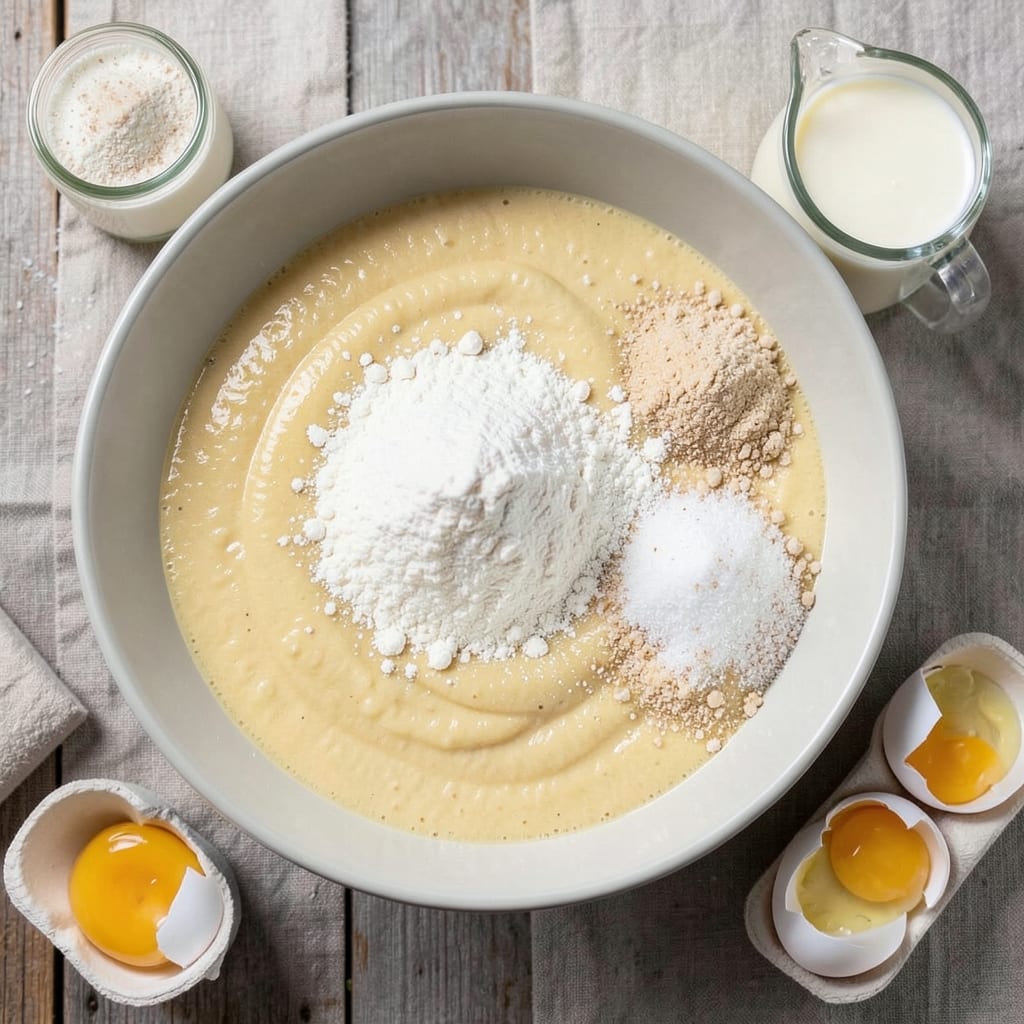
Ingredients for american pancake mix
The perfect mix of dry ingredients and buttermilk magic creates restaurant-quality pancakes every time.
| Ingredient | Amount | Notes |
|---|---|---|
| All-Purpose Flour 🌾 | 2 cups | Sifted for light texture |
| Granulated Sugar 🍚 | ¼ cup | White or light brown |
| Baking Powder 🧂 | 2 tsp | Aluminum-free preferred |
| Salt 🧂 | ½ tsp | Fine sea salt preferred |
| Buttermilk 🥛 | 1 ½ cups | Homemade or store-bought |
| Large Eggs 🥚 | 2 whole | Room temperature |
| Melted Butter 🧈 | ½ cup | Unsalted, cooled slightly |
| Vanilla Extract 🌸 | 1 tsp | Pure vanilla preferred |
| Vegetable Oil 🫒 | ¼ cup | For cooking pancakes |
| Maple Syrup 🍁 | ½ cup | Grade A for serving |
The all-purpose flour is the backbone of these pancakes—King Arthur or Bob's Red Mill are my go-tos for that signature fluff. Sift it first to avoid lumps, which can create dense spots. The baking powder needs to be fresh (check the date—if it's been sitting in your pantry for months, toss it). For the buttermilk, homemade is ideal (just mix milk with a splash of vinegar or lemon juice), but store-bought works in a pinch. The eggs should be at room temperature—cold eggs can make the batter too thick. And that vanilla extract? Pure Madagascar bourbon vanilla has the best flavor, but imitation will work if you're on a budget.
No buttermilk? Mix 1.5 tablespoons of vinegar or lemon juice into 1.5 cups of milk—it's a game-changer. Short on baking powder? Baking soda plus an extra pinch of salt works, but the texture won't be quite as light. The maple syrup for serving should be Grade A—it's lighter and sweeter, perfect for drizzling. For the melted butter, don't let it get too hot or it'll separate. Microwave it in 20-second bursts, stirring between each, until just melted. And if you're feeling fancy, add a pinch of cinnamon to the dry mix for a subtle warmth.
The dry mix keeps perfectly for up to 3 months in an airtight container in your pantry. Portion it out if you're making multiple batches to avoid measuring every time. The wet ingredients should be mixed just before cooking—the batter thickens as it sits. For extra crispy edges, use a nonstick skillet and keep the heat at medium-low. These pancakes reheat beautifully—wrap them in a damp towel and warm in a 300°F oven for 10 minutes. And if you make extra? Freeze them between parchment paper for up to 3 months—just reheat in a toaster or oven.
Why You'll Love This Recipe
- Pantry Staple Magic: I swear by this mix because it uses ingredients I always have—flour, sugar, baking powder—no special trips to the store. The buttermilk alone makes the batter tangy and light without extra fuss.
- Golden Crisp Perfection: That sugar and baking powder combo gives you a pancake with a caramelized top and a fluffy interior. Honestly, the first time I made these, I nearly burned the kitchen waiting for them to come out.
- Weekend Brunch Star: Serve them with maple syrup for a Sunday morning classic, or swap in blueberries for a quick weeknight breakfast. I’ve even used leftover batter to make mini pancakes for kids’ lunchboxes—no one turns them down.
- Budget Breakfast Hero: A box of mix might cost more, but this version saves me money and lasts for weeks. Freeze extras for lazy mornings, or double the batch for a crowd—it’s my go-to for feeding hungry teens without breaking the bank.
Step-by-step instructions for American pancake mix recipe
Here's how to transform simple ingredients into golden, fluffy pancakes with a buttermilk secret.
Whisk Dry Ingredients for Light Texture
In a large mixing bowl, combine the 2 cups all-purpose flour, 0.25 cup granulated sugar, 2 teaspoons baking powder, and 0.5 teaspoon salt. I always sift the flour first—this prevents lumps and ensures a light, airy batter. Use a whisk to gently blend everything until uniformly distributed, but don't overmix. You'll see fine streaks of flour remain, and that's perfect—overworking develops gluten, leading to dense pancakes.
Set this dry mixture aside while you prepare the wet ingredients. The buttermilk will need time to fully integrate, and this separation prevents premature clumping. I like to use a fine-mesh sieve for sifting, but if you don't have one, just whisk vigorously in the bowl—just be patient about it.
Combine Wet Ingredients for Perfect Consistency
In a separate bowl, whisk together the 1.5 cups buttermilk, 2 whole large eggs, 0.5 cup melted butter (cooled slightly), 1 teaspoon vanilla extract, and 0.25 cup vegetable oil. The buttermilk is the star here—its acidity reacts with the baking powder to create those signature fluffy bubbles. I always use room-temperature eggs for better emulsification, and I make sure the melted butter isn't hot when adding it to the buttermilk to prevent curdling.
Whisk until completely smooth—no streaks of egg white should remain. The mixture should look like a thick, creamy custard. If you notice any separation, just whisk a bit more. This is where the magic happens: the fat from the butter and oil creates tender pancakes while the buttermilk ensures they rise beautifully.
Merge Wet and Dry Ingredients Gently
Create a well in the center of your dry ingredients and pour in the wet mixture. Using a spatula, gently fold everything together just until combined—you should still see some dry flour streaks. This folding technique incorporates air without overmixing, which is crucial for that signature pancake texture. I like to use a figure-eight motion when folding to distribute everything evenly while maintaining that lightness.
Let the batter rest for 5 minutes before cooking. This allows the flour to fully hydrate and the baking powder to activate completely. During this time, preheat your griddle or nonstick skillet over medium heat (around 350°F). The batter should be thick but pourable—if it's too thick, add 1 tablespoon of buttermilk at a time until it reaches the right consistency.
Cook Golden, Fluffy Pancakes
Lightly oil the griddle with vegetable oil (using the same 0.25 cup you mixed in earlier) and wipe it with a paper towel to coat evenly. Pour ¼ cup of batter for each pancake, spreading it slightly to form a 5-inch circle. You'll get about 8 pancakes from this recipe, depending on your griddle size.
Cook until bubbles form on the surface and the edges look set (2-3 minutes), then flip carefully. You'll know it's ready when the edges are golden brown and the pancake releases easily from the griddle. Cook for another 1-2 minutes on the second side until golden brown. The pancakes should be slightly underdone in the center—they'll finish cooking as they rest.
Serve Warm with Maple Syrup
Transfer the pancakes to a wire rack and keep them warm in a 200°F oven while you finish cooking the rest. This prevents them from getting soggy. When ready to serve, drizzle with 0.5 cup Grade A maple syrup and watch them soak up that rich flavor. The buttermilk boost gives these pancakes a subtle tang that pairs perfectly with the sweet syrup.
For extra fluffiness, I like to serve them immediately while still warm. Each pancake should be golden brown on the outside with a tender, slightly springy interior that holds its shape when sliced. The secret to perfect pancakes lies in the buttermilk and gentle folding—don't rush either step, and you'll get restaurant-quality results every time.
Pro Tips For Making American Pancake Mix
- MEASURE DRY INGREDIENTS RIGHT: Spoon flour and sugar directly from the bag into your measuring cups—don’t scoop with a cup. After leveling, give the cup a quick tap on the counter to settle the flour. I learned this the hard way when my pancakes turned out denser than a brick.
- WHISK BUTTERMILK FIRST: Mix the buttermilk with a fork or whisk before adding it to the dry ingredients. This breaks up any lumps and ensures it blends smoothly—no surprise gummy pancakes here. (Yes, even if you’re impatient like me.)
- STOP WHEN BUBBLES POP: Flip your pancakes when the edges look set and bubbles form on top, then wait another 10 seconds before moving. I used to flip too early, and they’d either burn or stay raw inside. Trust the bubbles—they’re your cue.
- USE A LIGHT HAND WITH BAKING POWDER: Sift the baking powder separately and fold it in last—just until the dry ingredients are mostly combined. Overmixing makes pancakes tough, and you don’t want that. Think "gentle as a summer breeze," not "beat it like a drum."
Pro cooking tips for this recipe
Buttermilk Magic
The buttermilk is what transforms ordinary pancakes into something extraordinary. Its acidity activates the baking powder, creating tiny air pockets that give your pancakes that signature fluffy rise. I always use 1.5 cups—never substitute regular milk unless you add 1.5 tablespoons of vinegar or lemon juice to mimic the acidity. This step is non-negotiable for that light, airy texture. 🥛
Heat Control Secrets
Medium heat is your best friend here—350°F is ideal for golden edges without burning. I use a nonstick skillet (like GreenPan or All-Clad) because it distributes heat evenly and prevents sticking. If your pancakes brown too quickly, lower the heat slightly. The center should be just set when you flip—it’ll finish cooking as it rests.
Flipping Like a Pro
Timing is everything when flipping. Wait until bubbles form on the surface and the edges look set (2-3 minutes). Use a thin spatula to gently lift the pancake—if it resists, it’s not ready. Flip once for even cooking. I like to keep cooked pancakes warm in a 200°F oven on a wire rack to prevent sogginess while finishing the batch. 🔥
Batter Consistency
The batter should be thick but pourable—like pancake batter consistency (not too runny, not too stiff). If it’s too thick, add 1 tablespoon of buttermilk at a time until it reaches the right texture. Overmixing develops gluten, leading to dense pancakes. Fold just until combined—you’ll still see dry flour streaks, and that’s perfect. Let it rest for 5 minutes before cooking to let the flour hydrate fully.
Equipment Upgrades
A griddle (like Cuisinart Griddler) is ideal for cooking multiple pancakes at once, but a large nonstick skillet works too. I avoid cast iron unless it’s well-seasoned—it can make pancakes too dry. For extra crispy edges, add a splash of vegetable oil to the griddle before each batch. A wire whisk and rubber spatula are must-haves for mixing and folding without overworking the batter.
Resting for Perfection
Never skip the 5-minute rest before cooking—it lets the baking powder activate fully. After cooking, let pancakes rest on a wire rack for 2-3 minutes before stacking. This prevents them from turning gummy. For reheating, wrap in a damp towel and warm in a 300°F oven for 10 minutes to restore fluffiness. 💫
Nutrition facts
Frequently asked questions
Can I make this pancake mix ahead of time?
The dry ingredients can be pre-mixed and stored in an airtight container for up to 3 months in your pantry. However, I recommend mixing the wet ingredients fresh before cooking to maintain the perfect batter consistency. The buttermilk and eggs work best when combined just before use for maximum fluffiness.
Why are my pancakes turning out dense instead of fluffy?
Overmixing the batter is the #1 culprit! Stop folding when you still see dry flour streaks. Also check your baking powder—it needs to be fresh (test with vinegar: if it fizzes, it's good). Another tip: let the batter rest for 5 minutes before cooking to allow proper hydration. Cold eggs or melted butter can also make pancakes dense.
What's the best way to store leftover pancakes?
For short-term storage, keep them in an airtight container at room temperature for 2 days. For longer storage, freeze between parchment paper for up to 3 months. To reheat, wrap in a damp towel and warm in a 300°F oven for 10 minutes or use a toaster for crispy edges. Never microwave—it makes them rubbery!
Can I substitute buttermilk in this recipe?
Yes! Mix 1.5 tablespoons of vinegar or lemon juice with 1.5 cups of milk and let sit for 5 minutes to curdle. This mimics buttermilk's acidity, which is crucial for activating the baking powder. If you're in a pinch, plain yogurt works too—just reduce other liquids by 2 tablespoons to maintain proper batter consistency.
How do I make these pancakes vegan?
Replace the eggs with 2 tablespoons ground flaxseed mixed with 6 tablespoons water (let sit for 5 minutes to thicken). Use plant-based buttermilk (like almond or soy) and ensure your baking powder is vegan-friendly. The texture will be slightly denser but still delicious. For extra fluffiness, add 1 teaspoon apple cider vinegar to the wet ingredients.