
Desserts
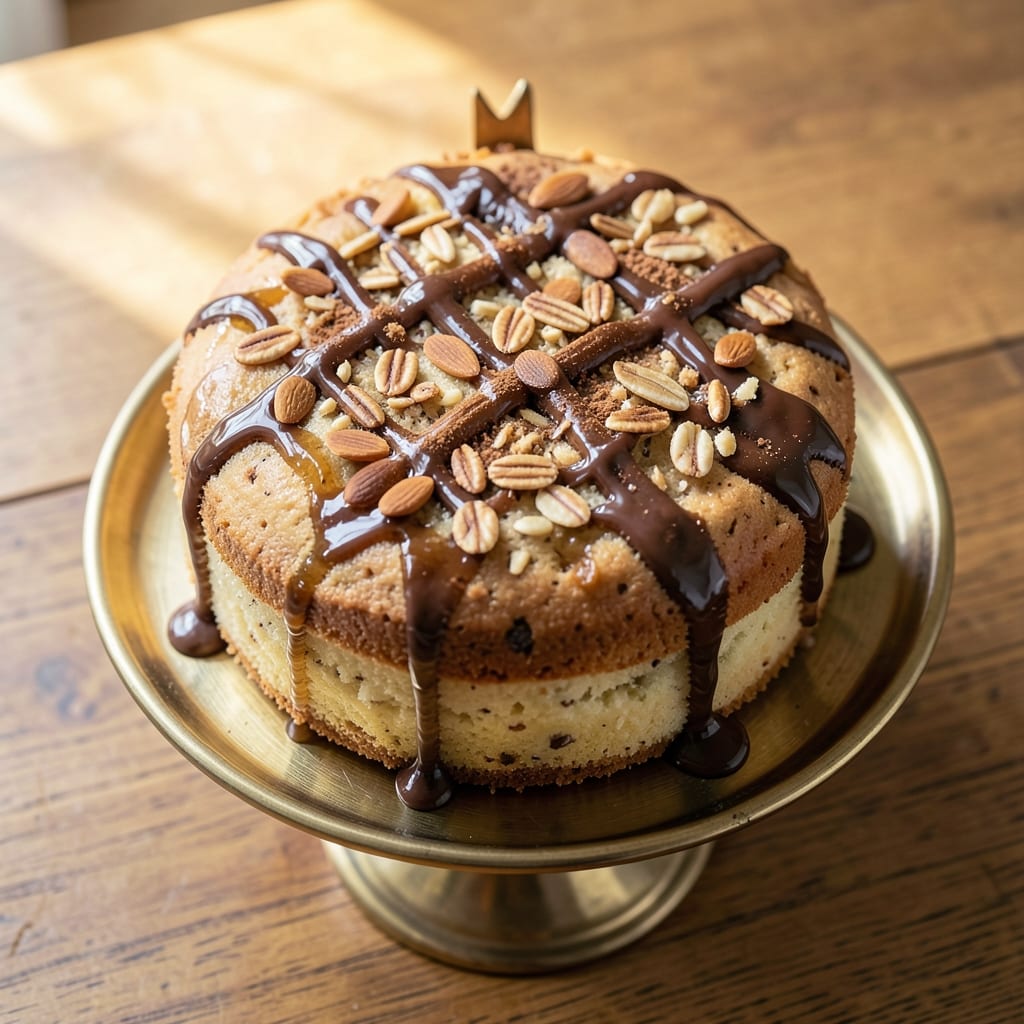
This amaretto sour cake delivers a perfect balance of boozy almond richness, tangy citrus, and buttery vanilla swirls topped with a crunchy streusel crown. The secret lies in layering flavors—amaretto-infused syrup soaks into moist layers while the streusel adds texture that contrasts beautifully with the tender cake. I developed this recipe after years of experimenting with Southern-style cakes, ensuring every bite is a harmonious blend of sweet, nutty, and slightly tart notes.
The cake itself is light and fluffy, thanks to a simple vanilla cake base that gets its depth from amaretto and lemon zest. The streusel topping, made with brown sugar and chopped almonds, caramelizes to a golden, crisp finish that adds a satisfying crunch. Unlike traditional sour cream cakes, this version incorporates amaretto into both the cake batter and the syrup for an authentic boozy twist without overpowering the delicate flavors.
What makes this recipe stand out is its versatility—serve it warm with vanilla ice cream for a decadent dessert or at room temperature for a sophisticated brunch cake. The combination of almond extract, lemon juice, and amaretto creates a complex flavor profile that’s both nostalgic and modern. Whether you're baking for a special occasion or treating yourself, this cake delivers restaurant-quality results with minimal effort.
Ready in just under an hour, this recipe is perfect for beginners and experienced bakers alike. The instructions are straightforward, and the ingredients are easy to find, making it an ideal project for weekend baking. Trust me—once you try this amaretto sour cake, it’ll become a go-to recipe for any celebration or cozy night in.
Ingredients for amaretto sour cake
Layered flavors and textures start with these 17 ingredients—simple yet sophisticated for a showstopping amaretto cake.
| Ingredient | Amount | Notes |
|---|---|---|
| All-Purpose Flour 🌾 | 2 ½ cups | Sifted for even texture |
| Granulated Sugar 🍚 | 1 ½ cups | Superfine preferred for smoothness |
| Light Brown Sugar 🍚 | ½ cup | Packed for moisture |
| Amaretto Liqueur 🍷 | ½ cup | High-quality, 25% ABV |
| Unsalted Butter 🧈 | 1 cup | Cold, cubed for creaming |
| Large Eggs 🥚 | 3 whole | Room temperature |
| Lemon Zest 🍋 | 1 tbsp | Fresh, finely grated |
| Pure Vanilla Extract 🌿 | 1 tbsp | High-quality, pure |
| Almond Extract 🥜 | ½ tsp | High-quality, pure |
| Baking Powder 🧂 | 2 tsp | Aluminum-free preferred |
| Salt 🧂 | ½ tsp | Diamond Crystal preferred |
| Sour Cream 🥛 | 1 cup | Full-fat, room temperature |
| Buttermilk 🥛 | ½ cup | Fresh, not powdered |
| Lemon Juice 🍋 | ¼ cup | Freshly squeezed |
| Slivered Almonds 🥜 | 1 ½ cups | Toasted, for streusel |
| Old-Fashioned Oats 🌾 | ½ cup | Blended into flour for streusel |
| Cinnamon 🌶️ | 1 tsp | Ground, for streusel |
The almond extracts and amaretto are non-negotiable for that signature nutty depth. Ghirardelli or Luxardo amaretto delivers the best flavor, while McCormick almond extract ensures consistency. For the streusel, Bob’s Red Mill old-fashioned oats blend beautifully with the almonds. The sour cream and buttermilk should be full-fat for optimal moisture—Trader Joe’s or Whole Foods carry excellent quality. Fresh lemon zest and juice are essential; organic lemons from the grocery store’s produce section work perfectly. Pre-sift your flour to avoid dense layers.
No amaretto? Substitute 0.25 cup almond extract plus 0.25 cup orange liqueur for a similar profile. Short on sour cream? Greek yogurt at double the amount mimics the tang. For the streusel, pecans or walnuts replace almonds, though texture will differ. The cake batter requires precise measurements—use a kitchen scale for accuracy if your cups aren’t level. Freshly toasted almonds for the streusel add an extra layer of flavor; toast them in a dry pan over medium heat for 3-4 minutes until fragrant.
Store cake components separately: the batter can be refrigerated for up to 24 hours before baking, while the streusel keeps in an airtight container for 5 days. Once baked, slice and serve at room temperature for 3 days or freeze individual portions for 3 months. For best results, bring frozen slices to room temperature before serving. The streusel topping can be prepped a day ahead and stored in the fridge, ready to sprinkle on top before baking.
Why You'll Love This Recipe
- One-Bowl Wonder: I swear by this recipe when I’m too tired to wash a million bowls. Just toss everything—flour, sugars, butter, amaretto—into one big bowl, mix until it’s just combined, then bake. No sifting, no extra steps, no stress.
- Almond-Orange Magic: That amaretto brings the sweet, nutty warmth, while the brown sugar adds depth—like a boozy hug in cake form. It’s rich but not heavy, with a subtle tang from the sour cream (if you add it) that keeps every bite interesting.
- Weekend Brunch Star: This cake is my go-to for lazy mornings or when friends drop by unexpectedly. Serve it warm with whipped cream and a sprinkle of cinnamon, or slice it cold for a dessert that feels fancy but takes zero effort.
- Budget-Friendly Luxury: You’re using pantry staples—flour, sugar, butter—but the amaretto makes it taste like you splurged. A single bottle lasts for multiple batches, and the leftovers? They disappear faster than I can say “second slice.”
Step-by-step instructions for amaretto sour cake
This method delivers a perfectly balanced cake with tender crumb, boozy vanilla swirls, and a crunchy almond streusel crown.
Prepare the Streusel Topping
In a medium bowl, combine all 1.5 cups slivered almonds, 0.5 cup old-fashioned oats, 0.5 cup light brown sugar, 1 tsp cinnamon, and 2 tbsp of the 2.5 cups all-purpose flour. Mix thoroughly with a fork until evenly distributed. This topping creates the signature crunchy crown that contrasts beautifully with the moist cake beneath.
Toast the mixture in a dry skillet over medium heat for 3-4 minutes, stirring constantly, until fragrant and lightly golden. Remove immediately to prevent burning. Let cool completely before sprinkling on the baked cake—this ensures even distribution and prevents sinking during baking.
Cream Butter and Sugars
In a stand mixer fitted with the paddle attachment, beat the 1 cup unsalted butter and 1.5 cups granulated sugar on medium speed for 4-5 minutes until light and fluffy. The mixture should nearly triple in volume and become pale in color. This creaming process incorporates air, creating a tender crumb that's essential for this cake's texture.
Add 3 whole large eggs, one at a time, mixing well after each addition. Scrape down the sides of the bowl as needed. The eggs should be fully incorporated before proceeding—this ensures proper structure without developing gluten. With the mixer running on low, add 1 tbsp lemon zest, 1 tbsp pure vanilla extract, and 0.5 tsp almond extract. Mix just until combined.
Combine Dry and Wet Ingredients
In a separate bowl, sift together the remaining 2.25 cups all-purpose flour (reserving 0.25 cups for the streusel), 2 tsp baking powder, and 0.5 tsp salt. Gradually add this dry mixture to the wet ingredients in three additions, mixing on low speed just until combined after each addition. Avoid overmixing—you should still see small flour streaks in the batter.
In a small bowl, whisk together 1 cup sour cream, 0.5 cup buttermilk, and 0.25 cup lemon juice. Gradually pour this mixture into the batter while mixing on low speed. The batter will be thick but pourable. Fold in 0.5 cup amaretto liqueur last, mixing just until evenly distributed. The alcohol will infuse the cake with its signature nutty aroma while adding moisture.
Prepare the Vanilla Swirl Dough
In a small bowl, combine 0.25 cup granulated sugar, 0.5 tsp vanilla extract, and 0.25 cup amaretto liqueur. Set aside. In another bowl, mix 0.5 cup all-purpose flour, 0.5 tsp baking powder, and a pinch of salt. Cut in 2 tbsp cold butter using a pastry cutter or your fingers until the mixture resembles coarse crumbs.
Add the sugar mixture and mix until a stiff dough forms. Roll this dough into a 6-inch log and wrap in plastic wrap. Chill for at least 1 hour or up to 24 hours. This resting period relaxes the gluten, making it easier to roll out thinly for the signature swirls.
Bake the Cake Layers
Preheat your oven to 350°F. Grease and flour two 9-inch round cake pans. Divide the main cake batter evenly between the pans. Bake for 25-30 minutes or until a toothpick inserted in the center comes out clean. Rotate the pans halfway through baking for even browning.
While the layers bake, roll out the chilled swirl dough on a lightly floured surface to 1/8-inch thickness. Cut into strips and arrange them in a spiral pattern on top of one cake layer. Bake this swirled layer for 20-25 minutes until set. Let all layers cool completely in their pans before assembling.
Pro Tips For Making Amaretto Sour Cake
- Use Room-Temperature Butter: I learned this the hard way—cold butter makes for a cake that’s dense and greasy. Let that block of unsalted butter sit out for 30-60 minutes before creaming, or even better, microwave it in 10-second bursts until it’s soft but not melted. The texture difference is night and day.
- Measure Amaretto Precisely: This isn’t the time to eyeball. A standard recipe calls for about ¼ cup of amaretto, but if you use even 1 tablespoon too much, the cake will taste boozy and unbalanced. Use a measuring cup, not a shot glass, and resist the urge to "add a splash more" for flavor—trust the recipe.
- Don’t Overmix the Batter: I used to beat the flour mixture until it looked like pancake batter, thinking more mixing = better cake. Wrong. Overmixing develops the gluten and turns your tender amaretto cake into a dense brick. Mix just until the dry ingredients disappear—about 20 seconds after that.
- Bake Until the Center Springs: The cake’s done when a toothpick comes out clean and the center springs back when gently pressed. I used to pull cakes out too soon because I was afraid of overbaking, but underbaked amaretto cake stays gummy and never sets right. Give it those extra 5-7 minutes if needed.
Common mistakes when making your amaretto sour cake
Overmixing the Batter
This is the #1 mistake I see with amaretto cakes—the temptation to mix until "perfectly smooth." Overmixing develops gluten, creating a tough, chewy texture instead of the tender crumb we want. Stop mixing as soon as you see small flour streaks disappear (about 20-30 seconds after combining all ingredients). The batter should be thick but pourable, not silky. 💡
Skipping the Chill
Never rush the 1-hour chill for the vanilla swirl dough—this is non-negotiable. Without chilling, the dough becomes sticky and difficult to roll thinly, resulting in uneven swirls that don't bake properly. I've learned this the hard way: once, I skipped chilling and ended up with a lumpy, uneven spiral that looked more like a tangled mess than elegant swirls. Place the dough log on a tray to prevent it from sticking to your countertop.
Incorrect Oven Temperature
Baking at 350°F is critical—any lower and the cake will be dense, any higher and the streusel will burn before the layers are done. I recommend using an oven thermometer to verify your oven's accuracy (many run 25°F hotter or colder than set). If your oven runs hot, reduce to 340°F and check for doneness 5 minutes early. The cake should spring back when gently pressed, not feel jiggly.
Uneven Baking
Rotating your cake pans halfway through baking prevents uneven browning, but many forget this step. Set a timer for 15 minutes and rotate the pans front-to-back. This ensures the edges bake evenly with the center. Another common mistake is opening the oven too early—resist peeking! The sudden temperature drop can cause the cake to sink. Trust your timer and toothpick test instead.
Improper Layer Assembly
Assembling the cake too soon is a recipe for disaster. Let layers cool completely in their pans for at least 1 hour before removing. If you rush this, the layers will collapse when stacked. I also recommend brushing each layer with 2 tbsp amaretto syrup (simmer ½ cup sugar + ¼ cup water + 2 tbsp amaretto until syrupy) before adding the streusel topping. This keeps the cake moist and adds extra flavor infusion.
Streusel Distribution
The streusel topping should be sprinkled evenly across the top layer before the final bake. Many people use too much, creating a thick, soggy mess, or too little, leaving bare spots. Measure your streusel mixture precisely and spread it in a thin, even layer using the back of a spoon. For the swirled layer, arrange the dough strips in a tight spiral—leave ½ inch gaps between strips to prevent overcrowding during baking. 🌟
Nutrition facts
Frequently asked questions
Can I make this cake without alcohol?
Yes! Replace the 0.5 cup amaretto with 0.25 cup almond extract plus 0.25 cup orange liqueur (or substitute with extra vanilla and lemon juice). For the streusel, add 1 tsp extra almond extract to maintain that signature nutty aroma. The flavor will be milder but still delicious.
How do I store leftovers?
Wrap the cake tightly in plastic wrap and store at room temperature for 3 days. For longer storage, slice and freeze portions in airtight containers for up to 3 months. Thaw overnight in the fridge before serving. The streusel stays crispy best when stored this way!
Can I use this recipe for a gluten-free version?
Yes, but with adjustments. Replace all-purpose flour with a 1:1 gluten-free baking flour blend (like Bob's Red Mill) plus 0.5 tsp xanthan gum. For the streusel, use gluten-free oats and ensure your almond flour is certified gluten-free. Expect slightly denser texture, but the flavor remains excellent.
What's the best way to serve this cake?
Serve warm with vanilla ice cream or chilled with whipped cream and fresh berries for contrast. For a boozy twist, drizzle with warm amaretto syrup** (simmer ½ cup sugar + ¼ cup water + 2 tbsp amaretto until syrupy). It's perfect for brunch, dessert, or even a sophisticated coffee cake!
Why does my streusel turn out crumbly instead of crispy?
This usually happens from under-toasting or too much moisture. Toast the streusel mixture until golden brown (about 3-4 minutes) and let it cool completely before using. Also ensure you're using cold butter in the streusel and not overmixing the cake batter underneath.