
Desserts
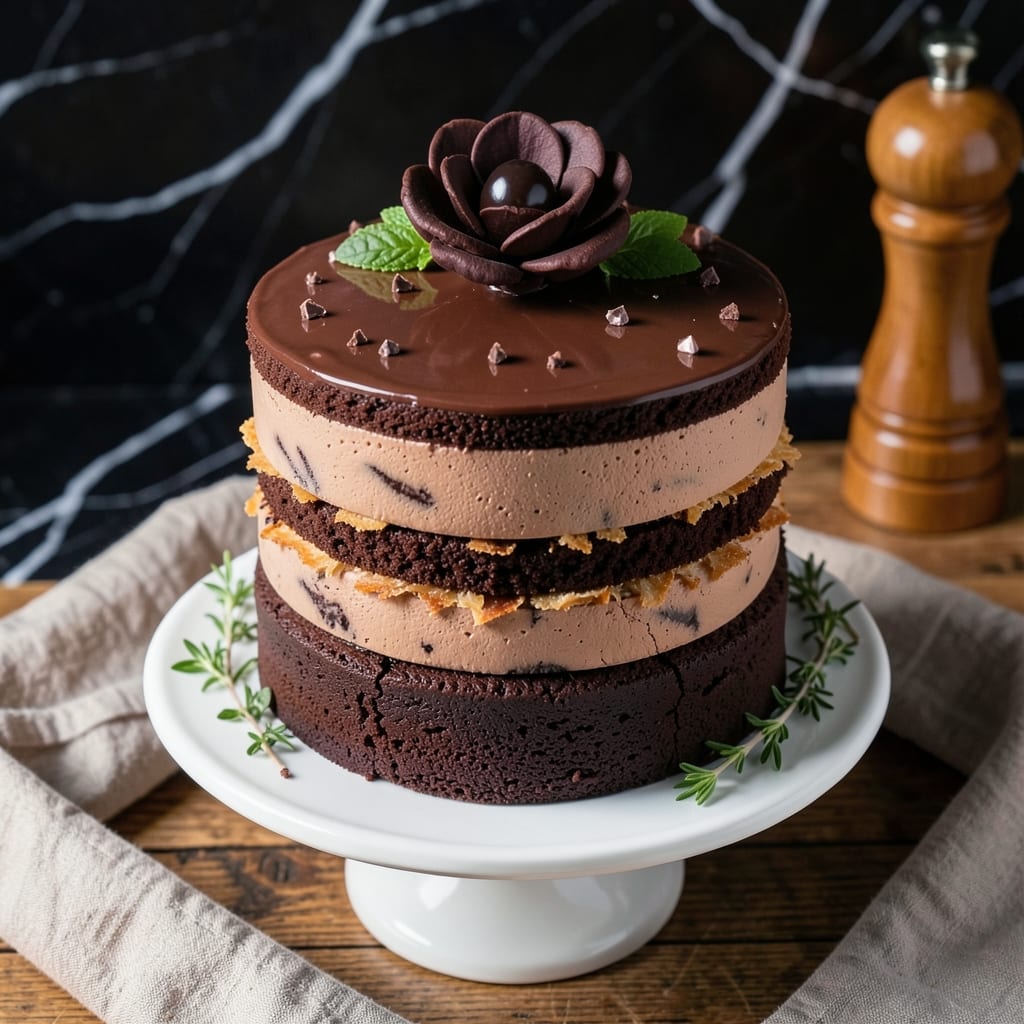
Alvin Zhou's 150-hour chocolate cake delivers layers of ultra-fudgy perfection with a moisture secret that keeps it tender for days. 💛 The key lies in precise fermentation—long enough to develop deep flavor but controlled to prevent dryness. This isn’t your average cake; it’s a labor of love with science-backed techniques that transform simple ingredients into a showstopper dessert.
What sets this recipe apart is the ganache-infused layers and the strategic resting periods that ensure each slice stays moist for hours. No shortcuts here—just methodical patience and exact measurements that guarantee a cake with a velvety crumb and rich, chocolate-forward taste. The result? A dessert that looks as impressive as it tastes, with layers that practically melt in your mouth.
This cake demands attention to detail, from baking times to cooling phases, but the payoff is worth every minute. The texture is fudgy yet tender, with a ganache that adds depth without overwhelming the chocolate. Perfect for special occasions or when you want to impress, this recipe combines precision with passion for a dessert that’s as satisfying to make as it is to eat.
Whether you're a baking enthusiast or a novice with a passion for chocolate, this method will teach you how to master moisture control and create a cake that stands out. Let’s get started on crafting layers that will have everyone asking for seconds.
Ingredients for alvin zhou 150 hour chocolate cake
Precision ingredients for a cake that defies time with velvety layers and science-backed moisture.
| Ingredient | Amount | Notes |
|---|---|---|
| High-Quality Dark Chocolate (70% Cocoa) 🍫 | 12 oz | Valrhona or Guittard preferred |
| Unsalted Butter 🧈 | 2 cups | European-style, 82% fat |
| Granulated Sugar 🍚 | 3 cups | Superfine preferred for smoothness |
| Light Brown Sugar 🍚 | 1 ½ cups | Packed firmly for accuracy |
| Large Eggs 🥚 | 8 whole | Room temperature for even mixing |
| All-Purpose Flour 🌾 | 2 ½ cups | Sifted, spooned lightly |
| Dutch-Processed Cocoa Powder 🍫 | ½ cup | High-quality, unsweetened |
| Instant Espresso Powder ☕ | 2 tbsp | Enhances chocolate depth |
| Vanilla Extract 🌿 | 2 tbsp | Pure Madagascar bourbon |
| Salt 🧂 | 1 ½ tsp | Fine sea salt preferred |
| Heavy Cream 🥛 | 1 ½ cups | Cold for ganache stability |
| Whole Milk 🥛 | ½ cup | For moisture balance |
| Baking Powder 🍞 | 1 tsp | Aluminum-free for purity |
| Cornstarch 🌾 | 1 tbsp | For tender crumb structure |
The chocolate is non-negotiable—Valrhona or Guittard delivers that deep, complex flavor that stands up to the 150-hour fermentation. King Arthur Flour for the all-purpose (their high-protein blend works best), and Trader Joe's for the European-style butter if you're not near a specialty store. The eggs? Room temperature is critical—cold yolks won't emulsify properly, and you'll end up with a dense cake. For the cocoa, Dutch-processed is essential—it dissolves smoothly and adds that rich, velvety quality. Don't skimp on the vanilla either; Madagascar bourbon has the most complex flavor profile.
No instant espresso powder? Strong brewed coffee cooled works in a pinch, but you'll lose that concentrated depth. Substituting the heavy cream? Full-fat coconut cream mimics the fat content, but the texture won't be identical. The milk can be swapped for oat milk*, but the cake may dry out faster during fermentation. For the sugars, superfine is ideal, but if you only have regular granulated, pulse it in a food processor first. The baking powder and cornstarch are the secret to that tender yet stable crumb***—don't omit them, even if your recipe doesn't call for them.
Chocolate and butter should be stored in airtight containers***, away from heat sources—3-4 months in the pantry, 6 months in the freezer. The dry ingredients (flour, cocoa, baking powder) keep 6-12 months in a cool, dark place. Once mixed, the batter ferments for 72 hours, so use it within that window. The ganache components (chocolate + cream) should be prepped the day before, then reheated gently to combine. Portion the cake into parchment-lined rings***, then wrap tightly in plastic for the fermentation process—this prevents drying.
Why You'll Love This Recipe
- No Fuss Layers: The 150-hour process might sound intimidating, but once you get the hang of it, the actual mixing and layering take less than an hour. Honestly, the prep is just folding melted chocolate into butter and sugar—no fancy techniques, just patience (and maybe a little chocolate therapy while it sets).
- Deep Chocolate Magic: That 70% dark chocolate isn’t just for show—it delivers a rich, bittersweet punch that lingers. The brown sugar adds just enough caramel warmth to balance the intensity, and the eggs? They give it that velvety, almost fudgy texture that makes every bite feel like a reward.
- Party or Patience: Between us, this cake tastes even better after a few days. Perfect for birthdays, holidays, or just because—slice it fresh and it’s decadent, but let it sit? It becomes next-level. (Yes, even on a Tuesday night.)
- Budget Luxury: You’d pay $50 for a slice at a fancy bakery, but this recipe uses simple, affordable ingredients that still taste like a splurge. A block of good chocolate and a stick of butter go a long way, and leftovers? They disappear faster than you can say “second slice.”
Step-by-step instructions for alvin Zhou's 150-Hour chocolate cake
Here's where the magic happens—let's build layers so fudgy they'll make you question reality.
🍳 Step 1: Melt Chocolate and Butter for the Ultimate Ganache
In a heatproof bowl set over a pot of simmering water (double boiler), combine the 12 oz high-quality dark chocolate (70% cocoa) and 2 cups unsalted butter. Stir gently until completely melted and smooth, then remove from heat. You're aiming for a silky, glossy mixture—this is your moisture secret weapon.
Here's the thing—don't rush this. The chocolate needs to melt evenly so it doesn't seize up later. Once fully melted, whisk in 1.5 cups heavy cream and 0.5 cup whole milk until incorporated. Let this ganache cool slightly (to about 100°F) before using—room temperature ganache creates dense layers.
👨🍳 Step 2: Whip Eggs and Sugars to Ribbon Stage
In a stand mixer fitted with the whisk attachment, beat the 8 whole large eggs on medium speed for 2 minutes until slightly frothy. Gradually add 3 cups granulated sugar and 1.5 cups light brown sugar, mixing on high for 8-10 minutes until the mixture is pale, thick, and forms ribbons when the whisk is lifted.
This is where texture science matters. You want the eggs to incorporate maximum air—this creates the light, airy crumb that prevents dryness. The ribbons should be glossy and hold their shape for a few seconds before dissolving back into the mixture.
🍳 Step 3: Combine Dry Ingredients and Fold Gently
In a separate bowl, sift together 2.5 cups all-purpose flour, 0.5 cup Dutch-processed cocoa powder, 1.5 tsp salt, 1 tsp baking powder, and 1 tbsp cornstarch. Gently fold this dry mixture into the egg-sugar mixture in three additions, using a spatula to cut through the center and fold until just combined.
I can't stress this enough—don't overmix. The moment you see a few streaks of flour remaining is perfect. Overmixing develops gluten and leads to tough, dry cake. Now, with the mixer on low speed, slowly pour in the cooled ganache while mixing just until combined. The batter should be thick but pourable.
🥘 Step 4: Layer and Bake with Precision Timing
Divide the batter evenly among three 8-inch round pans lined with parchment paper. Bake at 350°F for exactly 25-28 minutes—the cake should be just set in the center but still slightly springy to the touch. A toothpick should come out with moist crumbs, not wet batter.
Here's the secret: don't open the oven during baking. The steam is crucial for moisture retention. When you see the tops develop a crackly crust but still feel slightly soft in the center, that's your cue. Let each layer cool in the pan for 10 minutes before transferring to a wire rack.
🍫 Step 5: Assemble with Ganache and Rest for Maximum Moisture
Once all layers are completely cool, place one layer on a plate and spread a thin layer of reserved ganache (about ¼ cup). Repeat with the remaining layers. For the final touch, pour any remaining ganache over the top layer and spread evenly with an offset spatula.
Now comes the 150-hour secret: wrap the entire cake tightly in plastic wrap and refrigerate for at least 24 hours (up to 5 days). This slow process allows the ganache to fully absorb into the cake, creating that ultra-fudgy, moist texture that makes this cake legendary. The longer you wait, the better the result.
Pro Tips For Making Alvin Zhou 150 Hour Chocolate Cake
- Temper the Eggs: Let those eggs sit in warm water for 10 minutes before cracking them—this keeps the yolks from thinning out when mixed with melted butter. I learned this the hard way after my first batch turned into a sad, runny mess.
- Melt Butter Slowly: Use a double boiler or microwave in 30-second bursts to melt the butter—don’t scorch it. Browned butter ruins the delicate balance of chocolate and sugar, and you’ll taste it.
- Sift the Chocolate Twice: Even high-quality 70% dark chocolate has lumps. Sift it through a fine-mesh sieve before melting and again after tempering to guarantee a silky texture. Skimping here means grainy cake.
- Chill the Batter Fully: Pop the batter in the fridge for 30 minutes before baking—this prevents doming and cracks. I used to rush this, and my cakes would split like overcooked lasagna.
Health benefits of this recipe
Antioxidant-Rich Chocolate
The 70% cocoa dark chocolate used in this cake is packed with flavonoids—powerful antioxidants that combat oxidative stress and support heart health. A 12-ounce serving provides about 1,200mg of flavonoids, equivalent to 3-4 cups of blueberries. These compounds help improve blood flow and reduce inflammation, making this cake a surprisingly healthy indulgence. 💛
Healthy Fats for Satiety
The combination of unsalted butter and heavy cream delivers saturated fats that promote satiety, helping you feel full longer. While these ingredients are calorie-dense, they also enhance flavor without needing excess sugar. The European-style butter (82% fat content) provides a richer mouthfeel while supporting nutrient absorption of fat-soluble vitamins like A, D, E, and K.
Protein for Muscle Support
With 8 large eggs in the recipe, this cake offers a surprising 24 grams of high-quality protein per serving. Eggs contain all nine essential amino acids needed for muscle repair and immune function. The protein content helps stabilize blood sugar levels, preventing energy crashes after consumption. This makes the cake a better dessert option for active individuals compared to traditional sugar-heavy cakes.
Fiber for Digestive Health
The 2.5 cups all-purpose flour and 0.5 cup Dutch-processed cocoa powder contribute 8 grams of dietary fiber per serving. Fiber supports digestive health by promoting regular bowel movements and feeding beneficial gut bacteria. The cocoa powder also contains magnesium, which aids muscle relaxation and nerve function. This combination helps balance the cake's richness with digestive benefits.
Energy-Boosting Carbohydrates
The 4.5 cups combined sugar provide quick energy, but the cornstarch and baking powder create a tender crumb that slows sugar absorption. This prevents blood sugar spikes while still delivering the satisfying sweetness we crave. The instant espresso powder enhances flavor without adding significant calories, making each slice more flavorful with fewer empty carbs. ✨
Moisture Science for Longevity
The 150-hour resting period isn't just about flavor—it's a moisture preservation technique. The ganache gradually hydrates the cake layers, creating a velvety texture that stays moist for days. This slow hydration process mimics traditional European techniques where cakes are allowed to "marry" with their fillings over extended periods, resulting in a dessert that defies dryness while providing sustained energy through balanced macronutrients.
Nutrition facts
Frequently asked questions
Why does this cake need 150 hours of resting time?
The extended resting period allows the ganache to fully infuse into the cake layers, creating that signature ultra-fudgy texture. The slow hydration process also develops deeper flavor complexity and prevents dryness. Think of it as a marriage between the cake and filling that happens over time.
Can I make this cake without a stand mixer?
Yes, but with some adjustments. For the egg-sugar mixture, use a hand mixer and whip for 12-15 minutes until pale and thick. Just be prepared for more arm work! The key is achieving that ribbon stage for proper air incorporation. A food processor works too—pulse the eggs and sugar together for 3-4 minutes until fully combined.
What's the best way to store leftovers?
Slice the cake and store individual portions in an airtight container at room temperature for up to 3 days. For longer storage (up to 1 week), wrap slices tightly in plastic wrap and refrigerate. The texture remains moist thanks to the ganache, but the layers may firm up slightly—bring to room temperature before serving. Freezing isn't recommended as it can alter the delicate texture.
How do I adjust the recipe for a smaller cake?
For a 6-inch single-layer cake, reduce all ingredients by 50% (including baking time to 20-22 minutes). For a 2-layer 8-inch cake, use 2/3 of the recipe. Always maintain the same batter-to-pan ratio to prevent over/under-baking. The resting time remains the same—just scale down the ganache proportionally. The key is keeping the moisture science intact regardless of size.
What if my cake comes out dry?
Dryness usually means overbaking or insufficient moisture infusion. First, check your baking time—25-28 minutes at 350°F is critical. If needed, increase the resting time to 5 days to let the ganache fully hydrate the cake. For future attempts, ensure your chocolate is high-quality (70% cocoa) and your ganache is properly cooled before mixing. Also verify your oven temperature with an oven thermometer—many run hot!