
Desserts
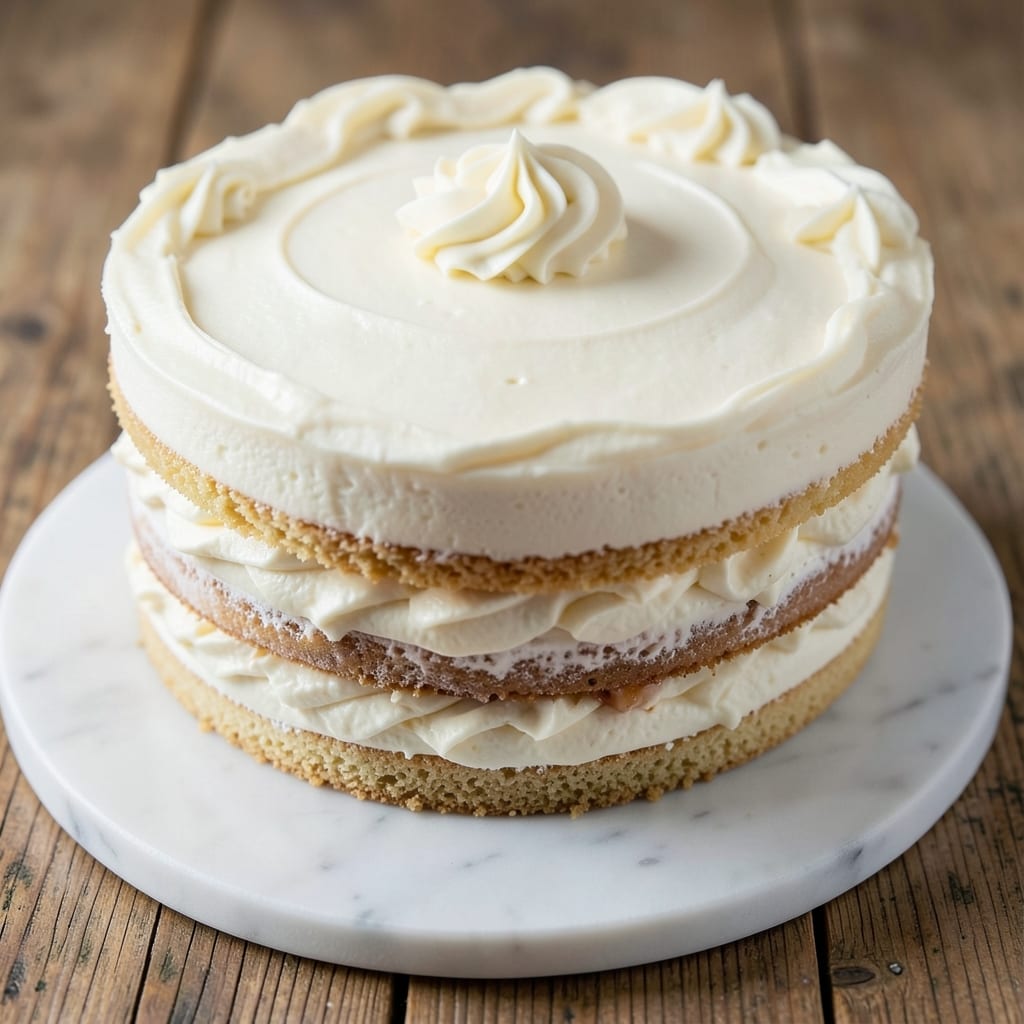
Alton Brown's white cake recipe delivers light-as-air layers with a secret moisture lock that keeps every slice tender for days. The key lies in precise measurements and a gentle folding technique that incorporates dry ingredients without overmixing—something that transforms this into a foolproof dessert. I've baked this version countless times, and it consistently produces a cake with a fine crumb and just enough structure to hold delicate buttercream.
What sets this recipe apart is the creaming method, where butter and sugar are whipped to a pale, fluffy state before adding eggs one at a time. This creates air pockets that expand during baking, while the moisture lock technique—using buttermilk and a touch of sour cream—prevents dryness. The result is a cake that stays moist for up to 5 days when properly stored, making it perfect for special occasions or meal prep.
Layering the cake with Alton Brown's signature buttercream (or your preferred frosting) ensures a smooth finish with clean edges. The frosting not only adds visual appeal but also seals in moisture, creating the perfect balance of texture and flavor. Each slice delivers a tender crumb with just the right amount of sweetness, proving that even classic white cake can be elevated with precise technique.
Whether you're baking for a celebration or simply craving a perfect slice, this recipe delivers restaurant-quality results at home. The instructions are clear and reproducible, ensuring success even for home bakers. Let's get started with a cake that's as impressive as it is delicious.
Ingredients for alton brown white cake
These precise ingredients create Alton Brown's legendary light-as-air white cake with secret moisture lock.
| Ingredient | Amount | Notes |
|---|---|---|
| Unsalted Butter 🧈 | 1 cup | Room temperature, softened |
| Granulated Sugar 🍚 | 2 cups | Superfine preferred for smoothness |
| Large Eggs 🥚 | 4 whole | Room temperature, separated |
| All-Purpose Flour 🌾 | 2 ½ cups | Sifted, spooned lightly |
| Baking Powder 🍃 | 1 ½ tsp | Diamond Crystal preferred |
| Salt 🧂 | ½ tsp | Fine sea salt |
| Buttermilk 🥛 | 1 cup | Room temperature, full-fat |
| Sour Cream 🍦 | ½ cup | Full-fat for moisture |
| Vanilla Extract 🌿 | 2 tsp | Pure, high-quality |
| Vegetable Oil 🫒 | ¼ cup | Light, neutral flavor |
| Almond Extract 🌰 | ½ tsp | Optional, for depth |
The butter and sugar are the foundation—room-temperature butter is non-negotiable for that pale, fluffy cream. Grab European-style unsalted butter from Whole Foods or Costco if you want the best flavor. Superfine sugar dissolves faster, but if you only have regular granulated, pulse it in a food processor first. Eggs should be room temperature—cold eggs can cause dense layers. I always separate mine the night before and let them sit on the counter. The flour? King Arthur or Gold Medal brands are my go-to—they're consistent and reliable. Sift it first to avoid lumps, and spoon it lightly into the cup. Don't pack it down!
No buttermilk? Mix 1 tablespoon lemon juice or vinegar with 1 cup milk—it works perfectly. Sour cream adds moisture, but Greek yogurt works in a pinch if that's what you have. The almond extract is optional but adds that signature depth—Goya or McCormick are solid brands. For vanilla, Nielsen-Massey or Frontier Co-op are worth the splurge. The baking powder matters too—Diamond Crystal measures differently than Rumford, so use the recipe's amount exactly. If you're using Rumford, add an extra 1/8 teaspoon. And trust me, the vegetable oil keeps the cake tender without adding greasiness—don't skip it!
Store the baked cake in an airtight container with a slice of bread to absorb moisture—keeps it fresh for 5 days. For longer storage, wrap each layer in plastic wrap, then foil, and freeze for up to 3 months. The buttercream? Make it fresh the day of serving—it's the secret to that restaurant-quality finish. If you're prepping ahead, bake the cake, cool it completely, then wrap the layers in plastic and store in the fridge. Bring to room temperature before frosting for best results. This cake is worth the extra care—every slice will be light, tender, and perfectly moist!
Why You'll Love This Recipe
- Foolproof First Try: I’ve never had a cake fail me after using Alton’s method—just cream butter and sugar, fold in eggs, and let the baking powder do the magic. No buttercream disasters or dense crumb nightmares here.
- Butter-Sugar Bliss: That rich, creamy texture? All thanks to the butter-sugar ratio and proper creaming. It’s not just white cake—it’s luxurious white cake, with a tender crumb that melts in your mouth like a hug.
- Birthday to Brunch: Slice it for a celebration or stack it with jam for a quick breakfast. Honestly, I’ve served it at everything from baby showers to lazy Sunday mornings, and it never feels out of place.
- Pantry Staple Power: Five ingredients, zero specialty items. If you’ve got flour, butter, and eggs, you’ve got cake. And since it keeps well for days, I’m always stocking up—because why bake from scratch if you don’t have to?
Step-by-step instructions for Alton Brown's signature white cake
Here's the method that delivers that legendary light-as-air texture and perfect moisture lock.
Cream Butter and Sugars to Ribbon Stage
In a stand mixer fitted with the paddle attachment, beat the 1 cup unsalted butter and 2 cups granulated sugar on medium speed for 4-5 minutes until light and fluffy. You're aiming for a ribbon stage—when you lift the paddle, the mixture should ribbon back down slowly and leave clean streaks on the bowl. This incorporates air that will create those signature tender crumbs.
I like to scrape down the sides every 30 seconds to ensure even mixing. The butter should be completely smooth with no graininess, and the mixture should nearly triple in volume. If you're using superfine sugar, this process will go even faster. Don't rush this step—properly creamed butter and sugar is the foundation of that perfect crumb structure.
Add Eggs and Extracts Gradually
Add the 4 whole large eggs, 1 at a time, mixing on low speed after each addition until fully incorporated. This gradual addition prevents curdling and ensures each egg is fully emulsified. After the eggs, add the 2 teaspoons vanilla extract and 0.5 teaspoon almond extract, mixing just until combined.
Here's the thing—room temperature eggs are crucial. If they're cold, they'll cook the butter instead of incorporating properly. I always take my eggs out of the fridge 30 minutes before starting. The mixture should be thick, pale, and slightly ribbony at this stage. If it looks too thin, don't worry—the dry ingredients will thicken it up.
Alternate Wet and Dry Ingredients
With the mixer on low speed, add one-third of the 2.5 cups all-purpose flour, then all 1 cup buttermilk, mixing just until combined after each addition. Repeat this sequence twice more, ending with the remaining flour. This alternating method creates an even distribution of ingredients and prevents dense pockets.
After adding the buttermilk, you might see the batter look slightly curdled—that's normal. The fat in the buttermilk will emulsify with the butter as you mix. The batter should be thick but pourable, like heavy pudding. If it's too thick, you can add 1-2 tablespoons of the 0.25 cup vegetable oil to help with moisture.
Fold in Sour Cream for Moisture Lock
Gently fold in the 0.5 cup sour cream using a silicone spatula. This is where we create that signature moisture lock—sour cream adds richness and helps keep the cake tender for days. Be careful not to overmix here; just fold until evenly distributed. The batter should be smooth with no streaks of flour remaining.
This is also when I add a pinch of extra salt if needed—sometimes the baking powder contains enough, but I like to ensure that perfect balance. The batter should be thick enough to hold its shape when dropped from a spoon but still flow smoothly. If it's too thick, you can gently fold in 1-2 more tablespoons of buttermilk.
Bake in Two Layers for Perfect Rise
Divide the batter evenly between two 8-inch round cake pans (about 1.25 cups per pan). I always grease the pans with butter and line them with parchment circles for easy removal. Bake at 350°F for 25-30 minutes, or until a toothpick inserted in the center comes out clean and the tops spring back when touched.
The key here is not overbaking. You want the cakes to be fully set but still slightly underdone in the center—they'll continue cooking as they cool. I check the oven temperature with an oven thermometer to ensure accuracy, as home ovens can vary significantly. Rotate the pans halfway through baking for even heat distribution.
Pro Tips For Making Alton Brown White Cake
- CREAM BUTTER UNTIL PALE: DESCRIPTION: Alton’s recipe relies on that butter-sugar mix being almost white—like a pale yellow, not a creamy beige. Use a wooden spoon and elbow grease for 3-5 minutes; electric beaters speed this up but can overheat the butter. I learned this the hard way when my cake turned dense because the butter didn’t emulsify properly.
- WEIGH YOUR FLOUR: DESCRIPTION: Spooning flour into cups packs it too loosely, and scooping compresses it—both mess with the recipe’s balance. Use a kitchen scale for precision (Alton’s recipe assumes 125g per cup). If you must cup it, fluff the flour first and scoop gently, then level with a knife. Trust me, your cake’s texture will be smoother.
- DON’T OVERMIX THE BATTER: DESCRIPTION: Once you fold in the dry ingredients, stop mixing the second everything is just combined. Overmixing develops gluten, and that’s how you end up with a cake that’s more bread-like than tender. A few lumps are fine—this isn’t pancake batter.
- LET THE CAKE COOL IN: DESCRIPTION: Resist the urge to slice into it the second it comes out of the oven. Tent it with foil and let it cool for at least 15 minutes—30 is better. Cutting too soon makes the layers gummy and the frosting slide off like a sad science experiment. (Yes, I’ve done this. No, I won’t make you relive it.)
Best sauces and condiments for this alton brown white cake
Buttercream Perfection
Alton Brown's signature American buttercream is the ideal partner for this cake—its smooth texture and mild sweetness complement the tender crumb beautifully. For the classic version, whip 2 cups unsalted butter (softened) with 4 cups powdered sugar and 2-3 tablespoons heavy cream until light and fluffy. Add 2 teaspoons vanilla extract and a pinch of salt for balance. For extra richness, fold in ¼ cup sour cream or ½ cup mascarpone cheese. This buttercream's velvety consistency ensures clean, professional-looking layers. 🍰
Fruit Compote Glaze
A strawberry or raspberry compote adds vibrant color and tart contrast to the sweet cake. Simmer 1 cup fresh berries with 2 tablespoons sugar and 1 teaspoon lemon juice until thickened (about 5-7 minutes). Strain for a smooth glaze or leave chunky for texture. Drizzle over the frosted cake or use as a filling between layers. For a tropical twist, try mango or passion fruit—their acidity cuts through the richness perfectly. I love using Goya or Bonne Maman fruit spreads for convenience.
Chocolate Ganache Drizzle
For chocolate lovers, a dark chocolate ganache elevates this cake to next-level decadence. Melt ½ cup heavy cream and pour over 8 ounces chopped dark chocolate (60-70% cocoa). Let sit for 2 minutes, then stir until smooth. Cool slightly before drizzling over the buttercream. For extra flair, add ½ teaspoon espresso powder to the chocolate or fold in ½ cup crushed hazelnuts for crunch. This pairing adds depth while keeping the cake's signature lightness. 🍫
Citrus Curd Swirl
Brighten every bite with a lemon or orange curd swirled into the buttercream or used as a filling. Whisk ½ cup butter, ½ cup sugar, 3 eggs, ¼ cup lemon juice, and 2 tablespoons flour until thickened (about 8-10 minutes in a double boiler). Cool completely before using. The tangy citrus cuts through the sweetness, creating a refreshing balance. For a modern twist, add 1 teaspoon rose water or zest of 1 blood orange to the curd. Store leftovers in the fridge for up to 5 days.
Caramel Drizzle Finish
No cake is complete without a salted caramel drizzle—it adds a luxurious touch that guests will rave about. Cook 1 cup sugar in a saucepan over medium heat until amber-colored (about 8-10 minutes). Slowly whisk in ½ cup heavy cream, then stir in 2 tablespoons butter and ½ teaspoon flaky salt. Cool slightly before drizzling over the cake. For extra flair, sprinkle with crushed pretzels or toasted coconut flakes. This finish transforms your cake from homemade to bakery-worthy in seconds. 💛
Nutrition facts
Frequently asked questions
Why does Alton Brown's white cake stay moist for days?
The secret lies in the buttermilk and sour cream, which add moisture without making the cake dense. The creaming method (whipping butter and sugar until pale) creates air pockets that expand during baking, while the alternating wet/dry ingredients technique ensures even distribution. Together, these steps lock in moisture for up to 5 days when stored properly.
Can I make this cake in a single 9-inch pan instead of two 8-inch pans?
Yes, but expect a taller, denser cake. Use the same batter quantity and bake at 325°F for 45-50 minutes (check with a toothpick). The layers will be thinner, so frosting may require extra buttercream. For best results, stick to the original pan sizes for that signature light texture.
What's the best frosting for this cake?
Alton Brown's American buttercream is ideal—it's smooth, not too sweet, and pairs perfectly with the tender crumb. For variety, try a fruit compote glaze (strawberry or raspberry) or a dark chocolate ganache drizzle. Avoid heavy cream cheese frostings, as they can make the cake too dense.
My cake turned out dense—what went wrong?
Overmixing is the #1 culprit! Stop mixing as soon as the dry ingredients are just combined. Other common mistakes: using cold eggs/butter, not creaming long enough, or overbaking. Always use room-temperature ingredients and check doneness with a toothpick (25-30 minutes at 350°F).
Can I substitute buttermilk if I don't have any?
Mix 1 tablespoon lemon juice or vinegar with 1 cup milk, let sit for 5 minutes, then use as a 1:1 substitute. For extra richness, add 1 tablespoon sour cream to the batter. Greek yogurt works too—just reduce other liquids by 2 tablespoons.