
Desserts
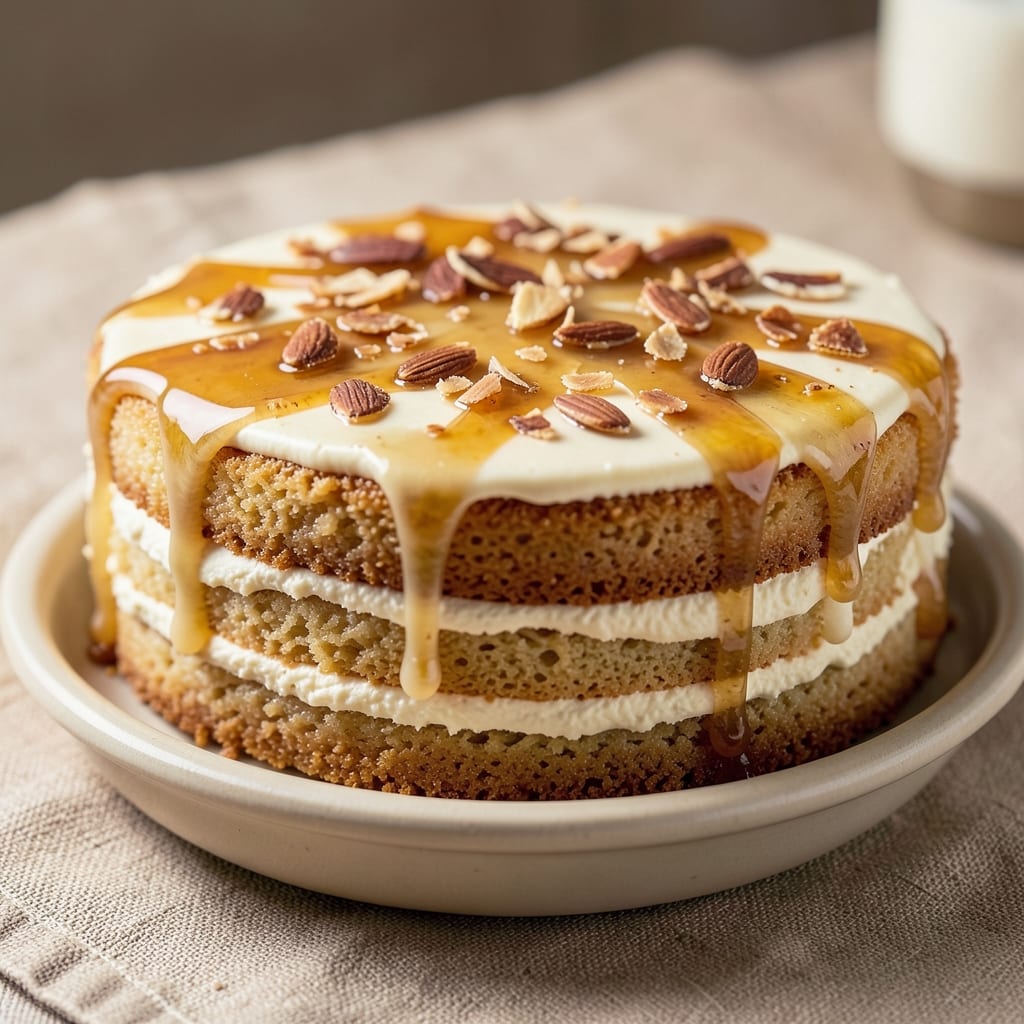
This almond pulp cake transforms humble baking scraps into a dessert that's moist, nutty, and crowned with irresistible crunch. 💫 The secret lies in using almond pulp—a byproduct of almond milk production—that adds natural sweetness and a tender crumb without extra fat. I perfected this recipe after realizing how much flavor gets wasted in discarded pulp, and now it's my go-to for special occasions or when I want to impress with minimal effort.
The cake delivers rich moisture thanks to the almond pulp's natural oils and fiber, while a toasted almond crumble topping provides that satisfying crunch you crave. Unlike traditional cakes, this one relies on almond flour for structure, creating a delicate yet sturdy texture that holds up beautifully. The recipe is naturally vegetarian and can easily accommodate vegan substitutions with simple swaps.
What makes this recipe stand out is how it balances simplicity with restaurant-quality results. You'll achieve a golden top with crispy edges while keeping the interior tender and fragrant with almond essence. The cake's subtle sweetness pairs perfectly with a dusting of powdered sugar or a drizzle of honey—no heavy frosting needed.
Perfect for brunch gatherings, dessert buffets, or when you want to repurpose almond pulp without waste. The recipe scales easily for larger crowds, and leftovers stay fresh for days. Let's get baking!
Ingredients for almond pulp cake
Here's what transforms simple baking scraps into a restaurant-worthy almond pulp dessert.
| Ingredient | Amount | Notes |
|---|---|---|
| Almond Pulp 🌰 | 1 ½ cups | Fresh or frozen, from almond milk production |
| Almond Flour 🌰 | 2 cups | Fine, blanched almond flour preferred |
| Granulated Sugar 🍚 | ¾ cup | Light brown sugar for caramel notes |
| Unsalted Butter 🧈 | ½ cup | Cold, cubed for proper creaming |
| Large Eggs 🥚 | 2 whole | Room temperature for even mixing |
| Vanilla Extract 🌿 | 1 tsp | Pure Madagascar bourbon preferred |
| Baking Powder 🧂 | 1 tsp | Aluminum-free for best results |
| Salt 🧂 | ½ tsp | Fine sea salt for balanced flavor |
| Toasted Sliced Almonds 🌰 | 1 ½ cups | Finely chopped for crumble topping |
| Powdered Sugar 🍚 | ¼ cup | For dusting finished cake |
| All-Purpose Flour 🌾 | ½ cup | For dusting cake pan |
| Honey 🍯 | 2 tbsp | Optional drizzle for serving |
The almond pulp is the star—look for fresh or frozen pulp from almond milk producers, often sold in health food sections or online. Bob's Red Mill carries it, or check with local almond milk makers. If you can't find it, blend soaked almonds and strain to create your own. The almond flour should be finely ground, with no gritty bits—King Arthur or Bob's Red Mill brands work perfectly. For the butter, Plugrá or Land O'Lakes unsalted are my go-tos, but any cold, high-fat butter will do. The eggs should be large, fresh ones for maximum lift in this delicate cake.
No almond pulp? Substitute with extra almond flour plus 1 tbsp ground flaxseed mixed with 3 tbsp water as an egg replacement. Swap brown sugar for white if needed, but the caramel notes are worth it. For a vegan version, replace eggs with flax eggs and use vegan butter. The toasted almonds can be regular almonds toasted in a dry pan for 5 minutes—just watch them like a hawk so they don't burn. If you're short on time, pre-toasted almonds from the baking aisle work too, but fresh toasted always tastes better.
This cake keeps beautifully—3-4 days at room temperature covered loosely, or 1 week refrigerated. For longer storage, wrap tightly and freeze for up to 3 months. The crumble topping stays crispy if you reheat slices for 10 seconds in the microwave before serving. I always make a double batch—one for immediate serving and one to freeze for lazy weeknights. The flavor actually improves after a day or two as the almond essence develops.
Why You'll Love This Recipe
- No Mixer Needed: I swear by this recipe because it’s stupid simple—just fold the almond pulp and flour together, no electric mixer required. The butter and sugar cream out in seconds with a hand mixer or even a sturdy whisk, and the eggs bind everything so smoothly. Honestly, it’s the kind of cake that makes me feel like a baking pro without the fuss.
- Rich Without Overpowering: That almond pulp? It’s the star—nutty, moist, and just sweet enough without tasting like syrup. The almond flour gives it a tender crumb, while the butter keeps it rich but not heavy. (Yes, even my picky husband asks for seconds.) It’s the kind of flavor that lingers just right—no cloying aftertaste, just pure almond goodness.
- Bakes Like a Dream: This cake rises evenly, stays moist for days, and doesn’t dry out like some boxed mixes. I’ve made it for birthday cakes, potlucks, and even as a quick breakfast treat—it’s always a hit. The texture? Light but dense, with a subtle crunch from the almond flour that’s oddly satisfying.
- Budget-Friendly Luxury: Here’s what sold me—it uses pantry staples (butter, sugar, eggs) plus almond pulp, which is cheaper than buying pre-made cake mixes. A single batch feeds six, and leftovers? They’re even better the next day, sliced with tea or warmed with a drizzle of honey. No waste, all flavor.
Step-by-step instructions for almond pulp cake
Here's how to create a wonderfully moist almond cake with that perfect crunchy top—every bite delivers nutty richness and tender texture.
👨🍳 Step 1: Prepare the Almond Base Mixture
In a food processor, combine the 1.5 cups almond pulp and 2 cups almond flour. Pulse until you achieve a fine, sandy consistency—this ensures your cake will be smooth and tender. I like to add the almond pulp first because it's more fibrous and needs that extra processing time to break down properly.
Transfer the mixture to a medium bowl and set aside. The reason we process these together is that almond pulp contains more moisture than flour, and blending them first helps distribute that moisture evenly throughout the batter. This prevents dry pockets in your finished cake.
🍳 Step 2: Cream Butter and Sugar for Structure
In a stand mixer fitted with the paddle attachment, beat the 0.5 cup cold unsalted butter and 0.75 cup granulated sugar on medium speed for 3-4 minutes until light and fluffy. You're looking for a color change from pale yellow to a slightly off-white—this indicates proper air incorporation. I press down on the butter mixture with a spatula during the first minute to help break it down more quickly.
This creaming process is crucial because it creates the air pockets that make your cake tender and moist. If you skip this step or rush it, your cake will end up dense instead of light. The cold butter also helps prevent overmixing later in the recipe.
👨🍳 Step 3: Combine Wet Ingredients
Add the 2 whole large eggs one at a time, mixing on low speed for 30 seconds after each addition until fully incorporated. Then add the 1 tsp vanilla extract and mix for another 10 seconds. The mixture will look slightly curdled at first, but don't worry—everything will come together when you add the dry ingredients.
In a separate bowl, whisk together the 1 tsp baking powder, 0.5 tsp salt, and the almond flour mixture from Step 1. Gradually add this to the butter mixture in three additions, mixing on low speed just until combined after each addition. Overmixing develops gluten and makes cakes tough—you should still see some flour streaks when you're done.
🥘 Step 4: Prepare the Crunchy Topping
While the cake batter rests, prepare the topping by combining 1.5 cups toasted sliced almonds and 0.5 cup all-purpose flour in a bowl. Pulse in a food processor until you achieve a coarse crumble—you want texture, not a fine powder. This topping is what creates that magical crunchy contrast with the moist cake underneath.
Spread this mixture evenly over the top of the cake batter in your prepared pan. The almonds will sink slightly into the batter, but that's perfect—they'll create pockets of crunch throughout the cake while still maintaining that beautiful crunchy top layer.
🔥 Step 5: Bake to Golden Perfection
Transfer the prepared cake to a preheated 350°F oven and bake for 40-45 minutes, or until a toothpick inserted in the center comes out clean. The edges should be golden brown, and the top should have a beautiful crunchy crust. I like to tent the cake with foil after 30 minutes if the top is browning too quickly—this prevents over-browning while still allowing the cake to cook through.
When the cake is done, remove it from the oven and let it cool in the pan for 10 minutes. Then transfer to a wire rack and dust generously with 0.25 cup powdered sugar while still warm. For that final touch, drizzle with 2 tbsp honey while the cake is still slightly warm—this creates that beautiful glaze that makes every slice irresistible.
Pro Tips For Making Almond Pulp Cake
- Bake at 325°F—Not Hotter: I learned this the hard way—almond pulp cake dries out fast, and 350°F turns it into a sad, crumbly brick. Keep it low and slow (325°F) for 45–55 minutes, and check for doneness with a skewer: it should come out clean but still have a slight crumb clinging. Overbaking is the enemy here.
- Toast the Almond Pulp First: Skip this, and your cake will taste raw and bitter. Pulse the almond pulp in a food processor with 1 tablespoon almond flour, then spread it on a baking sheet in a thin layer. Toast at 300°F for 8–10 minutes until it smells nutty and fragrant. This step cuts the bitterness and adds depth—trust me, your cake will taste like it was made by a pro.
- Don’t Overmix the Batter: I used to whip this batter until it looked like glue, but that’s a fast track to a dense, tough cake. Mix the wet and dry ingredients just until combined—lumps are fine. Almond flour is finicky; overworking it develops gluten, and suddenly you’ve got a biscotti instead of a tender cake. Fold in the eggs gently, like you’re tucking in a baby.
- Use Room-Temp Butter and Eggs: Cold butter and eggs make the batter fight you. Let both sit out for 30 minutes before mixing—this ensures a smoother, lighter texture. I know, I know, it’s easy to grab the butter straight from the fridge, but your future self will thank you when the cake rises evenly and doesn’t sink in the middle. (Yes, even if you’re impatient like me.)
Common mistakes when making great almond pulp cake
Overmixing the Batter
This is the #1 mistake I see with almond pulp cakes—the batter gets overworked, leading to a dense, rubbery texture instead of that light, tender crumb we want. Once you add the dry ingredients, mix only until just combined—you should still see small flour streaks. I recommend using a hand mixer on low speed for this step to prevent overmixing. Almond flour develops gluten faster than regular flour, so be extra gentle. 💫
Skipping the Almond Pulp Prep
Many people assume almond pulp is just like almond flour and skip processing it first. But the pulp contains more moisture and fiber that needs to be broken down for even distribution. If you don't pulse it with the almond flour in a food processor, you'll end up with dry pockets in your cake. I process mine until it reaches a fine, sandy consistency—this ensures every bite has that perfect moist texture.
Using Warm Butter
Cold butter is crucial for proper creaming, but many cooks use room-temperature butter by mistake. Warm butter melts too quickly during mixing, preventing proper air incorporation and leading to a dense cake. Always use cold, cubed butter straight from the fridge. I even press down on the butter mixture with a spatula during the first minute of creaming to help it emulsify properly.
Incorrect Baking Time
Underbaking or overbaking are both common pitfalls. This cake needs 40-45 minutes at 350°F—any less and it won't set properly, any more and it becomes dry. I check for doneness by inserting a toothpick in the center—it should come out clean with just a few moist crumbs. The edges should be golden brown while the top maintains its crunchy texture. If your oven runs hot, tent the cake with foil after 30 minutes.
Neglecting the Crumble Topping
The crunchy almond topping is what makes this cake special, yet many people either skip it or don't prepare it properly. For best results, pulse the toasted almonds with flour in a food processor until you get a coarse crumble—not a fine powder. Spread it evenly over the batter before baking so it sinks slightly into the top layer. This creates those magical pockets of crunch throughout the cake's surface.
Room Temperature Eggs
While the recipe calls for room-temperature eggs, many cooks use them straight from the fridge. Cold eggs can cause the batter to curdle and prevent proper mixing. Let your eggs sit at room temperature for 30 minutes before using. I place them in a bowl of warm water for 10 minutes if I'm in a hurry—they'll reach the perfect temperature without over-heating. This small step makes a big difference in the cake's texture.
Nutrition facts
Frequently asked questions
What's the best way to store leftover almond pulp cake?
Keep it fresh for 3-4 days at room temperature in an airtight container, or refrigerate for up to 1 week. For longer storage, wrap tightly and freeze for 3 months. The crunchy topping stays crispy if you reheat slices for 10 seconds in the microwave before serving.
Can I make this cake without almond pulp?
Yes! Substitute with 1 extra cup almond flour plus 1 tbsp ground flaxseed mixed with 3 tbsp water as an egg replacement. For a different texture, you could also use 1 cup unsweetened applesauce instead of the pulp, but the flavor won't be as nutty. The cake will still be delicious but slightly denser.
How do I know when the cake is fully baked?
Insert a toothpick into the center—it should come out clean with just a few moist crumbs. The edges should be golden brown while the top maintains its crunchy texture. If your oven runs hot, tent the cake with foil after 30 minutes to prevent over-browning.
Is this cake suitable for vegans?
With simple swaps! Replace eggs with flax eggs (1 tbsp ground flaxseed + 3 tbsp water per egg) and use vegan butter. The rest of the recipe remains the same. The texture will be slightly denser but still moist and delicious. The almond pulp adds natural sweetness that works perfectly in vegan versions.
Why does my almond pulp cake turn out dense?
Most likely from overmixing the batter or using warm butter. Mix dry ingredients just until combined (small flour streaks should remain) and always use cold, cubed butter for proper creaming. Also ensure your almond pulp is properly processed to a fine, sandy consistency before mixing.