
Desserts
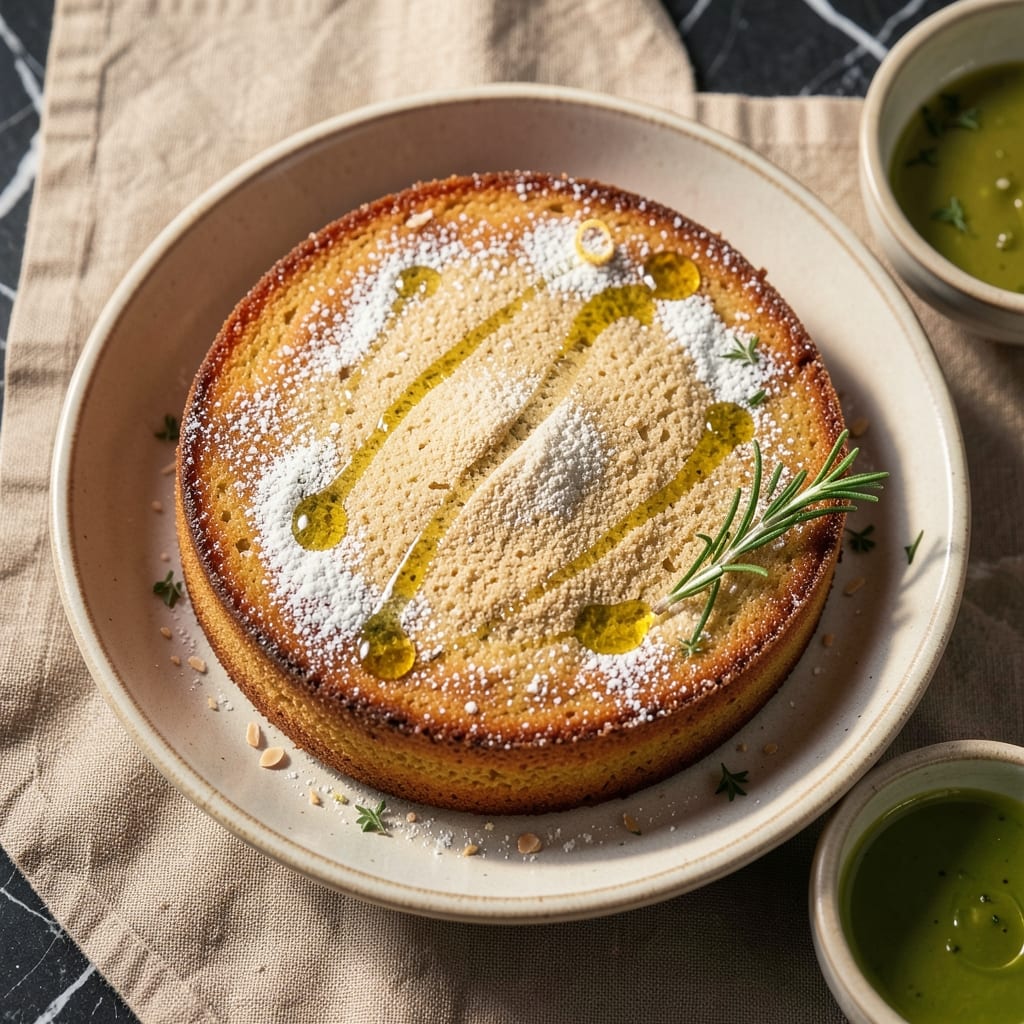
This almond flour olive oil cake delivers moist, gluten-free perfection with just five simple ingredients and 20 minutes of active time. The secret lies in combining almond flour’s natural richness with extra-virgin olive oil, which creates a tender crumb without relying on butter or eggs. I developed this recipe after years of experimenting with gluten-free baking—finally achieving a cake that’s light, fluffy, and holds its shape without drying out.
The beauty of this recipe is its foolproof nature: no special equipment, no complicated techniques, and no waiting for long rise times. Almond flour absorbs moisture differently than wheat flour, so we use a slightly higher ratio of oil to ensure that signature tender texture. The result? A cake with a delicate crumb, subtle nutty undertones, and just enough natural sweetness from the almonds themselves—no refined sugar required.
What makes this cake truly special is how it performs in the oven. Baked at 350°F for 35 minutes, it emerges with a golden top and edges that stay soft rather than dry. The olive oil keeps it rich and moist for days, making it perfect for breakfast with coffee, afternoon tea, or dessert with fresh berries. The texture is surprisingly light for an almond flour cake, proving that gluten-free doesn’t mean dense or crumbly.
For an extra touch of elegance, dust the top with powdered sugar or a sprinkle of citrus zest while still warm. Serve with a dollop of fruit compote or a scoop of vanilla ice cream for a dessert that feels both indulgent and nourishing. This recipe is your gateway to effortless, naturally sweet baking—without the gluten or the fuss.
Ingredients for almond flour olive oil cake
Five ingredients transform almond flour into a tender, gluten-free cake with olive oil's natural richness.
| Ingredient | Amount | Notes |
|---|---|---|
| Superfine Almond Flour 🌰 | 1 ½ cups | Blanched, finely ground preferred |
| Extra-Virgin Olive Oil 🫒 | ¾ cup | Light or fruity variety for balance |
| Granulated Coconut Sugar 🍯 | ½ cup | Or maple syrup for liquid sweetness |
| Unsweetened Almond Milk 🥛 | ½ cup | Room temperature for best mixing |
| Vanilla Extract 🌿 | 1 tsp | Pure Madagascar preferred |
| Baking Powder 🍞 | ½ tsp | Aluminum-free for gluten-free compatibility |
| Diamond Crystal Kosher Salt 🧂 | ¼ tsp | Fine grain for even distribution |
| Powdered Sugar 🍚 | 2 tbsp | For dusting, optional garnish |
Almond flour quality is non-negotiable here—Bob's Red Mill or Anthony's Goods are industry standards. The finer the grind, the lighter your cake. For olive oil, California Certified Extra Virgin delivers the best balance of fruity notes without overpowering. Coconut sugar adds moisture while maintaining a subtle caramel undertone, but maple syrup works perfectly if you prefer liquid sweetness. The almond milk should be unsweetened to avoid altering the cake's delicate flavor profile.
No almond flour? Substitute with a 1:1 blend of oat flour and tapioca starch, though texture may vary slightly. Swap coconut sugar for agave nectar or date syrup, adjusting to taste. For vanilla, vanilla bean paste adds flecks of intensity. The baking powder must be gluten-free—Bob's Red Mill GF version is reliable. If using powdered sugar as garnish, sift it through a fine-mesh sieve to avoid clumping, and dust while the cake is still warm for even adherence.
Store baked cake in an airtight container at room temperature for 3-4 days—the olive oil keeps it moist longer than traditional cakes. For extended storage, slice and freeze portions for up to 3 months. Reheat slices in a 250°F oven for 5-7 minutes to restore freshness. The cake's texture improves slightly after baking, so waiting 1 hour before slicing ensures clean cuts. For make-ahead convenience, bake a day ahead and store covered.
Why You'll Love This Recipe
- No Mixer Needed: Mixing this batter is like folding a blanket—just a fork and a bowl. The almond flour blends into the olive oil so smoothly, you’ll wonder why you ever used flour that clumps.
- Rich Without Guilt: That deep, fruity olive oil keeps every bite moist and satisfying, while the coconut sugar adds just enough sweetness without the crash. Honestly, I’ll take this over store-bought cake any day.
- Weeknight Hero: Bake it for breakfast, dessert, or a lazy afternoon snack—no one judges. It’s my go-to when I forget to plan, and the leftovers? Still delicious cold the next morning.
- Budget-Friendly Luxury: Almond flour might sound fancy, but it stretches further than regular flour, and olive oil lasts forever. Here’s what sold me: this cake feels like a treat without draining my wallet.
Step-by-step instructions for almond flour olive oil cake
This method delivers a tender, moist crumb without gluten—just precise technique and patience.
Whisk Dry Ingredients for Even Distribution
In a medium bowl, sift together the 1.5 cups Superfine Almond Flour, 0.5 tsp Baking Powder, and 0.25 tsp Diamond Crystal Kosher Salt. Use a fine-mesh sieve for the almond flour to eliminate any clumps that could create dense pockets in the cake. Whisk vigorously for 30 seconds until the mixture is completely homogeneous and airy.
This step is critical for gluten-free baking. The almond flour contains natural oils that can weigh down the texture, so thorough mixing ensures even distribution of leavening agents. Tap the bowl gently against the counter to settle any flour that rises to the top before proceeding.
Combine Wet Ingredients for Smooth Batter
In a separate large bowl, measure the 0.75 cup Extra-Virgin Olive Oil and 0.5 cup Granulated Coconut Sugar. Whisk together until the sugar dissolves completely and the mixture becomes pale and slightly thickened—about 1 minute. Add the 0.5 cup Unsweetened Almond Milk and 1 tsp Vanilla Extract, whisking until fully incorporated.
Here's where the magic happens: the olive oil's natural emulsifying properties create a stable base that prevents the cake from becoming greasy. The coconut sugar adds moisture while caramelizing slightly during baking, enhancing the cake's depth of flavor. Let the wet mixture sit for 2 minutes to allow any residual heat from mixing to dissipate—this prevents premature activation of the baking powder.
Gently Fold Wet into Dry for Light Texture
With a rubber spatula, gently fold the dry ingredients into the wet mixture in three additions. Scrape the bottom and sides of the bowl after each addition to ensure all flour is incorporated. Stop folding once the batter is just combined—you should still see slight streaks of flour. Overmixing develops gluten-like proteins in the almond flour, leading to a dense, chewy texture instead of the desired tender crumb.
The batter will be thick but pourable. This is normal—almond flour absorbs more liquid than wheat flour. For best results, let the batter rest at room temperature for 10 minutes before baking. This allows the flour to fully hydrate and the baking powder to begin activating gently, ensuring even rise.
Bake at Low Temperature for Even Cooking
Preheat your oven to 325°F—this lower temperature prevents the exterior from setting too quickly while allowing the center to bake through evenly. Grease an 8-inch round cake pan with olive oil and line the bottom with parchment paper. Pour the batter into the prepared pan and smooth the top with a spatula.
Bake for 40-45 minutes, or until a toothpick inserted into the center comes out clean with just a few moist crumbs clinging to it. Avoid overbaking—the cake will continue to set as it cools. The edges should be golden but not browned, and the top should spring back slowly when gently pressed with a finger.
Cool and Dust for Perfect Presentation
Remove the cake from the oven and transfer it to a wire rack. Let it cool in the pan for 15 minutes, then invert the cake onto the rack to cool completely. This gradual cooling prevents cracking, which is common with almond flour cakes due to their lower structural integrity compared to wheat-based cakes.
Once completely cool, dust the top generously with the 2 tbsp Powdered Sugar using a fine-mesh sieve. This step isn't just for aesthetics—it creates a delicate barrier that prevents the cake from drying out too quickly. Slice with a serrated knife for clean, even portions that showcase the cake's moist, velvety texture.
Pro Tips For Making Almond Flour Olive Oil Cake
- Weigh the almond milk: Almond flour absorbs liquid differently than regular flour, and measuring cups can leave you dry or gummy. Use a kitchen scale for the almond milk—120ml (½ cup) is the sweet spot for this recipe, and it ensures the batter stays just loose enough without turning into glue.
- Preheat the pan: I learned this the hard way—skipping preheating the 8-inch round pan means the edges cook slower, and you end up with a dense, uneven cake. Heat that pan for 5 minutes on medium before pouring the batter. The edges will set faster, and the center won’t sink like a sad soufflé.
- Skip the overmixing: Almond flour releases more gluten than you’d expect, and once that batter gets tough, it’s game over. Mix just until the coconut sugar dissolves—about 20 seconds with a spatula. Overmixing turns your cake into dense, sad almond-flour crackers.
- Add the olive oil last: Cold extra-virgin olive oil thickens the batter more than room-temperature oil, and that’s exactly what you want here. Stir it in right before pouring the batter into the pan—it keeps the crumb tender and the texture rich without making the cake greasy. (Yes, even if you’re impatient like me.)
Essential equipment for perfect results
Essential Mixing Tools
The right tools make all the difference with almond flour—its fine texture can clump easily. I swear by a stainless steel whisk (like the OXO Good Grips) for the dry ingredients to create an airy base. For the wet mixture, a heat-safe glass bowl (I use Pyrex) helps distribute the olive oil evenly without absorbing flavors. A silicone spatula (like Epicurean) is perfect for folding the batter gently—its flexibility prevents tearing the delicate almond flour structure. 🌰
Baking Pan Selection
An 8-inch round cake pan with sloped sides works best for even baking. I recommend a carbon steel pan (like Made In pan) for superior heat distribution, but a well-seasoned cast iron skillet also works. Line the bottom with parchment paper to prevent sticking—almond flour cakes can dry out faster than traditional cakes. Avoid nonstick pans, as they can leave a chemical taste that overpowers the delicate olive oil flavor.
Measuring Precision
Almond flour is not packed like wheat flour—spoon it into your measuring cup and level it off with a knife. For the olive oil, use a liquid measuring cup (like Pyrex) to ensure accurate 0.75 cup measurements. A digital kitchen scale (I use OXO Good Grips) is ideal for precise measurements, especially when working with gluten-free flours. The baking powder should be measured using the spoon-and-level method for consistent leavening.
Oven Thermometer
Ovens vary wildly—even preheated ones. I always use an infrared thermometer (like Thermoworks) to confirm my oven hits 325°F before baking. Almond flour cakes bake differently than wheat-based ones, and even a 10°F difference can affect texture. Place the thermometer near the middle rack where your cake pan will sit for the most accurate reading. This small investment ensures your cake bakes evenly every time. 🌡️
Cooling Essentials
A wire cooling rack (like OXO Good Grips) is a must for preventing soggy bottoms. Let the cake cool in the pan for 15 minutes, then invert it onto the rack to finish cooling. For dusting powdered sugar, use a fine-mesh sieve (I love Norpro) to create an even, professional-looking finish. A serrated knife (like Mercer Culinary) is essential for clean slices that showcase the cake's moist interior.
Nutrition facts
Frequently asked questions
Why does this almond flour cake need more olive oil than traditional cakes?
Almond flour absorbs moisture differently than wheat flour, so the extra 0.75 cup olive oil creates that signature tender crumb. The oil also replaces butter's moisture and fat while keeping the cake naturally rich. Too little oil results in dryness, while too much makes it greasy—this ratio strikes the perfect balance!
Can I substitute coconut sugar with regular white sugar?
Yes, but expect a slightly different texture and flavor. Use 0.5 cup granulated white sugar instead, but add 1 extra tablespoon almond milk to compensate for the sugar's lower moisture content. The cake will still be delicious, though the coconut sugar adds subtle caramel notes and extra moisture.
What if my cake turns out dense instead of light?
Overmixing is the most common cause—stop folding when you see slight flour streaks. Also ensure your almond flour is superfine (not almond meal) and measure it correctly (spoon-and-level). If using a different pan size, adjust baking time by 2-3 minutes per inch difference. For extra insurance, let the batter rest 15 minutes before baking.
How do I make this cake nut-free?
Replace almond flour with a 1:1 blend of oat flour and tapioca starch (1.5 cups total). Use the same liquid measurements, but increase baking powder to 1 tsp for better rise. The texture will be slightly denser but still moist. For nut-free vanilla, use vanilla bean extract instead of pure vanilla extract.
Can I bake this cake in a different pan shape?
Yes, but adjust baking time accordingly. For a 9-inch round pan, bake 35-40 minutes (check at 35). For a loaf pan, use 30-35 minutes. Key tip: Reduce oven temp to 325°F for any pan larger than 8 inches to prevent over-browning. The cake should always be golden with a toothpick coming out clean.